8 June 2020
The University of Bolton on opening its campuses and protecting quality and standards
Author
Professor Patrick McGhee
Assistant Vice Chancellor
University of Bolton
COVID-19 has led to unparalleled global disruption across almost all aspects of society, impacting every person and organisation in the UK. Students and their universities have not escaped the chaos. While back in March, the decision to close campuses was in the end out of the control of higher education providers, the decision as to whether to reopen, and when - and in what way - is a difficult one for institutions. Across the country, students feel uncertain about what is on offer and what it will mean for them as individuals.
So, what has the University of Bolton decided to do, how will it do it and how will it protect quality and standards as it does it?
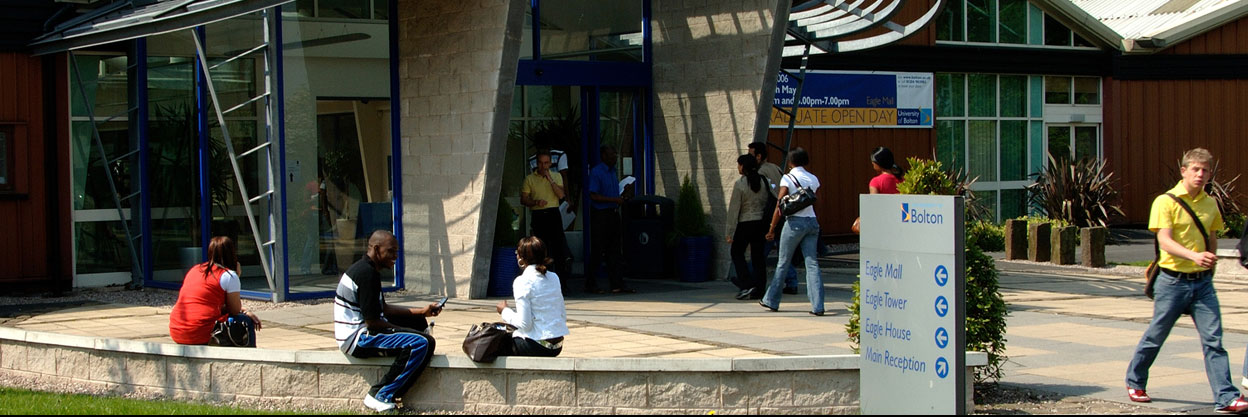
On 19 May, the University of Bolton was the first in the UK to decide to open its campuses to new and returning students this September.
The Vice-Chancellor, Professor George E Holmes summarised the plan at the time:
Workshops, laboratories and studios will be adapted over the summer to ensure they are Covid-19 secure and can be used as safely as possible, while at the same time enabling staff and students to observe the correct social distancing requirements. We are determined to ensure that the University of Bolton is ahead of the game in transforming its campus to create a place where students feel safe and happy to come to and make the most of their experience of higher education.
As an institution committed to access, we know from research that disadvantaged students from low-income backgrounds do not always have the necessary space or technology at home to study effectively in a way that suits their learning preferences or particular needs.
As an institution, we have welcomed the guidance that QAA have produced over the course of the COVID-19 crisis, particularly the initial guidance issued on 23 March - COVID-19: Initial Guidance for Higher Education Providers on Standards and Quality and Securing Academic Standards and Supporting Student Achievement issued on 7 April, along with the specialist focus on Practice and Lab-based Assessment. These helped us assess our own emerging arrangements against a wider framework.
More recently, we have started mapping our plans for restart against the four principles published on 2 June by QAA in Preserving Quality and Standards Through a Time of Rapid Change: UK Higher Education in 2020-21. It is worth reviewing what we have done and are planning to do under each of these four principles. I will also propose a fifth.

A fifth principle?
To these four principles I would add a fifth principle: Providers should recognise the need for local disciplinary flexibility. In the context of the management of change at this scale and pace, the central shaping, resourcing, planning, scheduling and leadership is likely to already be a management priority. Crucially, however, at Bolton we continue to recognise the fundamental importance of local, departmental-based solutions developed by staff and students who know their learning culture best. It’s obvious that what works in our highly-regarded English Literature programmes will not necessarily work in our excellent Nursing provision. Less obvious from the centre, is that what works in our Children Nursing programmes might not work in our Community Public Health Nursing. This fifth principle will be increasingly important as professional, statutory and regulatory bodies (PSRBs) start to map their expectations onto the 'new normal' in the delivery of professionally-accredited specialist higher education. Overall this year, PSRBs have generally shown a commendable level of flexibility and pragmatism. Let’s hope that continues.
Beyond chaos
Students have not just had their education disrupted but the whole world around them disrupted. Disruption, and worse, has been visited upon their families, friends, work, socialising, sport, travel and much else. Beyond that, their futures have been chaotically disrupted and they have seen few solid points of reference to help them navigate that chaos. University education in that context is particularly important - a unique point of reference for students’ own personal development and potentially a compass for the rest of their lives. At the University of Bolton, helping students see a practical model of how they can re-engage with learning and achievement - even in the most unsettling and unexpected circumstances - is what we have tried to do. It has not been and will not be easy; we will undoubtedly not get every aspect right first time. We have not yet finished this work, but we have started, and we believe our initiative has been the right thing to do for our students, for our staff and for all the stakeholders of our institution.