Collages and colleagues: using arts-based activities to support internationalisation

Author
Julie Hughes
University of Wolverhampton
This blog is the second in a series of four posts from the QAA-funded Collaborative Enhancement Project, Supporting Staff to Enhance the International Student Experience. The project is led by De Montfort University in partnership with the University of Manchester, Manchester Metropolitan University, and the University of Wolverhampton.
As part of this project, cross-institutional workshops took place at all partner institutions. Our workshop at the University of Wolverhampton was developed by a working group that includes academic staff, professional services staff and international students now employed by the University. We used the framework provided by De Montfort University and decided to hold a 3-hour session that would include some hands-on creative activity, some sharing of good practice and an insight into international students lived experiences. 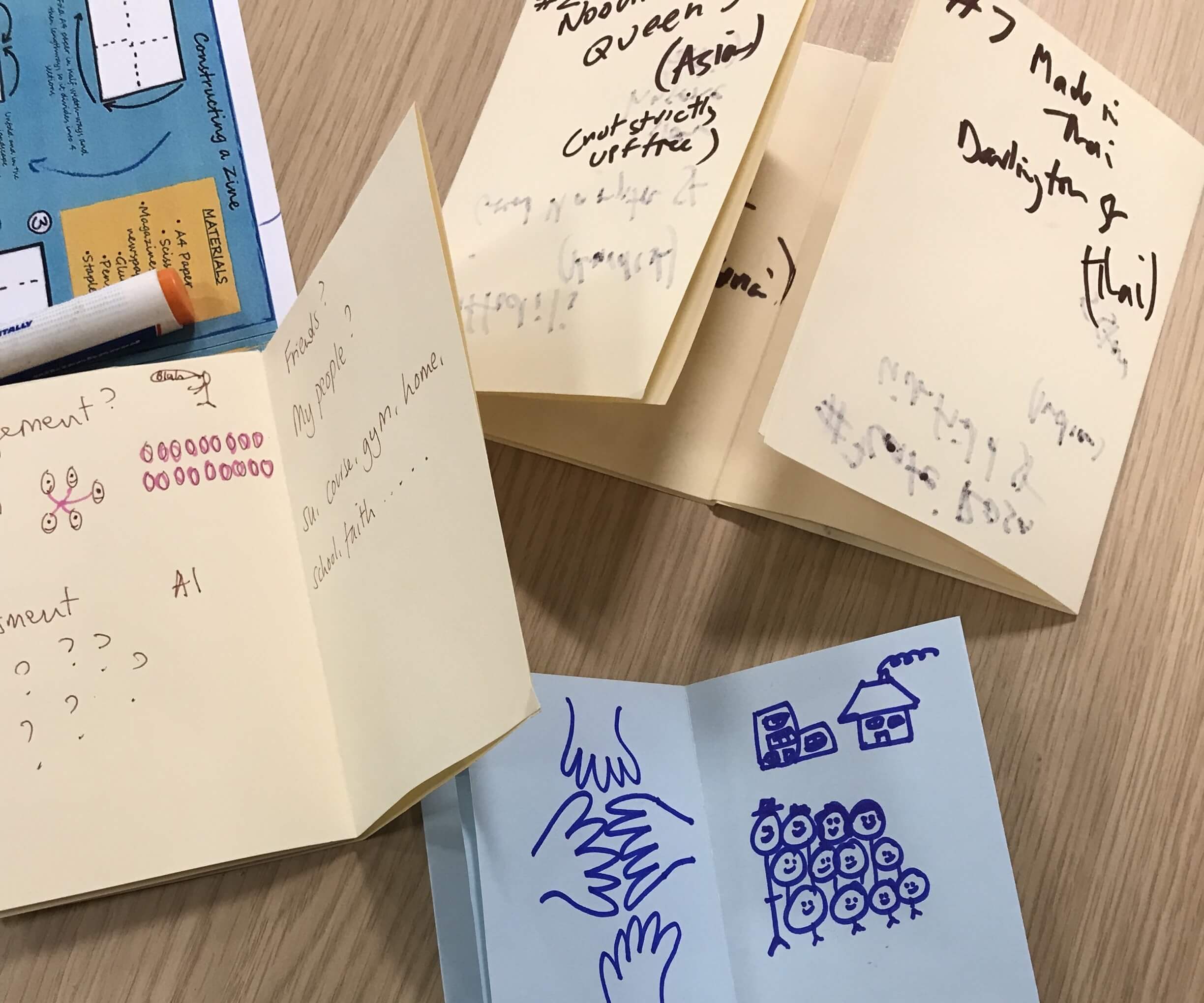 This both related to the overall aims of the project and reflected the experiential knowledge of the working group.
The group of about 20 were drawn from across the institution and all had student-facing roles and experience of working with international students. The first part of the session focussed on perceptions of international students’ experiences in our classrooms, the wider institution and the region. Colleagues were invited to create collages and/or zines to reflect their discussions. This resulted in an hour of very in-depth sharing of a mix of experiences, negative and positive including frustrations and solutions.
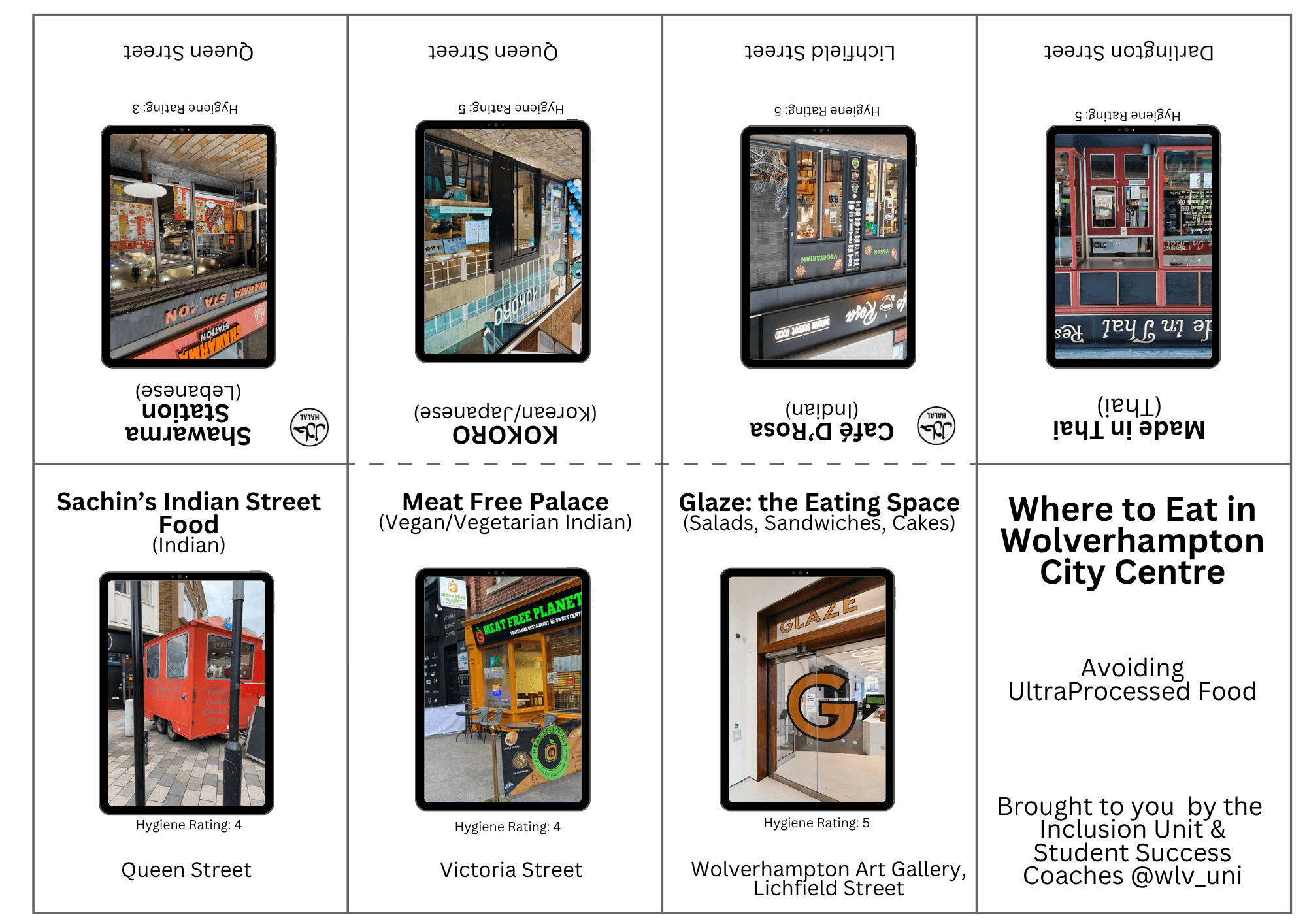
Colleagues discussed the shocks that some students experience when coming to study at Wolverhampton including travel and navigating the physical landscape, the language and accents of the region, the pedagogic new practices and relationships, the weather, the food and the loneliness and financial pressures experienced. This was balanced by how the University is anticipating and mitigating some of the shocks with more positive examples from staff who offered practical tips for teaching and support staff.
Colleagues from the Business School followed this by sharing a recent lesson study project co-created with international students. The project asked students what worked for them in the classroom and built their feedback into future teaching and curriculum development. This innovative approach sought to enhance the student experience within the classroom and beyond through lesson observation and dialogue with academic peers and students. The team shared their curriculum design and classroom toolkit for teaching international students and a podcast exploring the project’s findings. This was very well received by colleagues. It was identified that more projects such as this would be beneficial to both teaching staff and students but that there was a considerable time commitment in the process which involved pre and post observation meetings, observations and dialogue with students and implementing changes based on colleague and student feedback.
The group decided to continue as a cross-institution community of practice to develop the workshop for other audiences. This will be available as part of a wider programme of staff development. We also fed feedback from staff into the University's Race Equality Charter action plan.