About this project
This project explores how hidden barriers and the hidden curriculum within assessment communication affect students’ understanding of exam and coursework requirements. Building on work at the University of Leeds, it focuses on improving the clarity, accessibility, and inclusivity of assessment language, structure, and instructions through an inclusive-by-design approach.
While assessment design may be valid, the way tasks are communicated can unintentionally disadvantage certain groups of students (i.e. students with English as an additional language, and students with additional learning needs). The project addresses this gap by examining how assessment expectations are interpreted in practice.
Working collaboratively across partner institutions, the project will use audit data, student feedback, and co-design workshops to identify common barriers and develop practical solutions. The outcome will be a scalable Inclusive Assessment Communication Toolkit to support fairer, clearer, and more equitable, inclusive-by-design assessment practices across the sector.

Project introduction and outline
This project builds on a framework for writing inclusive assessment questions, developed and implemented at the University of Leeds, to improve the clarity and accessibility of assessment communication. The work has led to the creation of an Inclusive Assessment Communication Guide, including a checklist for moderating exam papers and staff development resources. This is now embedded within the University’s assessment processes.
The project extends this work across partner institutions to evaluate, adapt, and scale the approach at a sector level. The partner institutions will pilot this approach within their universities using a range of implementation models.
It recognises that the way assessment requirements are communicated, through language, structure, and tone, can unintentionally create barriers for some students, particularly those with additional learning needs or students with English as an additional language. The project addresses these challenges by focusing on how assessment expectations are understood in practice.
Working collaboratively, partner institutions will take part in audits, student–staff co-design workshops, and evaluation activities to identify barriers and develop practical solutions. The project will produce a sector-ready Inclusive Assessment Communication Toolkit, with evidence-based guidance, examples, and resources to support more inclusive assessment practices.
Project objectives
- To evaluate how the Leeds Inclusive Assessment Communication Guide has been implemented across partner institutions, and to understand its impact on the clarity and accessibility of assessment for students.
- To identify how the approach may need to be adapted across different disciplinary and institutional contexts.
- To work in partnership with students and staff to co-develop a scalable Inclusive Assessment Communication Toolkit.
- To develop accompanying staff development resources and digital exemplars to support effective and sustainable implementation.
- To share the project findings through QAA networks, supporting wider adoption and integration into assessment design and quality assurance practices across the sector.
Approach
The project will adopt a participatory, mixed-method approach, structured across three phases.
In the first phase, mapping and evaluation, partner institutions will audit their current practices and evaluate the Leeds framework within their local context. This will enable a clearer understanding of how assessment communication is currently experienced and where potential barriers may arise.
The second phase focuses on co-design, bringing together students and staff in collaborative workshops to adapt and extend the guidance. This process will ensure that the framework responds to diverse learning and communication needs.
In the final phase, pilot and dissemination, the approach will be tested across institutions. This will include evaluating student understanding and confidence in interpreting assessment requirements.
The project is distinctive in moving beyond assessment design to focus on how assessment expectations are communicated in practice, bringing together inclusive pedagogy, linguistic accessibility, and co-creation as a coherent methodological approach.
Project Outputs:
1. Inclusive Assessment Communication Toolkit (open access)
2. Evaluation report and recommendations
3. Case studies from pilot institutions
4. CPD workshop pack and facilitator guide
5. Sector dissemination event (QAA/Advance HE collaboration)
Lead institution
- Dr Salma Al Arefi, University of Leeds (PI)
- Jenny Brady, University of Leeds
- Harriet Cannon, University of Leeds
Partner institutions
- Dr Nour Ali, Brunel University of London
- Dr David Tree, Brunel University of London
- Dr Naseem Ramli, King's College London
- Dr Tom Ritchie, University of Warwick
Pressing Escape will cancel and close this dialog
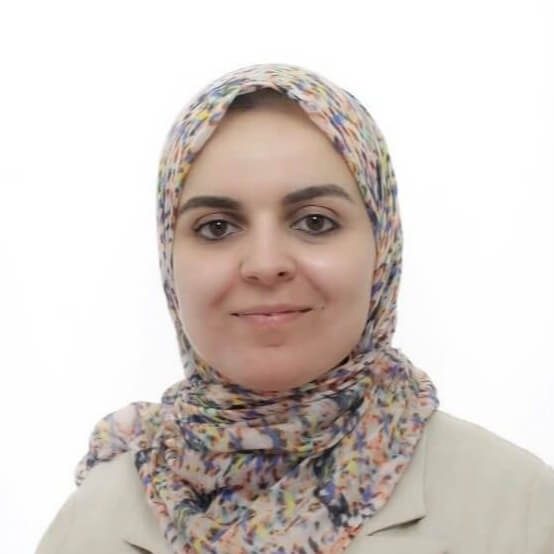
Dr Salma Al Arefi
Dr Salma Al Arefi is an author and award-winning Lecturer at the School of Electronic and Electrical Engineering at the Faculty of Engineering and Physical Sciences. She is the recipient of the University of Leeds 2021 Early Career Teaching Award and Faculty of Engineering and Physical Sciences Teaching Award.