QAA accreditation case study: Institutional accreditation in United Arab Emirates
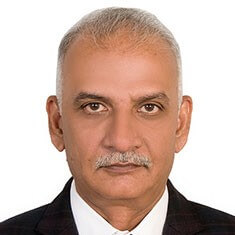
QAA’s international institutional accreditation helped Gulf Medical University to transform their quality culture and demonstrate alignment with global standards, strengthening trust with students and partners around the world.
Professor Manda Venkatramana, Chancellor at Gulf Medical University, reflects on achieving reaccreditation and the benefits delivered throughout the full five-year accreditation process for creating meaningful institutional change.
Why did you choose to seek international accreditation?
GMU sought international accreditation to benchmark our quality assurance processes against globally recognised standards and to provide transparent, independent evidence of our institutional quality to students, partners, employers, and national regulators. As an institution with an internationally diverse community and a strategic vision to be "an internationally acclaimed sustainable Academic Healthcare Institution", external validation was both a natural and necessary step. We also recognised that international accreditation would strengthen student confidence and support graduate mobility in a globalised healthcare workforce.

Why did you choose to work with QAA and undertake institutional accreditation?
QAA was the clear partner of choice. QAA's standing as one of the world's foremost higher education quality agencies, its use of the European Standards and Guidelines (ESG) as the benchmark framework, and its cooperation with the UAE's Commission for Academic Accreditation (CAA) made it uniquely well-placed to provide validation that carries genuine weight both nationally and internationally. The ESG enabled us to evaluate our quality culture holistically, not just individual programmes, against a globally recognised standard.
Our QAA accreditation journey has been an impactful institutional development process:

Student enrolment has grown from approximately 2,320 (2021-22) to 3,345 (2026-27): Growth directly supported by the confidence that QAA accreditation provides to prospective students and families. The academic portfolio has also expanded from 27 to 39 accredited programmes, attracting new student cohorts.
How has accreditation influenced internal quality assurance, academic programmes or administrative processes?
GMU's quality journey with QAA spans five years and three reviews: initial accreditation in 2021, a mid-cycle review in 2024, and full reaccreditation in 2026. During this time, the most significant benefit has been the transformation of our quality culture. The recommendations from the 2021 review became an accelerator for continuous improvement that shaped five years of purposeful development. By the 2026 reaccreditation, the results spoke for themselves: a university with quality as a deeply embedded institutional value. The ESG framework gave all staff a shared language and clear standards to work towards, replacing compliance driven quality control with a proactive quality culture. That cultural shift from doing quality assurance to living it is the most enduring legacy of our QAA journey.
When we first engaged with QAA, the self-evaluation process against the ESG framework prompted a level of critical institutional reflection we had not previously undertaken in a structured, evidence-based way. This led to a series of foundational changes:
- The Quality Assurance and Institutional Effectiveness (QA&IE) unit was strengthened and the QA&IE Portal was developed – a fully integrated digital platform for real-time monitoring of academic performance, student outcomes and compliance.
- Quality assurance policies, programme design processes, student assessment frameworks, faculty development pathways and public information practices were all reviewed and aligned with the ESG.
- Student feedback mechanisms were broadened and student representation in quality governance was strengthened.
The four recommendations from the 2021 review became a structured improvement roadmap. By 2026, all had been fully addressed: student representative training was introduced, feedback methods were diversified, support for students of determination was clarified and made more accessible, and a strategic benchmarking framework was developed.
Across the full five-year accreditation cycle, the impact has been substantial and sustained, with continued investment in our quality infrastructure:
- Annual and periodic programme reviews were institutionalised across all Colleges, with findings systematically fed into improvement planning and consistently tracked and monitored.
- The Deanship of Quality Assurance and Institutional Effectiveness was established, providing dedicated leadership for evidence-based planning and institutional effectiveness.
Our QAA journey since 2021 has been transformative – not only in validating our quality, but also in strengthening and advancing it. The significant increase in good practices recognised by QAA between 2021 and 2026, together with the absence of any conditions, reflects what five years of purposeful, accreditation-driven development can achieve – excellence!

Has accreditation affected your institution’s reputation locally or globally?
QAA accreditation has materially strengthened GMU's standing regionally and internationally. The 2026 reaccreditation outcome – meeting all 10 ESG Standards with six features of good practice and no conditions – is publicly available evidence of institutional excellence and marks a clear trajectory of improvement since 2021.
Domestically, QAA accreditation complements GMU's CAA accreditations and is recognised within the UAE national quality framework. Internationally, it has opened doors for new partnerships, supported student mobility, and provided prospective students, employers and partner universities with assurance of quality alignment with global standards. GMU has presented its quality and innovation models at international forums including the MENA Higher Education Leadership Forum and the QS Higher Education Summit, building on the credibility that QAA accreditation provides.
About the University
Gulf Medical University (GMU) is a private academic healthcare institution established in 1998 in Ajman, United Arab Emirates. GMU offers 39 accredited programmes across Medicine, Dentistry, Pharmacy, Nursing, Health Sciences, Biomedical Sciences, Public Health, Management and Artificial Intelligence in Healthcare, Veterinary Medicine, and Health Professions Education. In 2024-25, GMU enrolled students from over 110 nationalities, reflecting its deeply international identity and mission. Institutional priorities centre on quality culture, academic excellence, student success, applied research, and international engagement.
Contact us to find out more about IQA
If you would like further information about IQA and the process of QAA accreditation, please email us.