 Dr Nadia Gulko
Collaborative Enhancement Project 2025-26
Futuring skills development for sustainability, responsible management, and innovation
Lead Institution: University of Lincoln
In today’s world, the importance of
sustainability in education cannot be overstated. That’s why our
multidisciplinary, cross-cultural project, spanning the UK, Australia, and
South Africa, is making groundbreaking progress. These three nations, each
uniquely vulnerable to climate change, are at the forefront of efforts to
enhance the United Nations’ Sustainable Development Goals (SDG 4: Quality
Education and SDG 16: Peace, Justice, and Strong Institutions), despite ongoing
challenges (Sachs et al., 2024).
This pioneering initiative goes beyond
traditional classroom teaching. By collaborating with educators, students, and
industry partners, the project will deliver hands-on interventions and an
innovative Global Virtual Exhibition. This exhibition will not just be a
display; it will be an interactive, experiential learning journey. Students
will get the opportunity to showcase their skills, reflect on their personal
growth, and engage with real-world issues. Educators, in turn, will gain
valuable insights into how students view learning, the world of work, and the
role of education in shaping the future.

Project Launch
Why this project is important
We believe that working within isolated academic disciplines is no longer enough. The future-facing workforce demands graduates who are adaptable, ethically minded, and equipped for interdisciplinary problem-solving. Our project integrates these critical skills into the curriculum, aligning with the Quality Assurance Agency’s (QAA) vision for lifelong, skills-rich learning. Through this approach, students are empowered to tackle real-world challenges responsibly and creatively.
What truly sets this project apart is its commitment to co-creation. By bringing together voices from education, business, and the broader community, we will foster the exchange of innovative ideas and best practices in sustainability and responsible management. This directly supports the UNESCO Education 2030 Agenda, driving forward-thinking dialogue and transformative action.
Ultimately, our goal is to inspire ‘transformative practices’ through practical, action-oriented learning that prepares students for a fast-changing global job market. By elevating diverse experiences and empowering learners to act, we’re helping to shape a more sustainable and inclusive future for all.

Links to previous projects
Our project builds on insights from QAA’s Collaborative Enhancement Projects, particularly those exploring the intersection of innovation in education and sustainable development, such as “Exploring the opportunities that generative artificial intelligence offers for Higher Education” and “Using AI to promote education for sustainable development and widen access to digital skills” and “The opportunities AI offers to higher education and the graduates of the future”. These projects demonstrated the value of integrating innovative frameworks to enhance learning outcomes and engage students in sustainable practices and future thinking.
Building on the focus of the above projects on technology, we have developed methods to integrate sustainability and responsible management within a collaborative, interdisciplinary curriculum. Our emphasis on 'futuring' skills through sustainability and interdisciplinary learning is also unique and will bring fresh perspectives to QAA’s catalogue of Collaborative Enhancement Projects (CEP). Specifically, we contribute to sustainable management education, an area less commonly covered in prior CEP projects. By using a creatively futuring perspective, in our project, we will explore sustainability and innovation-based skills development as part of learning models and the changing needs of the workforce.
The project directly supports the QAA’s goals by
enhancing the student learning experience through collaborative efforts across
the higher education sector institutions, extending internationally. The work
will help build a repository of best practices that supports lifelong, flexible
learning, enhancing quality standards across the broader QAA member
institutions, and encouraging more sustainable and flexible approaches across
the sector.
Want to
participate?
We welcome participation from academics across the UK, Australia, and South Africa.
This survey allows us to reflect on your practices, challenges and barriers of integrating sustainability, responsible management, and innovation in teaching.
To partake in the cross-country survey, please follow this link: https://forms.office.com/e/4EmbpW9F7b

Project Team
The project team of our QAA Collaborative
Enhancement project:
Our project team was brought together from five institutions from across three countries: Australia (Monash University), South Africa (North-West University), and the UK (Manchester Metropolitan University, Queen Mary University of London, University of Lincoln).
Lead Institution:
Professor Nadia Gulko, University
of Lincoln, UK (PI)
Dr Judith John, University of Lincoln,
UK (Co-I)
Professor Gyles Lingwood, University
of Lincoln, UK (Co-I)
Partner Institutions:
Professor Liz Warren, Manchester
Metropolitan University, UK (Co-I)
Dr Alessandro Merendino, Queen Mary
University of London, UK (CO-I)
Professor Nick McGuigan, Monash
University, Australia (Co-I)
Professor Sanlie Middelberg,
North-West University, South Africa (Co-I)
Professor Liandi Van Den Berg, North-West University, South Africa (Co-I)
Dr Nadia Gulko
Pressing Escape will cancel and close this dialog
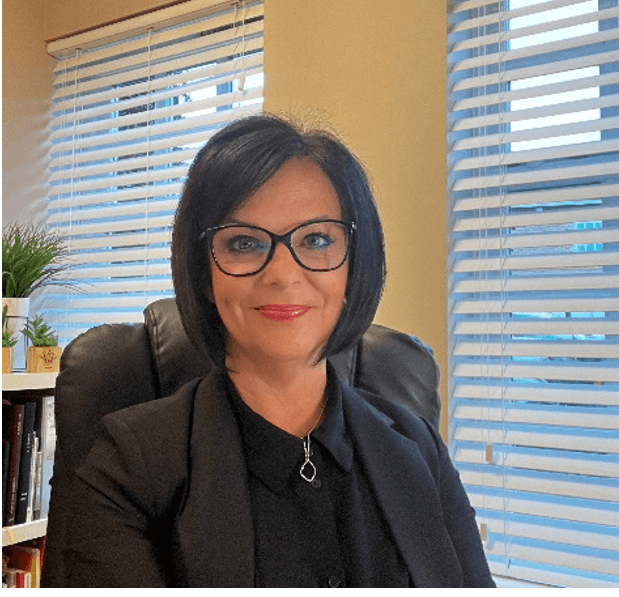
Dr Nadia Gulko: Project Lead, University of Lincoln
 Professor Liz Warren
Pressing Escape will cancel and close this dialog
Professor Liz Warren, Manchester Metropolitan University
Project Partners