2 March 2026
A most collegial network

Author
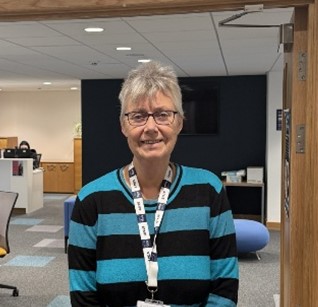
Charlotte Scheffmann
Dean of Higher Education, East Lancashire Learning Group
As this year's Colleges Week is now upon us, it seems a good time to reflect on the work and value of QAA's College HE Networking Community which I have the honour to chair.
With about 30 or 40 providers joining us online for each meeting, our network provides a dedicated space for HE professionals from QAA member colleges to stay informed, connected and supported in our ever-changing tertiary education landscape.
At its best, College-Based Higher Education (CBHE) reflects the most effective approaches to learning, teaching and assessment developed through further education, with an emphasis upon the continual enhancement of professional and pedagogic practices, conducted at the next academic level. There's much that HE and FE can learn from each other, and CBHE sits at that rich point of intersection between those areas.
Yet the further education environment is, like that of HE, faced with a set of emerging challenges to ensuring its learning and teaching remain rigorous and relevant in the era of artificial intelligence, and to meet the increasingly urgent and evolving demands of industry, expectations of government and academic and support needs of students at a time when resources are extraordinarily constrained.
Our sector, then, is both a source of remarkable skills, ingenuity and expertise, and the site of unprecedentedly knotty questions and complexities. Coming together in our network allows HE-in-FE practitioners from across the country to share, discuss and begin to develop solutions to the problems and frustrations our sector faces.
College-based higher education (CBHE) represents a minority, albeit a sizeable minority, in the HE landscape. CBHE practitioners also tend to be a minority in their own institutions, and can feel somewhat set apart – and even pressured by – the fact that the majority of their colleges' provision is delivered, managed and financed in completely different ways from their own areas of work. For colleagues who might often find themselves working in some degree of professional isolation – and particularly for those at providers with relatively limited extent and experience of HE delivery – the opportunity to come together with colleagues from across the country is therefore highly valued and highly appreciated.
It's also the case that, even in the smallest HE departments, our processes and systems need to be updated on a regular basis in response to government initiatives, and we are often expected to turn these things around very quickly. Our network allows us to pool our knowledge and understanding of such developments – and, as such, is highly valued not only by its members but also by their colleges for the ideas, innovations and solutions it generates.
With, for example, the Lifelong Learning Entitlement set to shake up both the funding and approach to provision of post-18 education in England – and similar initiatives in development across the UK – it's vital that we have such a space in which we can share information and approaches to such major new areas of challenge and opportunity.
Our colleges are well-positioned to deliver this kind of higher technical and vocational education at levels 4 and 5 in terms of the skills and experience of their staff, their relationships with regional employers and their place within their local communities. Although we have for some years faced significant challenges around establishing our ownership of this kind of provision (as a result of chronic underfunding in terms of both capital and revenue), there are now signs that things may start to turn around, and, as new opportunities open up, we need to be ready to grasp them.
Many of our staff have had dual careers – in industry and in education – and it's wonderful that their professional expertise informs their teaching, adding significant value to our students' learning experience and outcomes. Despite perhaps discouraging pay differentials, those whom we are fortunate enough to attract to join our sector from industry tend to find the work extraordinarily rewarding, as they support students – who often come to us lacking in prospects and confidence – to transform into highly skilled and qualified individuals who go on to enjoy successful careers. These successes enrich not only their own lives, but also those of their families, communities, and local economies. And, in some cases, they may even return to teach with us in the future.
With CBHE's focus on widening participation and social mobility, those of us who work in this area share that same motivation and passion – to support and bring out the best in our students, and to help transform their lives. Our College HE Networking Community shares knowledge and ideas in ways which make our work more effective and more efficient – and also gives us a place to share that passionate commitment to college-based higher education, which, I hope, helps to energise and motivate us all.
The next meeting of our College HE Networking Community will take place on 7 May. We very much hope to see you there.