Skip to main content Accessibility Statement

Principle 11 - Teaching, learning and assessment

This guidance explores how providers can create high-quality, inclusive and engaging learning experiences, support student success and progression, and design assessment that is fair, reliable and meaningful. It highlights approaches that help students develop academic and professional skills while maintaining standards that are recognised across the UK and internationally.

The eight Key Practices cover learning, teaching, assessment, student engagement, staff development, progression support, technology and academic integrity. Each section explains the practice, highlights key considerations, and provides reflective questions and scenarios to help providers review and enhance the student learning experience.

How this works in practice

Providers create learning environments that help students develop knowledge, skills and confidence, and engage actively in their learning by doing the following.

  • Aligning teaching, learning and assessment with intended learning outcomes.
  • Providing clear information, feedback and opportunities for student reflection.
  • Supporting staff to continually develop teaching and supervisory practice.
  • Designing inclusive, accessible and authentic assessments.
  • Helping students transition successfully through study and into employment or further study.
  • Promoting academic integrity and responsible use of technology throughout learning.

Download presentation-friendly tables and diagrams

Key Practices

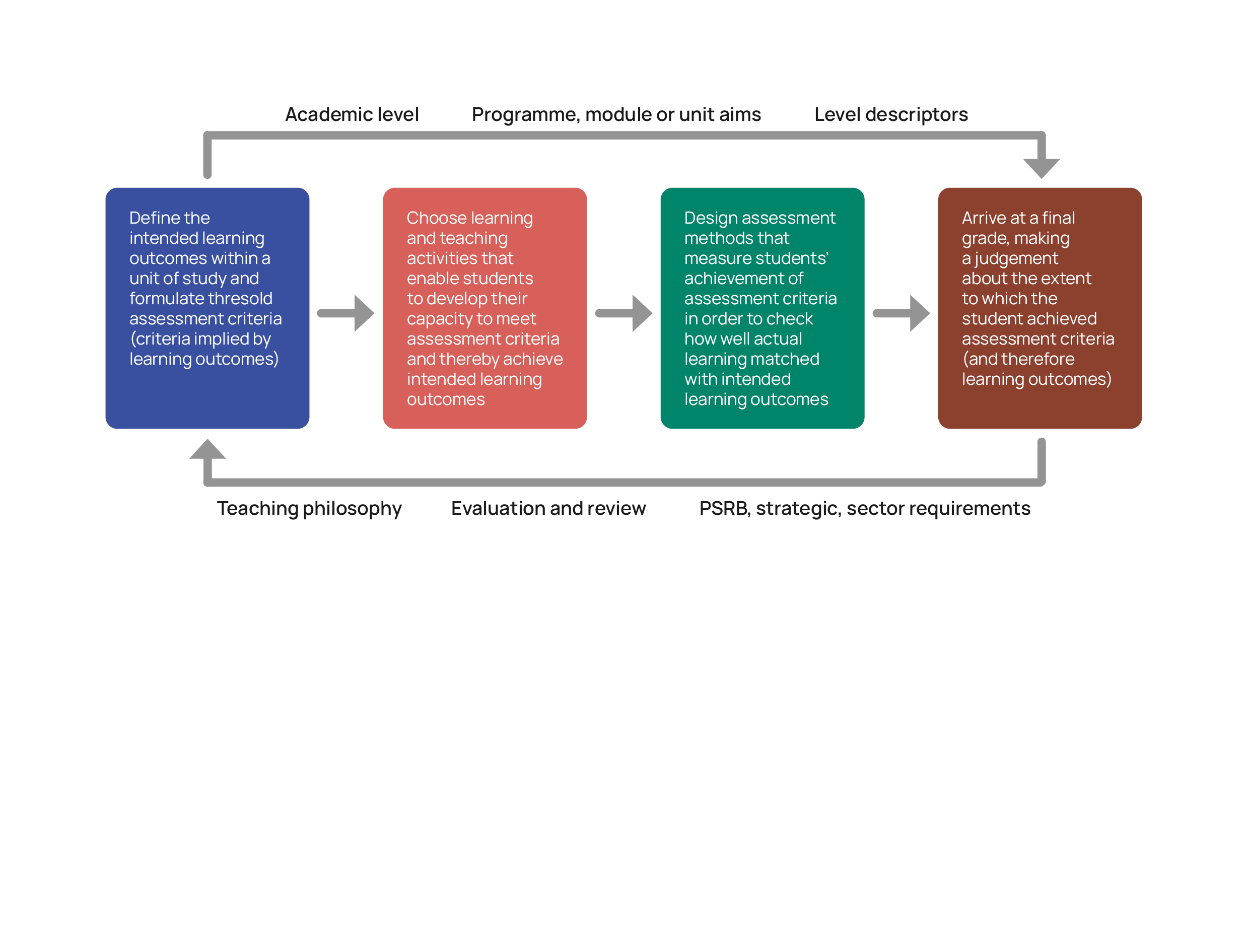
Learning, teaching and assessment are informed by research and scholarship, with clear alignment between learning outcomes, teaching activities and assessment. Students are supported to build their knowledge, skills and understanding progressively, and to demonstrate their achievement through meaningful assessment.

What this means 


Providers ensure that learning, teaching and assessment are informed by current research, scholarship and professional practice. Learning outcomes, teaching activities and assessment work together to help students develop, apply and demonstrate their knowledge, skills and understanding while achieving recognised academic standards.


In practice


Providers typically:

  • design programmes using clear learning outcomes aligned with national frameworks and relevant sector reference points
  • ensure teaching activities and assessments support achievement of programme and module learning outcomes
  • draw on current research, scholarship and professional practice to inform curriculum design and delivery
  • support staff to engage in continuing professional development and scholarly activity
  • use programme-level assessment mapping to create coherent and progressive learning journeys
  • evaluate learning and assessment approaches using evidence from student outcomes, engagement and feedback
  • create inclusive learning environments that help students to develop academic and professional capabilities.

Why this matters


Alignment between research-informed teaching, learning and assessment helps students achieve their potential while maintaining academic standards and supporting continuous improvement by:

  • supporting meaningful learning and development
  • promoting consistency, fairness and academic standards
  • strengthening graduate skills and readiness for work
  • encouraging evidence-informed enhancement and innovation
  • helping students demonstrate achievement and progression.

Resources


Students are given clear information about learning outcomes, assessment and feedback to help them understand expectations, track their progress and use feedback to improve future learning.

What this means


Providers ensure students understand what they are expected to learn, how they will be assessed and how assessment contributes to their academic and professional development. Learning outcomes, assessment requirements and feedback are communicated clearly and consistently, helping students engage confidently with their studies and use feedback and feedforward to support continuous improvement.

In practice 


Providers typically:

  • communicate programme and module learning outcomes in clear, accessible and student-friendly ways
  • make links between learning outcomes, assessment tasks and programme goals explicit
  • explain the purpose, expectations and criteria of assessments at key stages of study
  • use a range of formats and channels to communicate assessment information effectively
  • provide timely, constructive and actionable feedback aligned to learning outcomes and assessment criteria
  • create opportunities for students to engage with, discuss and apply feedback and feedforward
  • monitor and enhance feedback practices through quality assurance and student input.

Why this matters 


Clear information and effective feedback help students understand expectations, take ownership of their learning and make informed improvements throughout their studies by:

  • building assessment literacy and student confidence
  • supporting engagement, progression and achievement
  • encouraging reflection and continuous improvement
  • promoting transparency, consistency and fairness
  • helping students use feedback effectively in future learning.

Resources


Staff who facilitate learning and supervise research are appropriately qualified, experienced and supported to enhance their teaching and supervisory practice.
What this means


Providers ensure that staff involved in teaching, assessment and research supervision have the qualifications, expertise and support needed to fulfil their roles effectively. They promote continuous professional development, scholarly engagement and reflective practice, helping staff maintain and enhance their practice while supporting positive outcomes for students and researchers.


In practice


Providers typically:

  • recruit and deploy staff with appropriate subject, professional and teaching expertise
  • provide induction, mentoring and structured support for new teaching and supervisory staff
  • offer ongoing professional development opportunities throughout staff careers
  • support engagement with scholarship, research and evidence-informed practice
  • use review, observation and feedback processes to enhance teaching and supervision
  • create supportive and inclusive research environments for postgraduate researchers
  • share effective practice through networks, collaboration and learning communities.

Why this matters


Well-supported and appropriately qualified staff are essential for delivering high-quality teaching, effective supervision and positive student outcomes because they:

  • enhance teaching and supervisory quality
  • support student achievement and progression
  • promote continuous improvement and innovation
  • strengthen research culture and learning environments
  • build staff confidence, capability and consistency.

Resources


Students are supported and encouraged to take responsibility for their own learning and play an active role in shaping and improving the learning process.
What this means 

Providers support students to become active, self-directed learners who take increasing responsibility for their own development and progress. This includes creating opportunities for reflection, independent learning and student choice, alongside effective ways for students to provide feedback, work in partnership and help shape their learning experience.


In practice 

Providers typically:

  • design curriculums and assessments that promote independent, reflective and self-directed learning
  • support students to develop skills such as critical thinking, time management and self-evaluation
  • provide accessible academic, pastoral and study support throughout the student journey
  • create inclusive learning environments where students feel safe to contribute, challenge and learn from mistakes
  • establish formal and informal channels for student feedback and engagement
  • involve students in co-creation, consultation and enhancement activities relating to learning and teaching
  • support student representatives to contribute effectively to quality and governance processes.
Why this matters 
    Active student engagement strengthens learning, builds confidence and helps create educational experiences that are relevant, inclusive and responsive to student needs, by:
    • encouraging independence and responsibility
    • supporting deeper engagement and academic success
    • strengthening partnerships between students and staff
    • improving quality through student insight and feedback
    • promoting belonging, confidence and independence.

    Resources


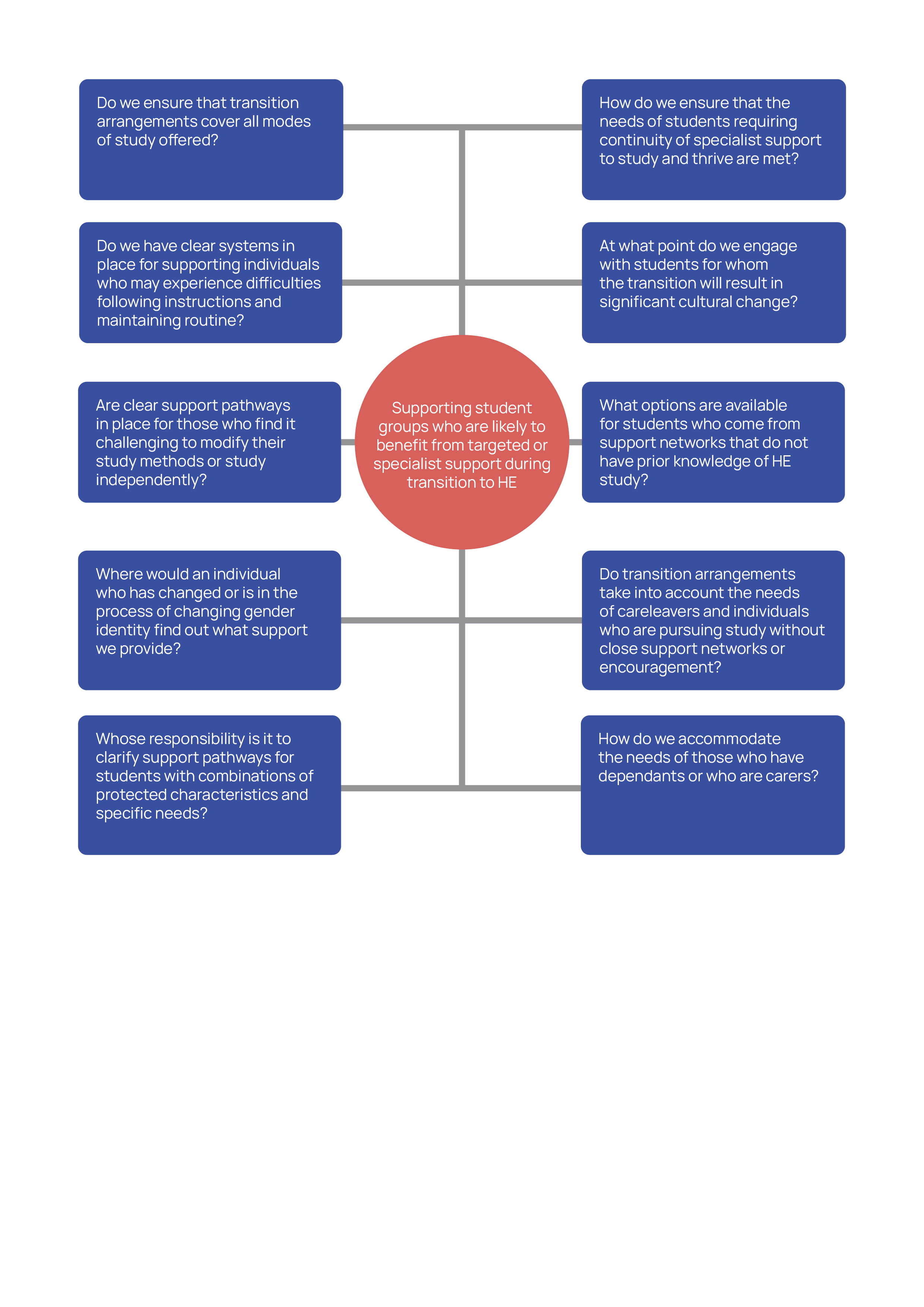
    Students are supported to transition effectively into, through and beyond higher education. Providers help students recognise their development, understand their progress and prepare confidently for further study, employment and future success.
    What this means 


    Providers recognise that students come from diverse backgrounds and experience multiple transition points throughout their studies. They take a coordinated, institution-wide approach to supporting progress, helping students develop resilience, reflect on their achievements, understand expectations and access the guidance, opportunities and support they need to achieve their potential.

    In practice 


    Providers typically:
    • identify key transition points and provide targeted support before, during and after them
    • offer clear and accessible information about progression, study expectations and future opportunities
    • design curriculums that progressively develop knowledge, skills and employability
    • use assessment, feedback and reflection to help students understand and monitor their progress
    • coordinate academic, professional and student support services to deliver consistent guidance
    • provide opportunities for students to record, discuss and demonstrate their development
    • monitor progress patterns and use data to inform targeted support and enhancement.

    Why this matters 


    Effective transition and progression support helps students navigate change, build confidence and achieve positive academic, personal and professional outcomes by:
    • supporting student retention, achievement and success
    • making progression and development more visible
    • helping students prepare for further study and employment
    • reducing barriers for diverse student groups
    • encouraging confidence, resilience and self-reflection.

    Resources


    Assessment is intentionally designed to enable all students to demonstrate achievement of learning outcomes through fair, reliable, accessible, authentic and inclusive approaches.
    What this means 

    Assessment is aligned to learning outcomes and enables all students to demonstrate their knowledge, skills and capabilities equitably. Providers take a proactive approach to fairness, accessibility and academic integrity, using inclusive and authentic assessment methods that uphold standards while recognising the diverse needs, backgrounds and circumstances of learners.


    In practice 


    Providers typically:

    • design assessment tasks that are clearly aligned to programme and module learning outcomes, academic standards and relevant external reference points
    • use a range of assessment methods that allow students to demonstrate achievement through authentic, meaningful and professionally relevant activities
    • build accessibility and inclusion into assessment design from the outset, reducing barriers and minimising the need for individual adjustments
    • offer assessment choices, where feasible and sustainable, while ensuring all options assess the same learning outcomes consistently
    • apply clear marking criteria, moderation processes and external scrutiny to support fairness, reliability and consistency of academic judgement
    • provide formative opportunities and timely feedback that help students build confidence, develop skills and prepare for summative assessment
    • review assessment design regularly using student feedback, outcomes data and external evidence to support enhancement and continuous improvement.

    Why this matters 


    Effective assessment design supports student success, protects academic standards, promotes equity, and provides confidence that achievement is valid, meaningful and comparable by:
    • creating equitable opportunities for students from diverse backgrounds and circumstances
    • strengthening confidence in academic standards and assessment outcomes
    • supporting authentic learning, employability and professional development
    • encouraging academic integrity through well-designed assessment tasks
    • enhancing student engagement, progression and achievement.

    Resources


    Providers establish clear, coherent and responsible approaches to technologies that support learning, teaching and assessment, including emerging technologies such as generative AI.

    What this means


    Providers take a strategic and coordinated approach to the use of technologies across learning, teaching and assessment. Staff and students understand how technologies should be used, the benefits and limitations of different tools, and the expectations surrounding ethical practice, accessibility, academic integrity and digital capability. Approaches are regularly reviewed in response to technological developments and changing educational needs.


    In practice


    Providers typically:

    • develop institution-wide policies and guidance that set clear expectations for the use of technologies and emerging digital tools
    • communicate approaches consistently across provider, faculty, programme and module levels to support shared understanding and implementation
    • provide staff and students with ongoing training and support to develop digital capability, critical awareness and responsible use of technology
    • ensure digital approaches are accessible, inclusive and equitable, taking account of differing levels of access, confidence and experience
    • integrate technologies purposefully into curriculum design, learning activities and assessment to enhance student learning and achievement
    • establish clear guidance on the ethical use of generative AI and other emerging technologies, including acceptable use and misuse
    • regularly evaluate the impact of technologies on student outcomes, staff practice and the overall learning experience.

    Why this matters


    Clear and coherent approaches to technology help students and staff use digital tools confidently, responsibly and effectively while supporting quality, innovation and academic standards, by:

    • promoting consistent and ethical use of technology across the provider
    • supporting student success through enhanced learning and digital capability
    • strengthening accessibility, inclusion and equitable participation
    • helping maintain academic integrity and trust in assessment
    • enabling providers to respond effectively to technological change and emerging opportunities.

    Resources


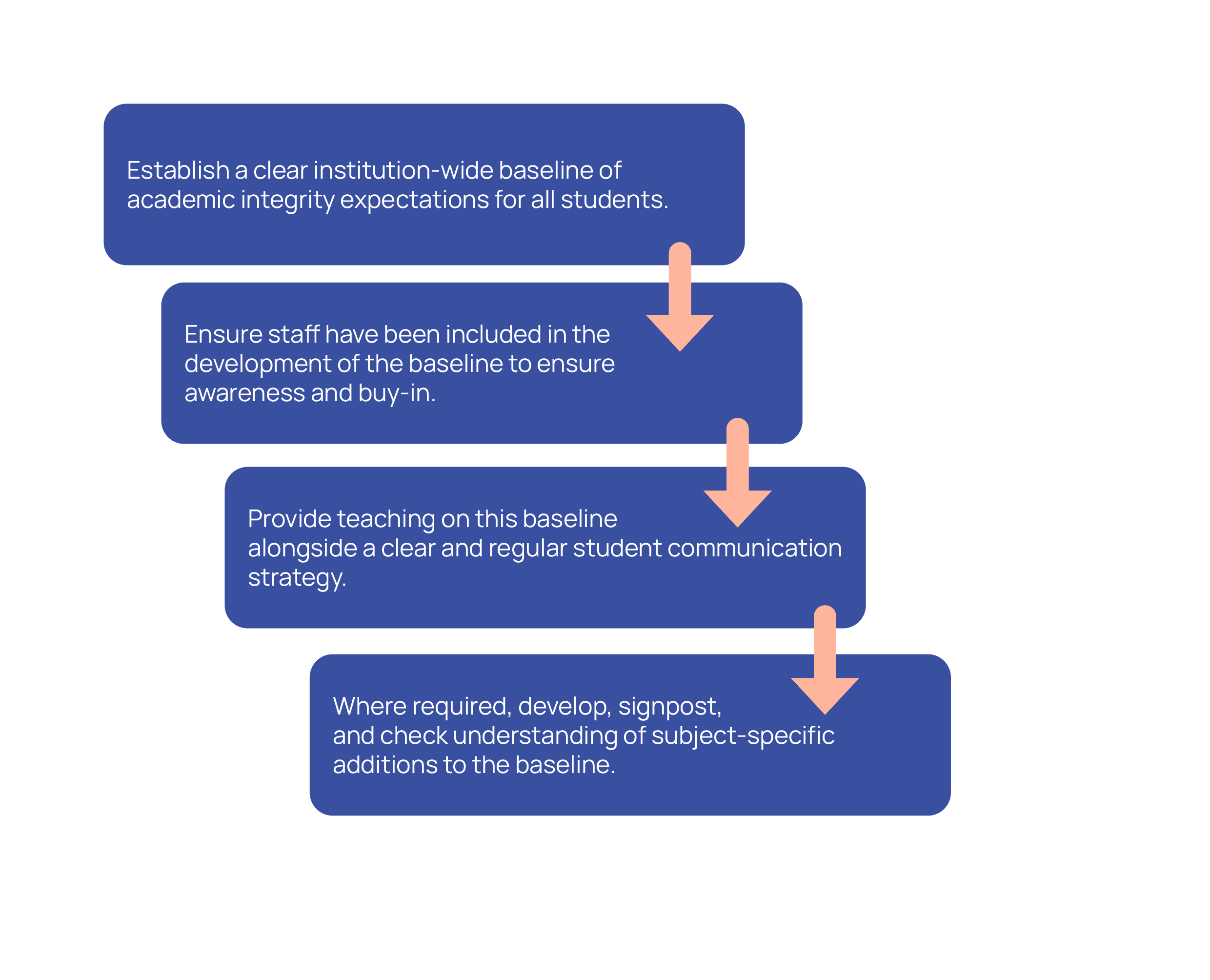
    Providers promote academic integrity through clear expectations, ongoing education and supportive guidance that is integrated within the curriculum. 

    What this means


    Students and staff understand what constitutes good academic practice, how to use emerging technologies responsibly, and how academic integrity applies across different contexts and disciplines throughout study.


    In practice


    Providers typically:

    • provide clear, accessible and regularly updated guidance explaining academic integrity expectations, responsibilities and good academic practice
    • embed academic integrity education throughout programmes rather than limiting it to induction or one-off training
    • tailor advice and support to reflect different student backgrounds, prior educational experiences and disciplinary contexts
    • ensure staff are confident in discussing academic integrity issues and receive ongoing professional development in emerging risks and practices
    • provide clear guidance on the acceptable and unacceptable use of technologies, including generative AI and proofreading tools
    • involve students in developing, reviewing and evaluating academic integrity guidance, resources and support
    • communicate academic misconduct processes transparently, including investigations, support arrangements, outcomes and appeals.

    Why this matters


    A strong culture of academic integrity protects the value of qualifications, supports student success and maintains confidence in higher education awards, by:

    • helping students develop ethical and responsible academic practices
    • maintaining the credibility, reliability and comparability of awards
    • supporting fair and consistent approaches to assessment and misconduct
    • building confidence among employers, professional bodies and wider stakeholders
    • enabling providers to respond effectively to technological developments and emerging integrity challenges.

    Resources


    For me, Principle 11 Teaching, learning and assessment is particularly valuable as we respond to the opportunities and challenges presented by AI in higher education. Rather than providing prescriptive answers, it prompts consideration of factors such as the student experience, capability and confidence, accessibility and inclusion, academic integrity and quality assurance before change is implemented. It also provides a framework for balancing innovation with academic standards, helping to ensure technology is used purposefully to enhance learning and develop the digital skills students need beyond university


    Ryan Girdley, Director of Teaching and Learning and QA Lead, Lincoln International Business School, University of Lincoln