QAA has updated its cookie policy. We use cookies to ensure that we give you the best experience on this website. This includes third-party cookies that may track your use of this website. To confirm you are happy with our use of cookies, please click Accept to continue. You can change your settings at any time.
Principle 9 - Recruiting, selecting and admitting students
This Principle sets out how providers should run fair, evidence-based admissions processes that put students first. It highlights the importance of matching applicants to the right programme, managing expectations, and providing support from first contact through to enrolment. By making admissions decisions clear and transparent and seeking feedback from applicants, providers can continue to improve the admissions experience.
This approach helps ensure students are admitted through fair, inclusive and transparent processes, supported by accurate information and well-trained staff. Providers use robust policies, clear communication and recognition of prior learning to help applicants make informed choices. By meeting regulatory requirements and keeping programme information up to date, they can widen access to higher education and help students understand their options and choose the course that best meets their needs.
UK Quality Code for Higher Education: Advice and Guidance - Principle 9
Publication date: 22 Sep 2026
Author:
QAA
Format:
PDF
Size:
4.15 MB
How this works in practice
Providers typically take a fair, transparent and evidence-based approach to admissions, matching applicants to suitable courses and supporting them throughout the admissions process. This includes the following practices.
Admissions decisions use evidence-based criteria alongside prior attainment to identify students with the potential to succeed.
Applicants receive clear, realistic information from first contact to enrolment so their expectations align with course demands.
Fairness, inclusivity and transparency are embedded across recruitment, selection and admissions processes, including complaints and appeals.
Feedback is gathered from applicants, including those who decline offers, to improve admissions practice.
Providers work with PSRBs, regulators, employers and other institutions to align intake with local and national workforce needs and inform applicant guidance.
Download presentation-friendly tables and diagrams
A clear, fair and accessible approach to admissions is employed, with transparent criteria that explain how applications are assessed and what applicants need to do.
What this means
This Key Practice encourages providers to set out clear, fair and accessible admissions criteria. Providers explain how applications are assessed, outline entry requirements and applicant responsibilities, and provide information on recognition of prior learning, timelines, assessments, communications, feedback and appeals. This helps applicants understand the process and make informed decisions.
In practice
Providers typically:
provide applicants with clear and accessible admissions information
apply evidence-based selection processes consistently, using methods that assess potential to succeed and minimise bias
use programme-specific criteria only where necessary, for example to meet PSRB requirements, and focus on what is essential for success
consider applicants' individual circumstances fairly, using contextual data transparently to support equitable decision-making
remove unnecessary barriers and review practices regularly to ensure admissions remain fair, flexible and responsive to change.
Why this matters
A fair, transparent and evidence-based approach to admissions allows providers to select students with the potential to succeed while maintaining trust, compliance and widening access. This:
supports consistent, defensible decision-making that meets regulatory and PSRB expectations
ensures applicants understand requirements, processes and timelines, improving confidence and reducing complaints
helps providers admit a diverse, capable cohort by considering context, removing barriers and avoiding biased or counterproductive practices.
Clear, accurate information that supports prospective students and their advisers in making informed decisions.
What this means
Prospective students should feel confident that recruitment information is accurate, reliable and clearly explained, helping them make informed choices about higher education. They should also be guided to further sources that support their decision‑making before making an application.
In practice
Providers typically:
provide accurate and contextualised recruitment information to prospective students
equip staff in admissions, recruitment and widening participation teams to clearly communicate admissions requirements to prospective students
ensure transparency by publishing clear admissions criteria and any assessment methods that are used to select students
publish essential pre‑enrolment and financial information that gives prospective students timely and accessible information about fees, additional course costs, learning environments, and any available financial support
manage course changes responsibly and legally so that if a programme changes after recruitment materials are published, applicants are notified promptly with an explanation of the implications and clear options.
Why this matters
This guidance helps providers give prospective students clear, accurate and legally compliant information so they can make informed choices, while building trust and supporting compliance. This:
ensures students receive reliable, contextualised information that reflects the real course experience, supporting fair decision-making
helps providers meet consumer protection and regulatory obligations, reducing the risk of complaints or legal challenge
promotes consistent, accurate communication from staff and partners, safeguarding institutional reputation and widening access goals.
Training and resources for the delivery of recruitment, selection, admissions and widening access.
What this means
Admissions, selection, recruitment and widening access activities all need the right resources and skilled staff to support fair, transparent decision-making. This helps maintain trust in the recruitment process and reduce barriers for applicants. Where automation is used, expert oversight helps to make sure that efficiency does not compromise the quality or fairness of admissions decisions.
In practice
Providers should allocate enough trained staff and resources to keep admissions fair, transparent and free from unnecessary barriers, especially where processes are complex.
Automation should be used to improve efficiency and must be designed and implemented with expert oversight to protect fairness, accuracy and relevance.
All staff involved in recruitment, admissions and widening access need clear roles, foundational training and reliable resources so they can give accurate guidance and escalate issues appropriately.
Ongoing professional development - including anti-bias training, safeguarding, fraud prevention, qualification frameworks and digital tools - is essential to maintain high-quality, compliant admissions practice.
External partners and student workers should receive robust training and monitoring to ensure they uphold institutional standards and provide accurate, timely advice to prospective students.
Why this matters
A well-resourced and well-trained admissions workforce is essential to ensuring fair, transparent and compliant admissions. It helps providers to:
maintain applicant trust through fair and transparent processes
reduce bias, errors and barriers through effective systems and staff training
meet regulatory requirements while delivering a better applicant experience.
Clear, consistent communication enables all parties to exercise informed choice.
What this means
Providers are reminded to keep admissions policies up to date, clear and accessible so applicants receive accurate and fair information. This helps protect fairness, supports informed decision-making and ensures providers meet regulatory expectations. It also encourages providers to maintain and publish accurate information about programmes, entry requirements, fees and the overall admissions journey.
In practice
Providers keep admissions policies, programme information and entry requirements accurate, centralised and regularly updated so applicants always receive reliable, up-to-date information.
Webpages, promotional materials and events present a fair and clear picture of programmes and the student experience, meeting consumer protection and regulatory requirements.
Staff involved in admissions communicate requirements clearly, explain how decisions are made and signpost applicants to authoritative sources of information.
Providers clearly explain how applicant data is used, including in contextual admissions and AI tools, to support transparency and trust.
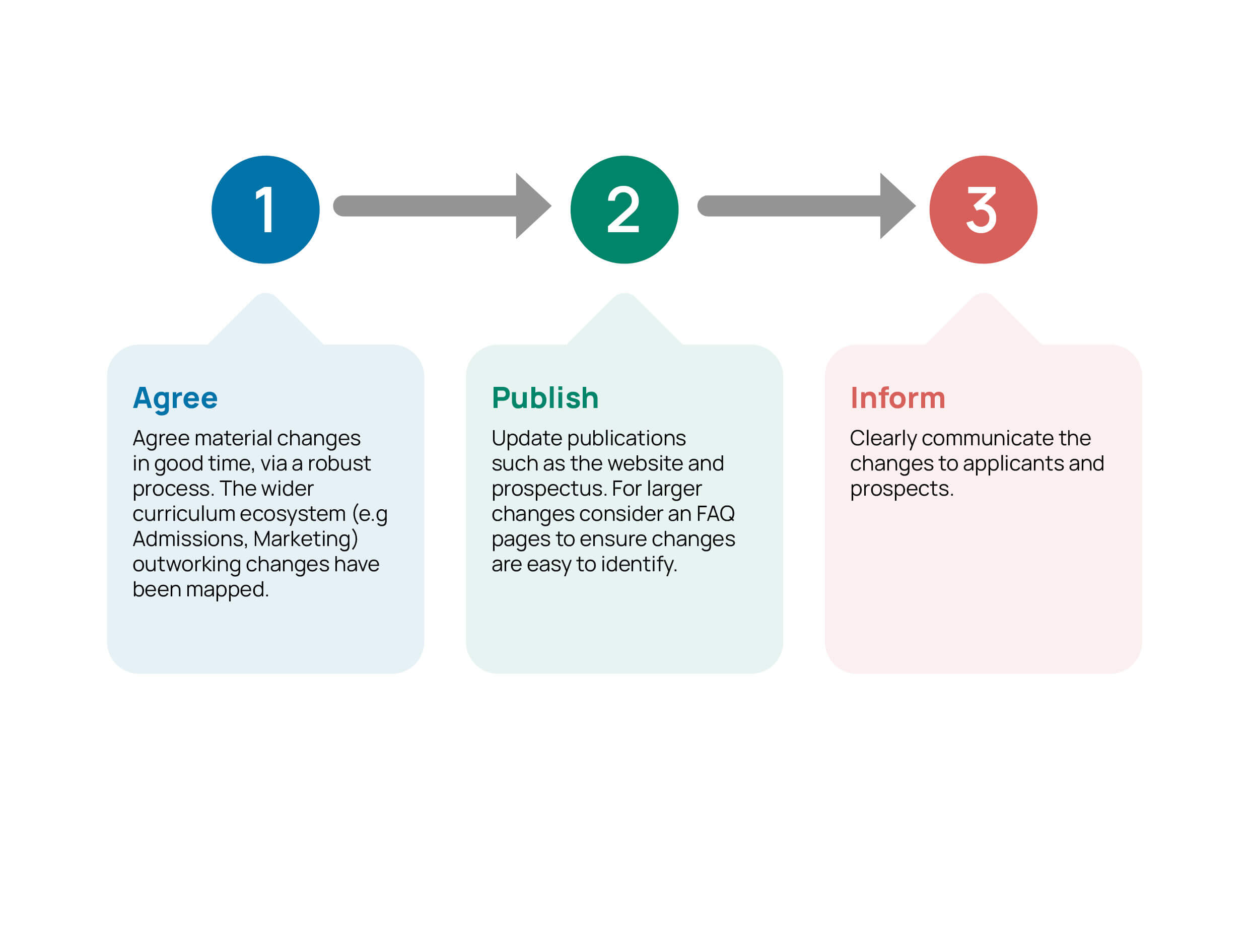
Any additional selection measures or programme changes are communicated early and consistently, with clear responsibility for updating information across all platforms and partner organisations.
Why this matters
Providers should maintain clear, accurate and up-to-date information because it supports fair admissions, helps applicants make informed decisions and ensures compliance with consumer protection and regulatory requirements. Strong information governance helps protect institutional reputation and reduces the risk of complaints or legal challenges.
Applicants receive reliable and consistent information about programmes, entry requirements and the student experience.
Providers meet legal and regulatory requirements, including consumer protection obligations.
Trust is built through clear information about how decisions are made and how applicant data is used.
Clear and timely communication of programme changes helps reduce reputational and non-compliance.
QAA’s UK Quality Code remains our gold standard for assuring academic practice, but higher education does not stand still. The new principles on recruiting, selecting and admitting students will be invaluable in ensuring we remain up-to-date and can continue to enhance our academic quality. No other source is as comprehensive in the advice and shared good practice to not only understand what our approach should be, but also how to achieve it.
Dan Shaffer, Director of Academic Services, Royal Agricultural University