UK Quality Code for Higher Education: Advice and Guidance - Principle 7
Publication date: 22 Sep 2026
Publication date: 22 Sep 2026
What this means
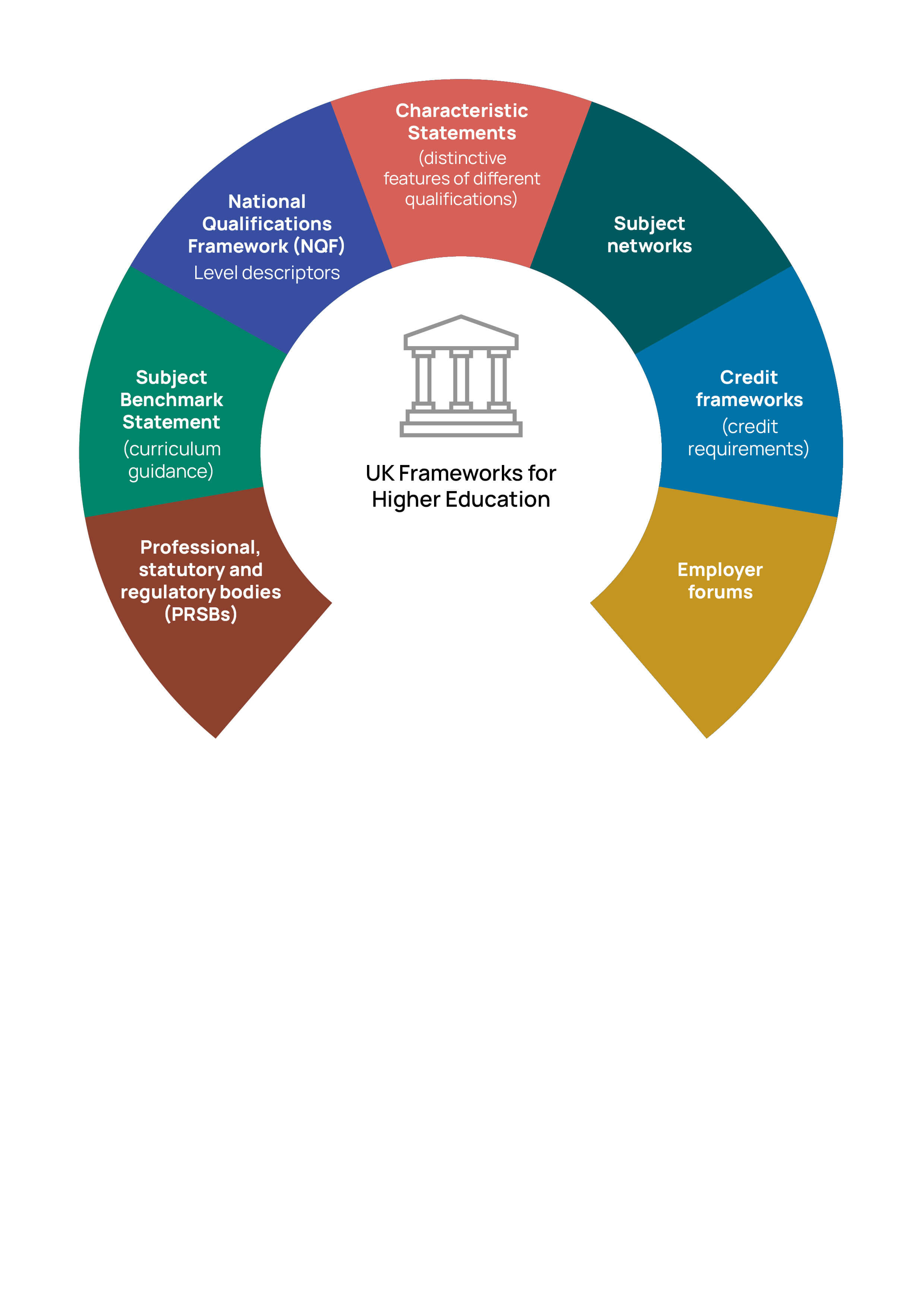
Providers use national qualifications and credit frameworks, subject benchmark statements and, where relevant, PSRB or apprenticeship requirements to design and approve programmes at the appropriate academic level. They ensure learning outcomes, curriculum content and assessment are aligned, while using governance and oversight arrangements to maintain academic standards and comparability across the UK.
In practice
Providers typically:
Why this matters
Making sure programmes and modules meet academic standards consistent with relevant national qualifications and credit frameworks builds confidence in qualifications among key stakeholders, and keeps programmes current and relevant. It also:
Resources
What this means
This Key Practice focuses on maintaining a definitive, accurate and secure set of programme and module documents. These documents act as the authoritative source of information about provision, support consistency and transparency, and ensure that programme changes are properly recorded, communicated, version-controlled and aligned across related sources such as websites and prospectuses.
In practice
Providers typically
Why this matters
Clear, accurate and up-to-date programme documentation helps to make sure that everyone works from the same information, supporting consistency, transparency and confidence in academic provision. It also provides an authoritative record of approved programmes and changes over time.
You might evidence this through:
Resources
What this means
This Key Practice focuses on ensuring that students, staff and other stakeholders clearly understand the award being studied for, how achievement will be assessed and recorded, and how outcomes will be certificated. It supports accurate, consistent and transparent recording of student achievement, helping to maintain confidence in qualifications, transcripts, certificates and academic records.
In practice
Providers typically:
Why this matters
Clear and accurate records help protect academic standards, support student confidence and enable graduates to demonstrate their achievements throughout their careers. This also:
Resources
What this means
Providers publish clear and accessible information about how programmes and modules are designed, developed, approved, modified and, where relevant, closed. Information is tailored to different audiences, enabling staff, students, partners and external stakeholders to understand responsibilities, processes, decision-making and the implications of change.
In practice
Providers typically:
Accessible and transparent information supports consistent decision-making, strengthens confidence in academic processes and enables effective engagement across the provider community. This:
Resources
What this means
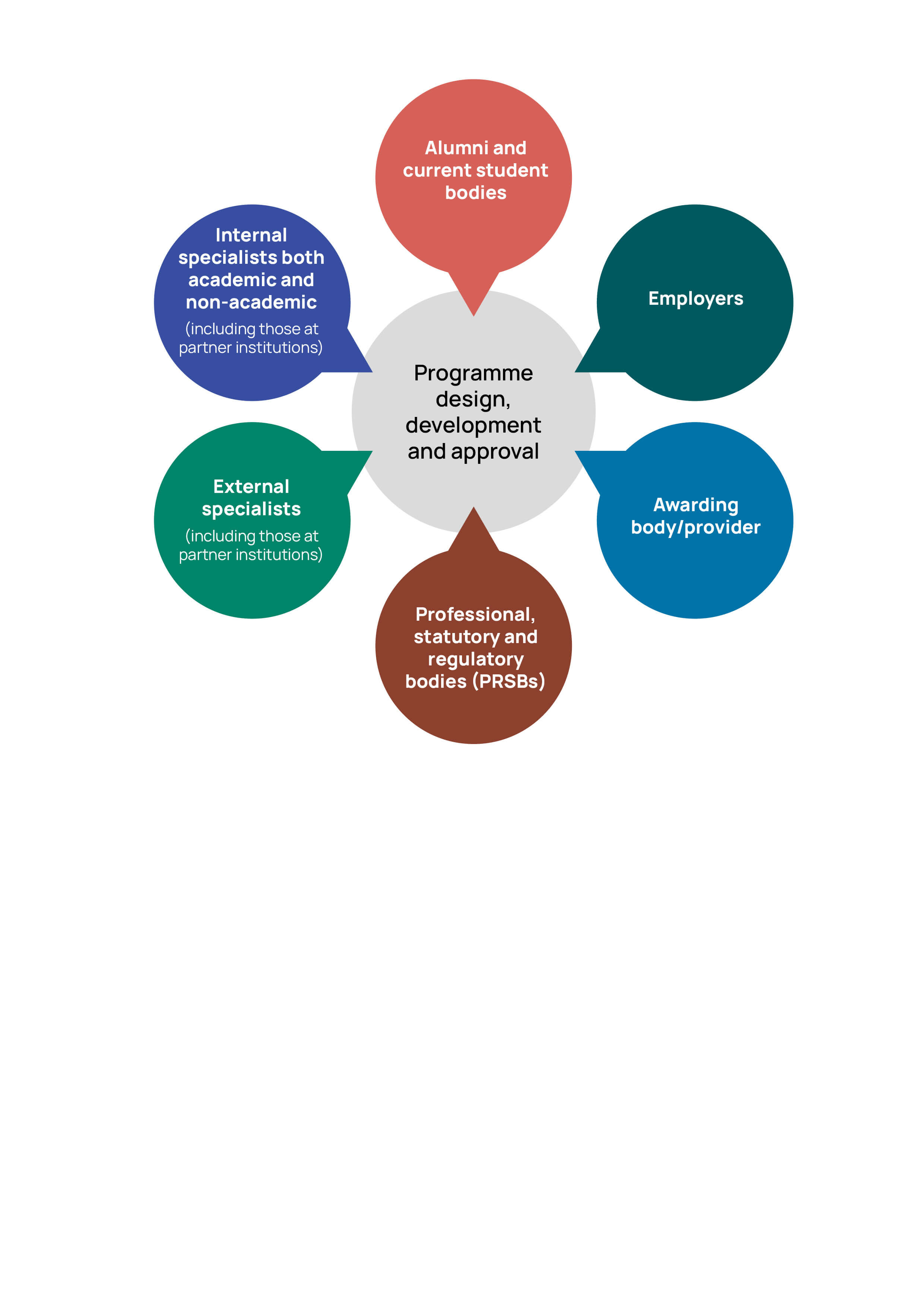
Providers engage with a range of external stakeholders to inform curriculum development and evaluation. These may include employers, professional bodies, alumni, academic peers, service users and external examiners. External engagement helps ensure programmes remain relevant to students’ futures, aligned with academic and professional expectations, and responsive to changing societal and sector needs.
In practice
Providers typically:
Why this matters
External engagement helps programmes remain current, credible and responsive to the needs of students, professions and wider society, by:
Resources
What this means
Providers consider equality, diversity and inclusion (EDI) and environmental sustainability throughout the design, development, approval and modification of programmes and modules. This includes creating inclusive curriculums and assessment approaches, addressing barriers to participation and success, and embedding sustainability in ways that are meaningful and relevant to the subject and student experience.
In practice
Providers typically:
Why this matters
Embedding EDI and sustainability helps create accessible, relevant and future-focused learning experiences for all students, by:
Resources
What this means
Providers create opportunities for students to contribute in ways that are purposeful, inclusive and influential. Student involvement extends beyond consultation and feedback, enabling students to help shape curriculums, learning experiences and enhancement activities through partnership, co-creation and shared decision-making.
In practice
Providers typically:
Why this matters
Meaningful student involvement strengthens the relevance, quality and effectiveness of educational provision while fostering a culture of partnership, by:
Resources
At a time of significant change in higher education, the Quality Code remains a trusted source of guidance and support. Through the new Advice and Guidance Principle 7, I am confident that I have access to information that is current, comprehensive and presented in an accessible manner. Particularly useful are the scenarios, which help me to see how the guidance can apply to a variety of contexts.