QAA has updated its cookie policy. We use cookies to ensure that we give you the best experience on this website. This includes third-party cookies that may track your use of this website. To confirm you are happy with our use of cookies, please click Accept to continue. You can change your settings at any time.
Principle 4 - Using data to inform and evaluate quality
This guidance enables reflection on the effective use of data to inform, evaluate and enhance quality, and maintain standards. It explores how qualitative and quantitative data can be collected, managed, analysed and used to support evidence-informed decision-making, improve the student experience, and evaluate quality assurance and enhancement activities. It also highlights the importance of ethical practice, effective data governance, staff capability and ensuring data enables providers to understand the needs and diversity of their learning community.
This guidance supports providers in taking a strategic and evidence-informed approach to the use of data. Reflective questions and scenarios explore how qualitative and quantitative data can be collected, managed, analysed and used to support quality assurance, enhancement and the maintenance of standards. It highlights the importance of effective governance, ethical practice and staff capability in ensuring that data is used to evaluate impact and drive improvements to teaching, learning and the quality of the student experience.
UK Quality Code for Higher Education: Advice and Guidance - Principle 4
Publication date: 22 Sep 2026
Author:
QAA
Format:
PDF
Size:
8.49 MB
How this works in practice
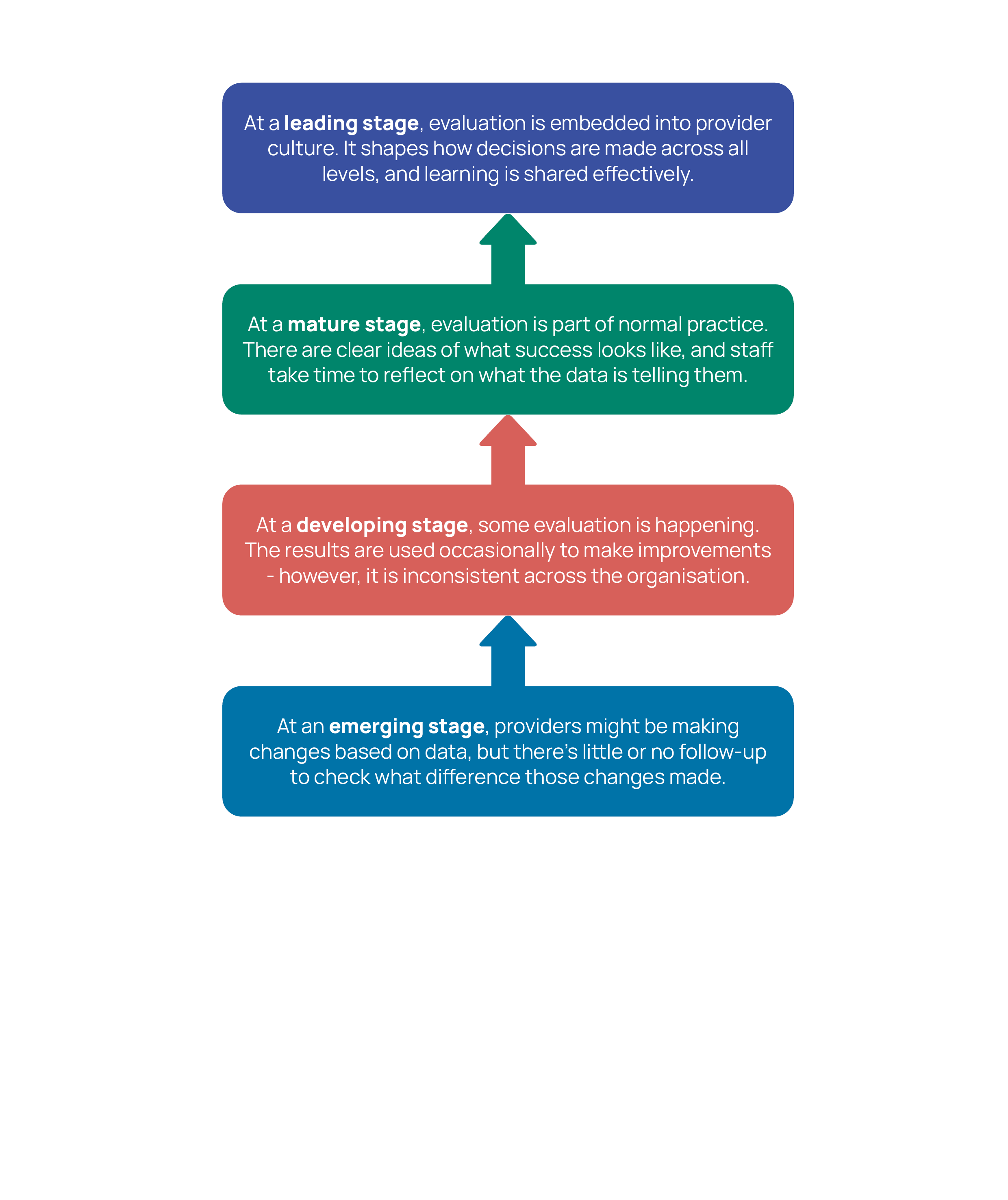
Providers are encouraged to plan, collect and use data purposefully, ensuring it supports meaningful evaluation, informed decision-making and enhancement of the student learning experience. This includes doing the following.
Considering evaluation from the outset of new initiatives, projects or interventions, rather than as a discrete activity.
Embedding data-informed monitoring and evaluation within regular review, planning and enhancement processes to support continuous improvement.
Defining what successful outcomes look like before implementing change, enabling meaningful assessment of impact.
Ensuring that the data collected is relevant, sufficient and fit for purpose, providing the evidence needed to answer key questions and inform decision-making.
Using data in ways that reflect institutional context, recognising that effective approaches will vary according to provider size, mission and operating environment.
Download presentation-friendly tables and diagrams
A consistent, coherent and evidence-informed strategic approach to the collection, storage and management of data is employed across the provider. The provider makes explicit the type and level of data utilised (such as departmental, programme, module level) and the policies and processes that underpin its use in the maintenance of academic standards and the assurance and enhancement of quality.
What this means
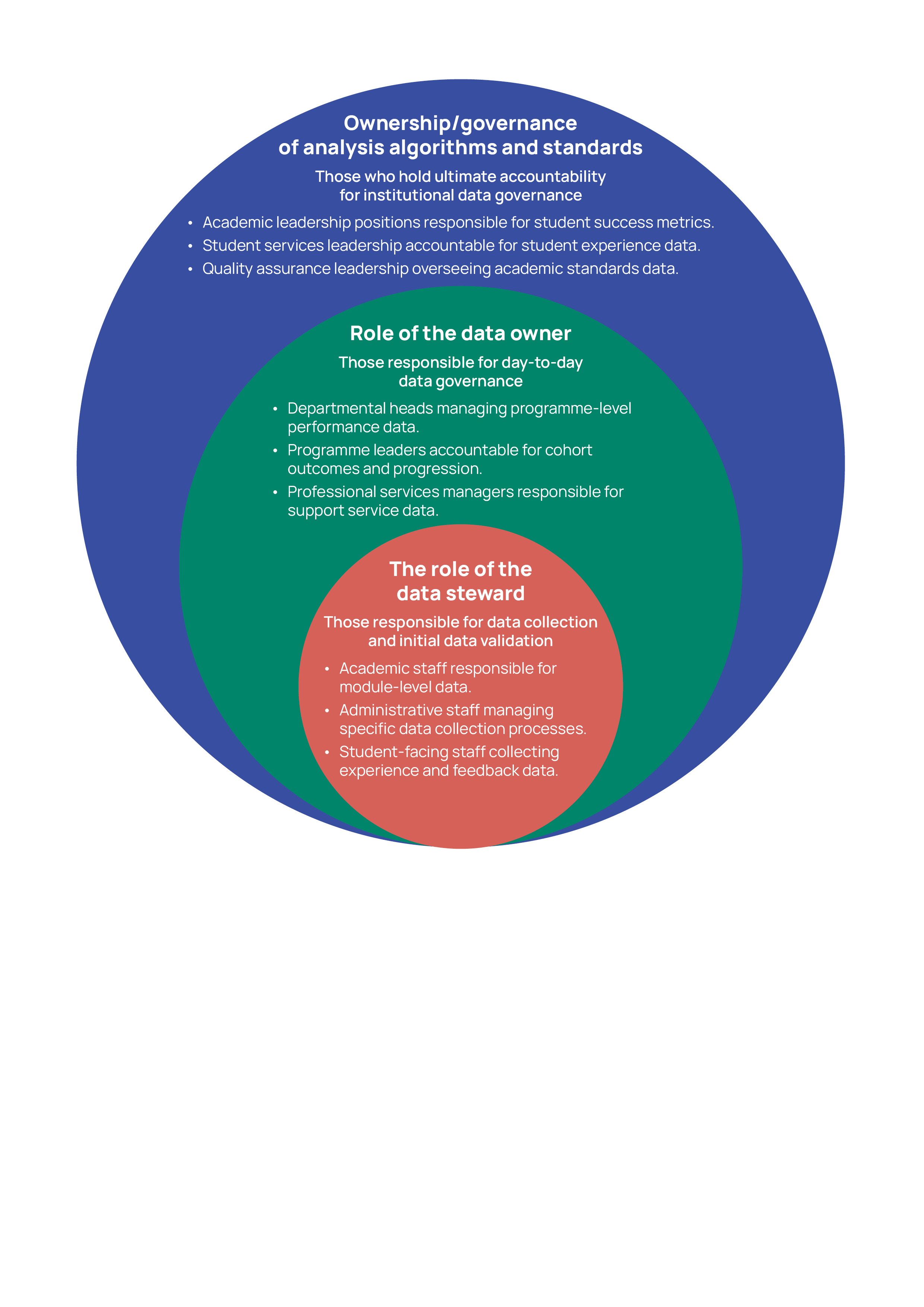
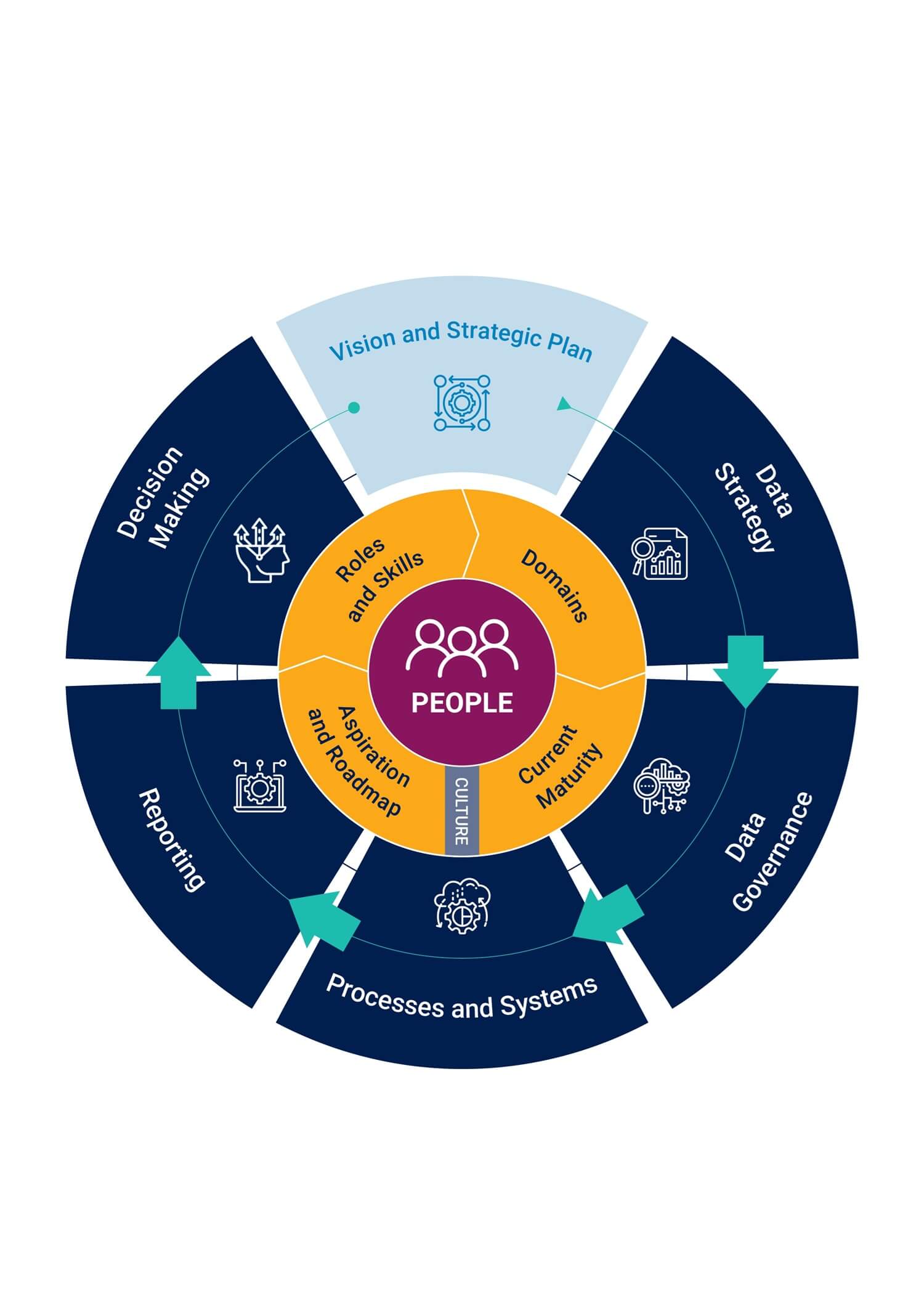
A strategic approach to data management is fundamental to informing a provider-wide understanding of quality and supporting continuous enhancement. This is embedded as a shared strategic priority, with clear leadership, governance and accountability structures to ensure data is effectively owned, managed and used across the organisation.
In practice
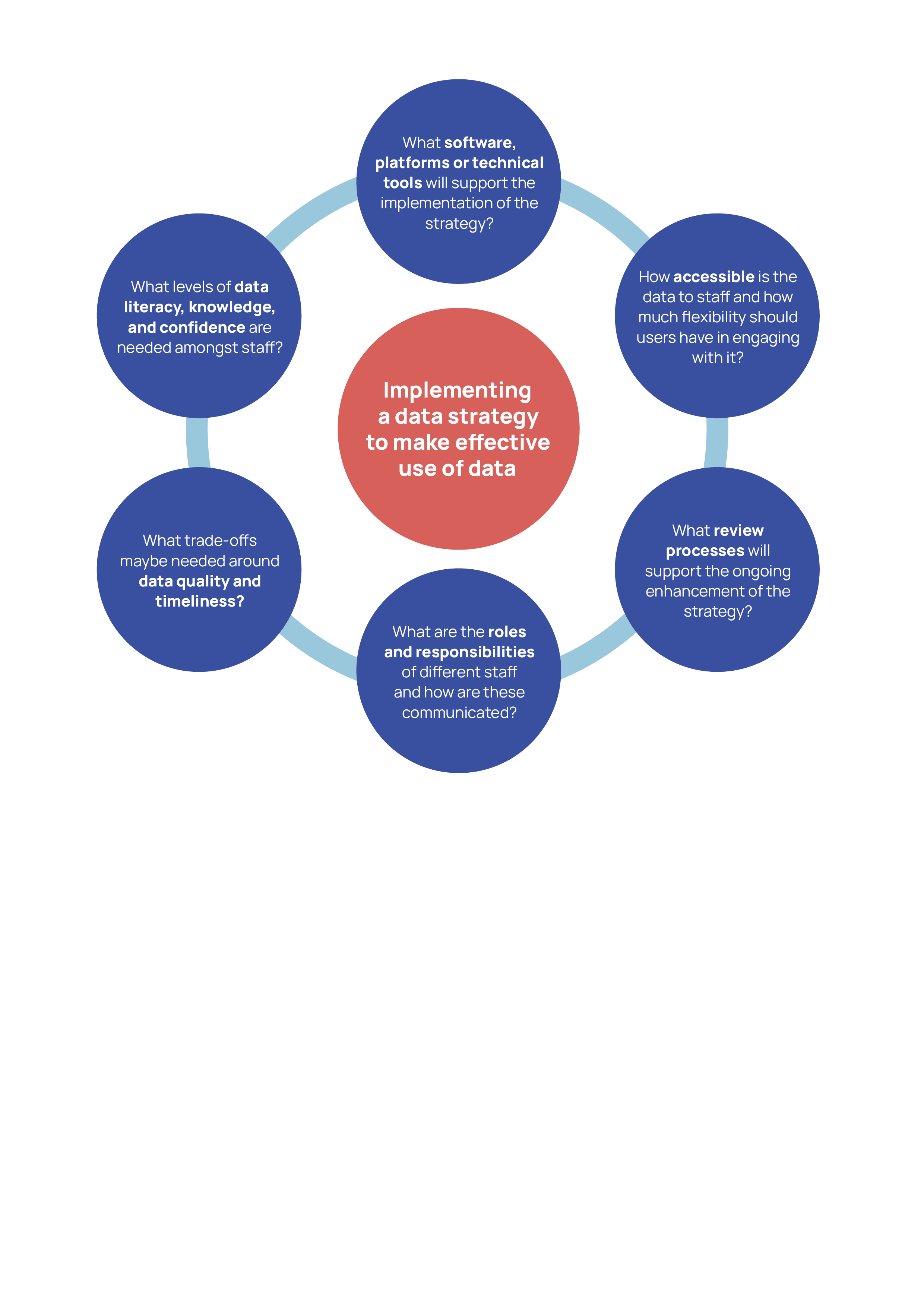
Effective implementation of a data strategy requires ongoing commitment and regular review. Implementation will involve
making data accessible
ensuring staff understand how to access and engage with it
defining and embedding clear responsibilities to support confident and consistent use across the institution
regular review to help keep the strategy effective, aligned with institutional priorities and responsive to evolving needs.
Why this matters
This Key Practice encourages a strategic, coherent and evidence-informed approach to data, supporting effective governance, informed decision-making, quality assurance, enhancement and the maintenance of academic standards.
promote a strategic approach to data by embedding clear governance, leadership, accountability and institutional oversight of data use
support effective decision-making by encouraging providers to use trusted qualitative and quantitative data to identify risks, evaluate impact and prioritise enhancement activities
improve consistency and confidence by establishing common definitions, data standards, ownership and a single source of trusted institutional data
encourage continuous improvement by aligning data strategies with monitoring, evaluation and enhancement processes and regularly reviewing their effectiveness.
Staff and students are aware of the types of data gathered and how it is stored and used in the management of quality and standards.
What this means
Key Practice b promotes transparency and trust by ensuring staff and students understand what data is collected, why it is collected, how it is stored and protected, and how it informs decisions about quality and standards. It encourages confident, informed engagement with data while supporting ethical, secure and evidence-informed quality enhancement.
In practice
Providers typically:
clearly communicate data practices so staff and students understand what data is collected, why it is collected, how it is stored, and how it is used to assure and enhance quality
build trust and confidence by promoting open dialogue, explaining safeguards, and encouraging informed engagement with data rather than passive awareness
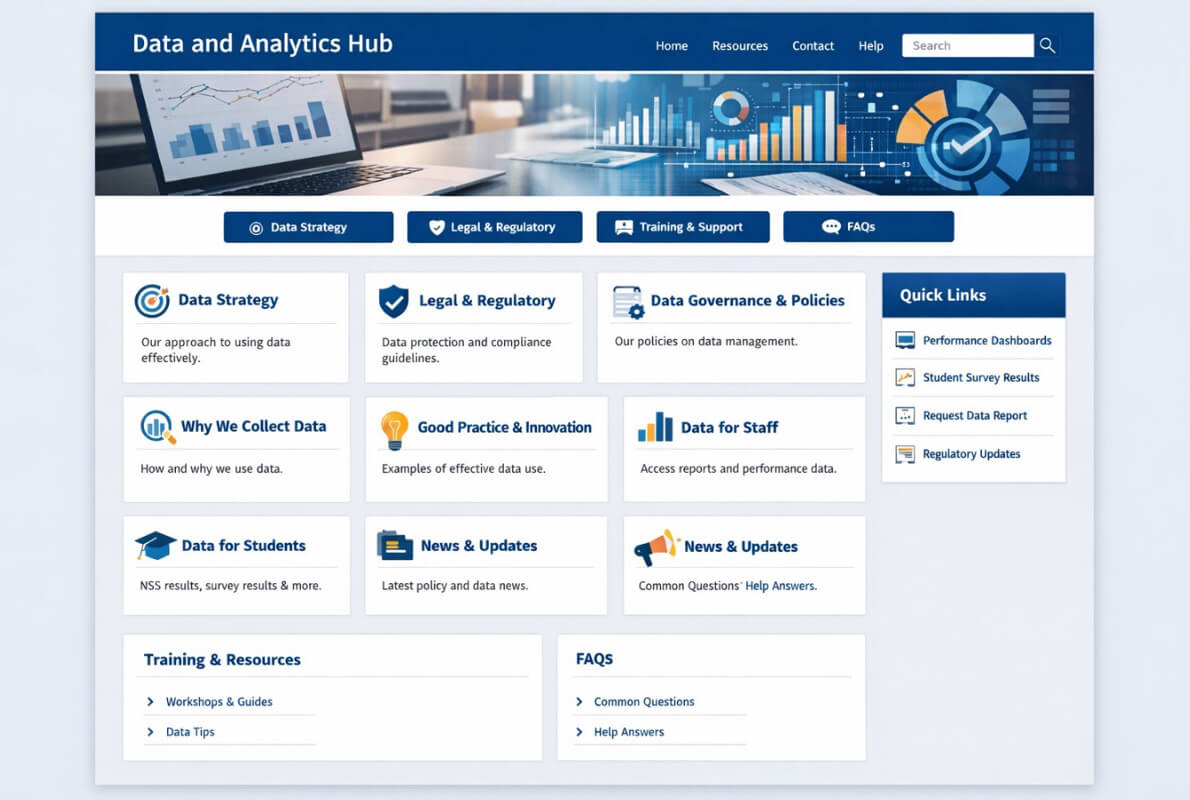
provide accessible guidance and resources, such as a central data hub containing policies, legal requirements, training, FAQs and examples of good practice
develop role-appropriate understanding by ensuring staff, leaders, students and student representatives receive information and support relevant to their responsibilities and use of data
review and improve awareness regularly by evaluating how well communication, training and engagement mechanisms develop understanding, confidence and trust in the use of data for quality assurance and enhancement.
Why this matters
This emphasises transparent and responsible data practices, encourages trust and informed engagement with data, protects individuals, and supports evidence-informed approaches to quality assurance and enhancement. It also:
builds transparency and trust by helping staff and students understand what data is collected, why it is collected, how it is used, and the safeguards in place to protect it
supports meaningful engagement by enabling staff, students and student representatives to interpret, question and use data confidently in quality assurance and enhancement activities
encourages responsible data practices by promoting awareness of institutional policies, legal requirements and appropriate approaches to collecting, storing and using data
strengthens confidence in quality processes by ensuring that communication, guidance and training help create a shared understanding of how data informs institutional improvement and the maintenance of academic standards.
When designing and operating monitoring and evaluation arrangements, staff and students adhere to ethical and data protection requirements relating to gathering and submitting data for national data sets, regulatory purposes, and internal monitoring and evaluation.
What this means
This Key Practice helps providers to review how all quality and standards monitoring and evaluation activities comply with legal, ethical and regulatory requirements for data use. Providers are expected to protect personal data, promote transparency, embed appropriate governance, and use data responsibly to support quality assurance, enhancement and the maintenance of academic standards.
In practice
Providers typically:
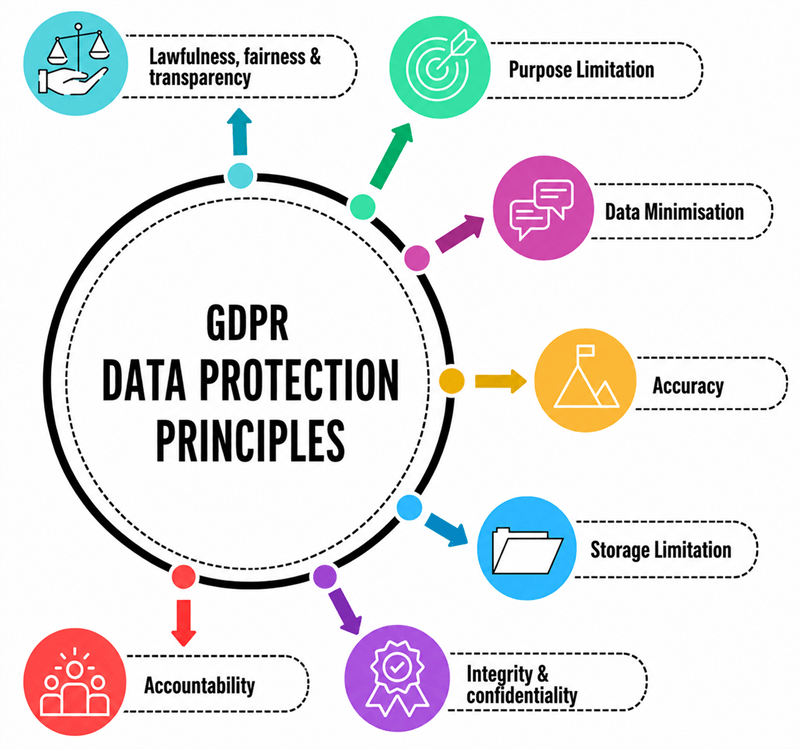
embed legal and ethical data practices by ensuring monitoring and evaluation activities comply with UK GDPR, the Data Protection Act (2018) and other relevant regulatory requirements
protect personal data throughout its lifecycle by collecting only necessary data, using anonymisation or aggregation where appropriate, and ensuring secure storage, transfer and disposal
promote transparency and trust by clearly explaining to staff and students what data is collected and why, how it will be used, and obtaining informed consent where required
develop robust governance and capability by defining responsibilities, providing regular training, establishing oversight, and ensuring accurate, verified data is submitted for regulatory and internal purposes
ensure ethical and inclusive use of data by involving staff and students in data practices, considering equality and inclusion, and applying appropriate oversight to AI, analytics and third-party data-sharing.
Why this matters
This Key Practice emphasises the importance of protecting individual data, embedding legal and ethical data practices, and strengthening confidence in the responsible use of data to inform quality assurance, enhancement and regulatory reporting. It:
promotes lawful and ethical data use by reinforcing the importance of complying with data protection legislation and ethical principles when collecting, using and sharing data
protects individuals and builds confidence by encouraging transparent, proportionate and secure data practices that safeguard personal information throughout its lifecycle
supports effective governance and accountability by embedding clear roles, responsibilities and oversight for data management, regulatory reporting and monitoring activities
encourages responsible use of data by promoting inclusive, evidence-informed monitoring and evaluation practices, while ensuring appropriate oversight of partnerships, third-party services and emerging technologies such as generative AI.
Staff who are required to collect, manipulate and analyse data for reporting, quality assurance and enhancement purposes receive training that enables them to undertake these activities effectively, ethically and securely. Policies cover any third-party use of data, including applications utilising generative artificial intelligence.
What this means
This Key Practice helps providers to ensure that staff responsible for collecting, analysing and reporting data have the knowledge, skills and confidence to do so effectively, ethically and securely. It also requires clear policies governing the use of third-party applications, including generative AI, to safeguard institutional data
In practice
Providers typically:
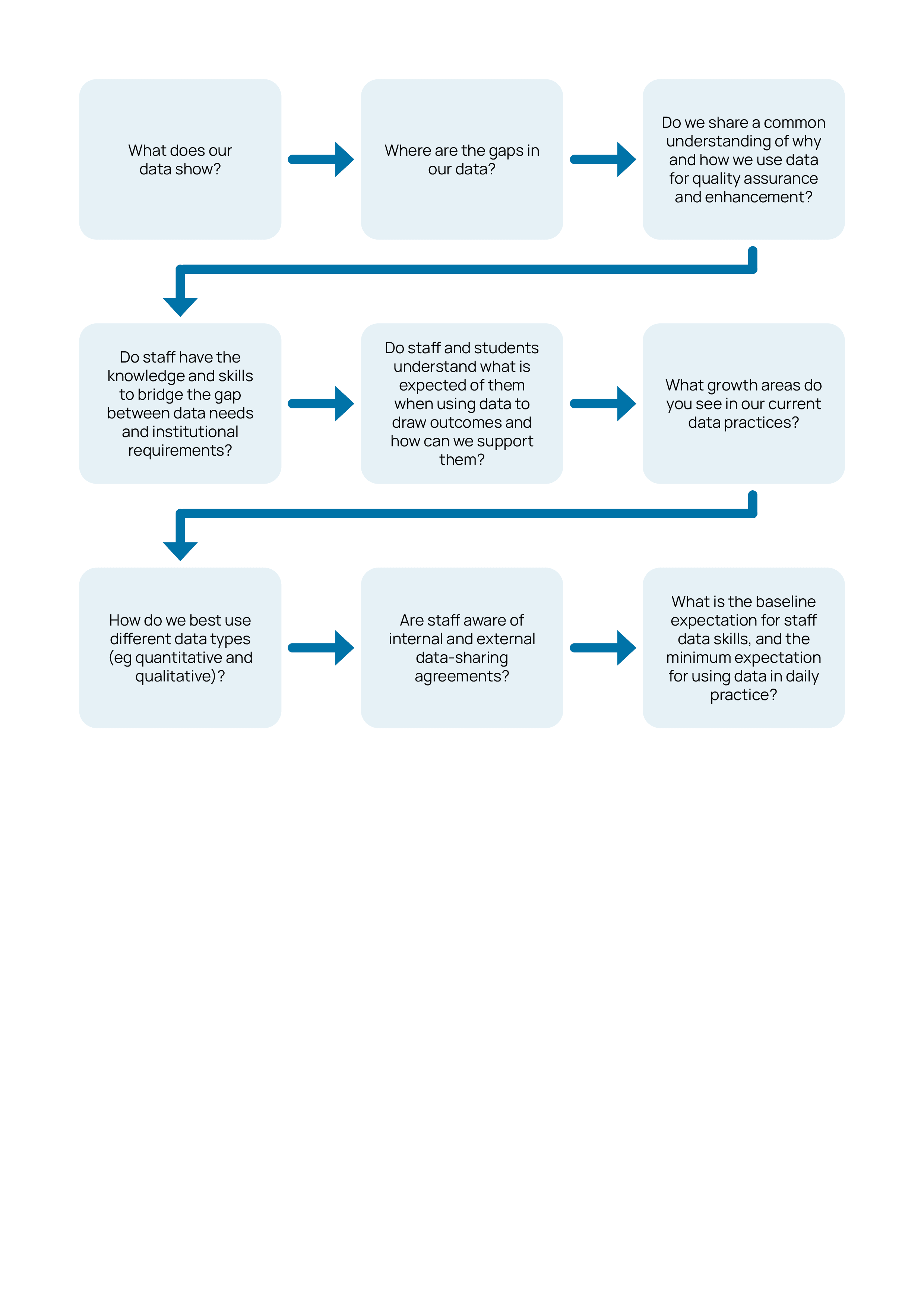
assess staff capability and data literacy to identify knowledge and skills gaps, then provide training appropriate to different roles and responsibilities
embed effective, ethical and secure data practices by ensuring staff understand institutional policies, legal and regulatory requirements, governance arrangements, and evidence-informed approaches to data use
develop clear policies for third-party applications and generative AI, including how institutional data may be used, stored, protected and governed when using external tools
build a data-literate culture by supporting ongoing development, using clear terminology, evaluating the impact of training, and ensuring staff can confidently apply learning in quality assurance and enhancement activities.
Why this matters
This Key Practice highlights the importance of developing staff capability, establishing consistent and ethical data practices, safeguarding institutional information, and creating the conditions for the effective use of data in quality assurance, enhancement and informed decision-making.
develops staff capability by encouraging providers to assess data literacy and provide role-specific training that supports effective, ethical and secure data handling
promotes consistent institutional practice by embedding shared understanding of data governance, legal requirements, institutional policies and evidence-informed approaches across the provider
supports responsible use of technology by establishing clear policies and governance for third-party applications, including generative AI, when handling institutional data
encourages continuous development by promoting ongoing evaluation of training, data literacy and institutional capability so that staff can confidently apply data to quality assurance and enhancement activities.
Ghodoosi, B., Torrisi-Steele, G., West, T., & Heidari, M. (2024). Perceptions of data literacy and data literacy education. Journal of Librarianship and Information Science, 57(3), 822-832. https://doi.org/10.1177/09610006241246789 (Original work published 2025)
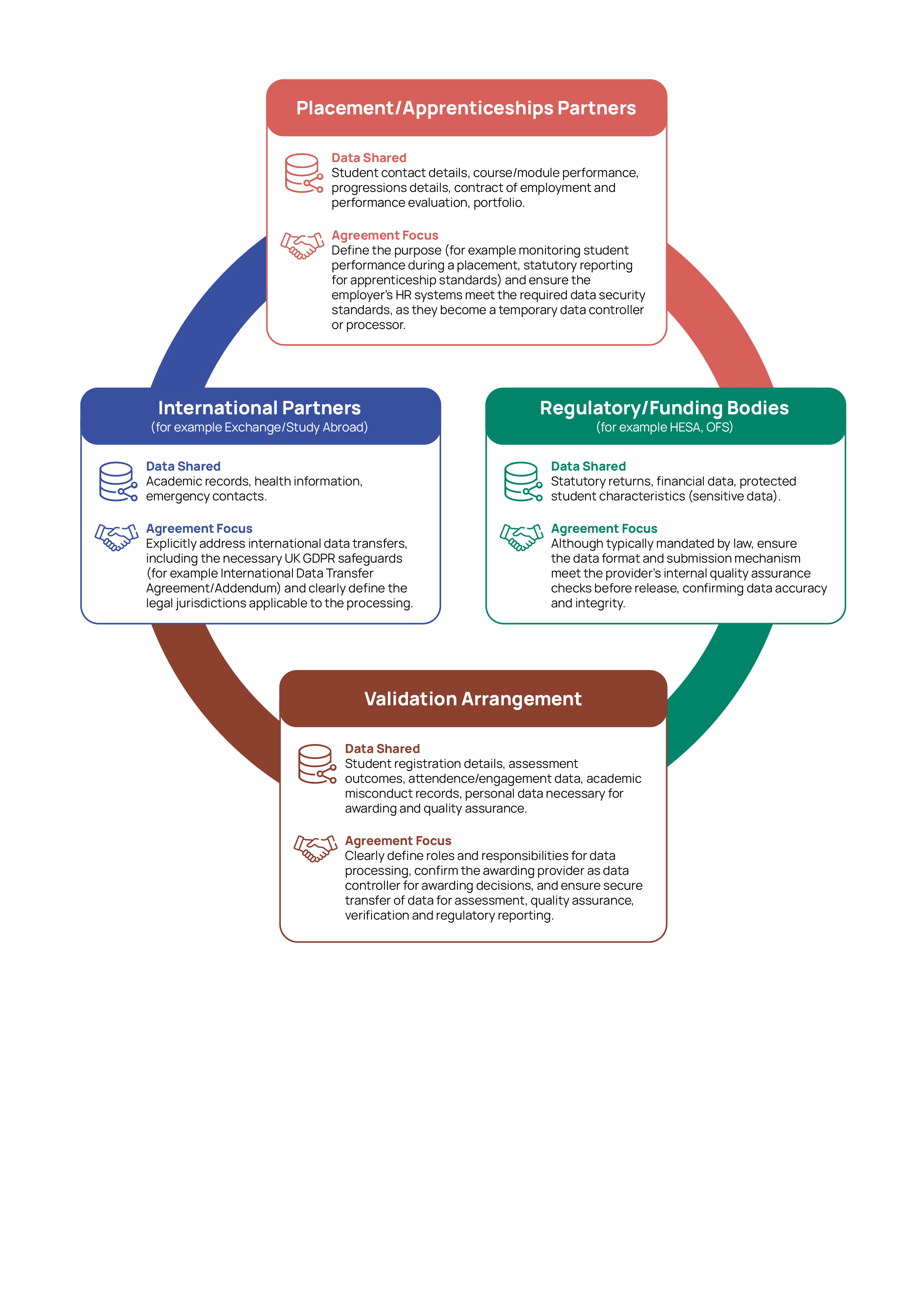
Providers in partnership arrangements (including the student representative body, where applicable) ensure data sharing agreements and reporting requirements are clearly stated, understood and reviewed periodically.
What this means
This Key Practice highlights the importance of clear, documented and regularly reviewed data-sharing agreements and reporting requirements across partnership arrangements. It encourages providers to establish shared understanding, effective governance and transparent approaches to data-sharing that support quality assurance, enhancement and the maintenance of academic standards.
In practice
Providers typically:
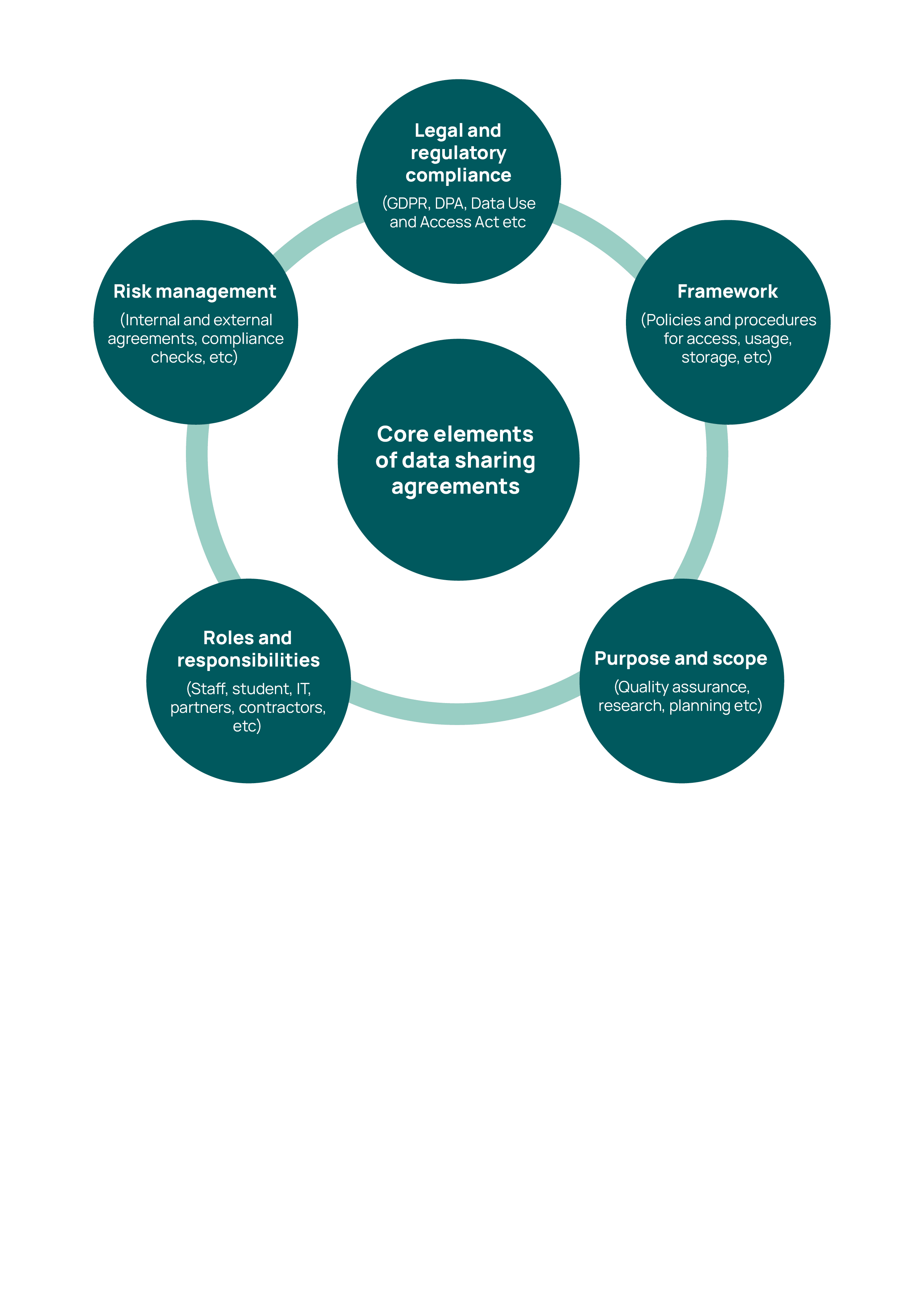
develop clear data-sharing agreements that define the purpose of sharing, the data to be shared, roles and responsibilities, reporting requirements, and arrangements for secure archiving or disposal
establish effective governance and oversight by ensuring data-sharing arrangements are formally documented, communicated, proportionate to risk, and reviewed regularly to remain legally and operationally effective
promote shared understanding across partnerships by ensuring staff, partners and student representative bodies understand their responsibilities for data-sharing, reporting and data protection
use data-sharing to support quality assurance and enhancement by encouraging accurate, timely and proportionate reporting that informs institutional decision-making and continuous improvement
work collaboratively with partners and student representative bodies to strengthen transparency, minimise unnecessary data-sharing, protect personal data, and regularly review arrangements as legislation, technology and institutional needs evolve.
Why this matters
This Key Practice highlights the importance of clear, transparent and well-governed data-sharing arrangements, supporting effective collaboration, accountability and responsible data use across partnership arrangements. It:
promotes clear governance by encouraging documented agreements that define responsibilities, reporting requirements and accountability for all parties involved
supports transparency and shared understanding by encouraging partners, staff and student representative bodies to understand how data is shared, used and reviewed
encourages proportionate and secure data-sharing by highlighting the importance of lawful, risk-based and regularly reviewed data-sharing arrangements
strengthens partnership working by encouraging collaborative approaches to data-sharing and reporting that can inform quality assurance, enhancement and institutional oversight.
Data is collected and analysed in ways that enable providers to understand and respond to the needs of their student populations, promoting equality, diversity and inclusion, and environmental sustainability.
What this means
This Key Practice highlights the importance of collecting and analysing data in ways that help providers better understand the needs and experiences of their diverse student populations. It encourages the use of evidence to inform approaches to equality, diversity and inclusion, environmental sustainability and enhancement activities, while recognising the value of both qualitative and quantitative data.
In practice
Providers typically:
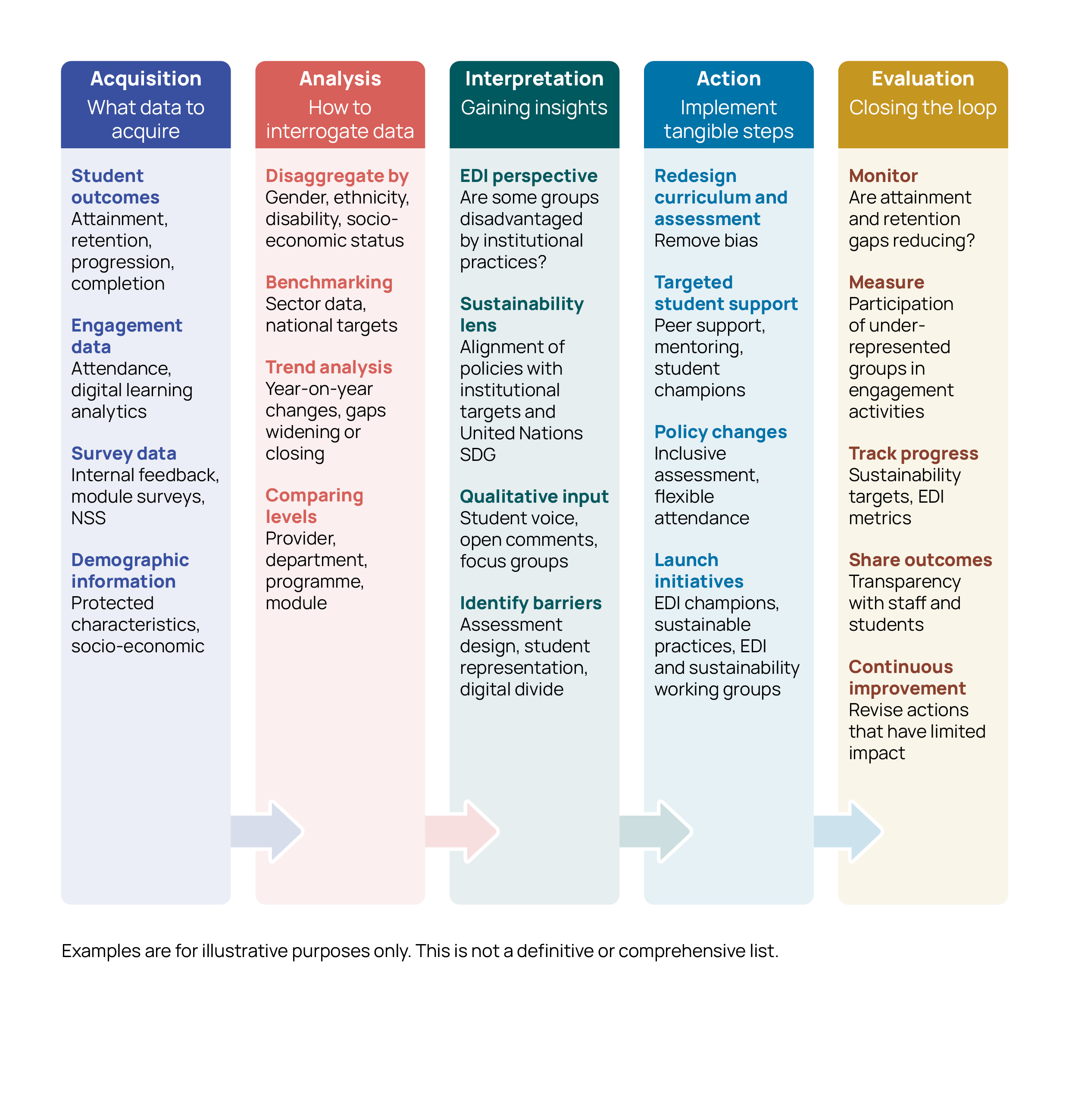
collect and analyse data purposefully to better understand the needs and experiences of diverse student populations, informing quality enhancement, equality, diversity and inclusion (EDI), and environmental sustainability
use a range of evidence by combining quantitative data with qualitative insights, such as student voice and reflective evaluation, to develop a more complete understanding of the student experience
use disaggregated data responsibly to identify disparities, institutional barriers and opportunities for improvement, while applying appropriate ethical, legal and data protection safeguards
take an evidence-informed approach to enhancement by using leading and lagging indicators to identify risks, evaluate interventions and inform timely, proportionate action
embed EDI and environmental sustainability into quality processes by using data to monitor progress against institutional priorities, evaluate the impact of initiatives and support continuous enhancement.
Why this matters
This Key Practice highlights the value of using data to better understand diverse student experiences, inform inclusive enhancement and support institutional priorities relating to equality, diversity, inclusion and sustainability. It:
encourages evidence-informed enhancement by promoting the use of qualitative and quantitative data to better understand the experiences and needs of diverse student populations
supports inclusive practice by highlighting how disaggregated data and student voice can help identify potential barriers to equality of opportunity and participation
promotes strategic use of data by encouraging providers to align data collection and analysis with wider institutional priorities for equality, diversity, inclusion and environmental sustainability
encourages meaningful action by highlighting the value of using evidence to evaluate interventions, communicate improvements and inform continuous quality enhancement.
This resource will be genuinely useful for colleagues across the sector. It is particularly valuable in Northern Ireland, where we do not have OfS data requirements to benchmark against in the same way as our counterparts in England. We will use it to review our own data strategy, making sure our approach to collecting, using and reporting on data reflects sector-wide expectations and aligns with practice across other institutions. It also provides a useful reference point when discussing why certain data practices matter, rather than relying on institutional judgement alone.
Chloe Hastings, Quality Enhancement Manager, Ulster University