QAA has updated its cookie policy. We use cookies to ensure that we give you the best experience on this website. This includes third-party cookies that may track your use of this website. To confirm you are happy with our use of cookies, please click Accept to continue. You can change your settings at any time.
Principle 3 - Resourcing delivery of a high-quality learning experience
This guidance explains how providers can plan, resource and maintain the physical, digital and human resources needed to deliver a high‑quality, accessible learning experience. Thoughtful, evidence‑based resourcing - informed by students - can help providers meet diverse needs, respond to changing circumstances, and make sure that students are supported academically, professionally and personally throughout their entire journey.
This approach considers how to develop a strategy to deliver a high-quality student experience, based on a provider’s mission values and student demographic. Providers then use data, feedback and agile operational planning to allocate and use physical, digital and human resources to enhance learning, support student wellbeing and remove barriers to success.
UK Quality Code for Higher Education: Advice and Guidance - Principle 3
Publication date: 24 Sep 2026
Author:
QAA
Format:
PDF
Size:
10.93 MB
How this works in practice
Providers intentionally align resources with student needs to create a supportive, high‑quality learning environment in a number of ways.
Clear strategies shaped by student input guide decisions about facilities, technology and support services.
Regular feedback and data inform adjustments to resources and priorities.
Staff are trained to use systems confidently and signpost students effectively.
Wellbeing, accessibility and inclusion are embedded across the student journey.
Resources are continually reviewed to stay responsive to changing circumstances.
Download presentation-friendly tables and diagrams
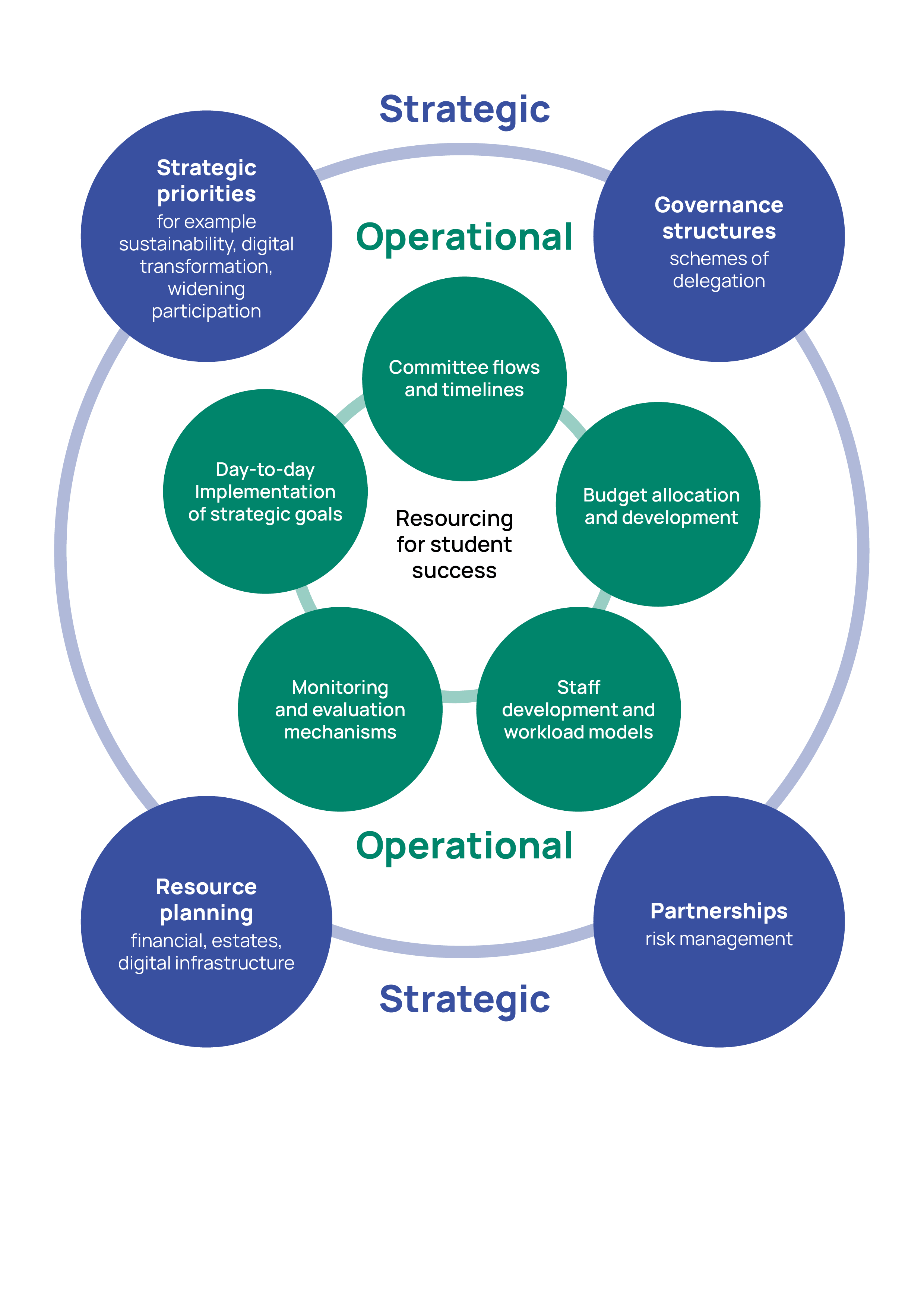
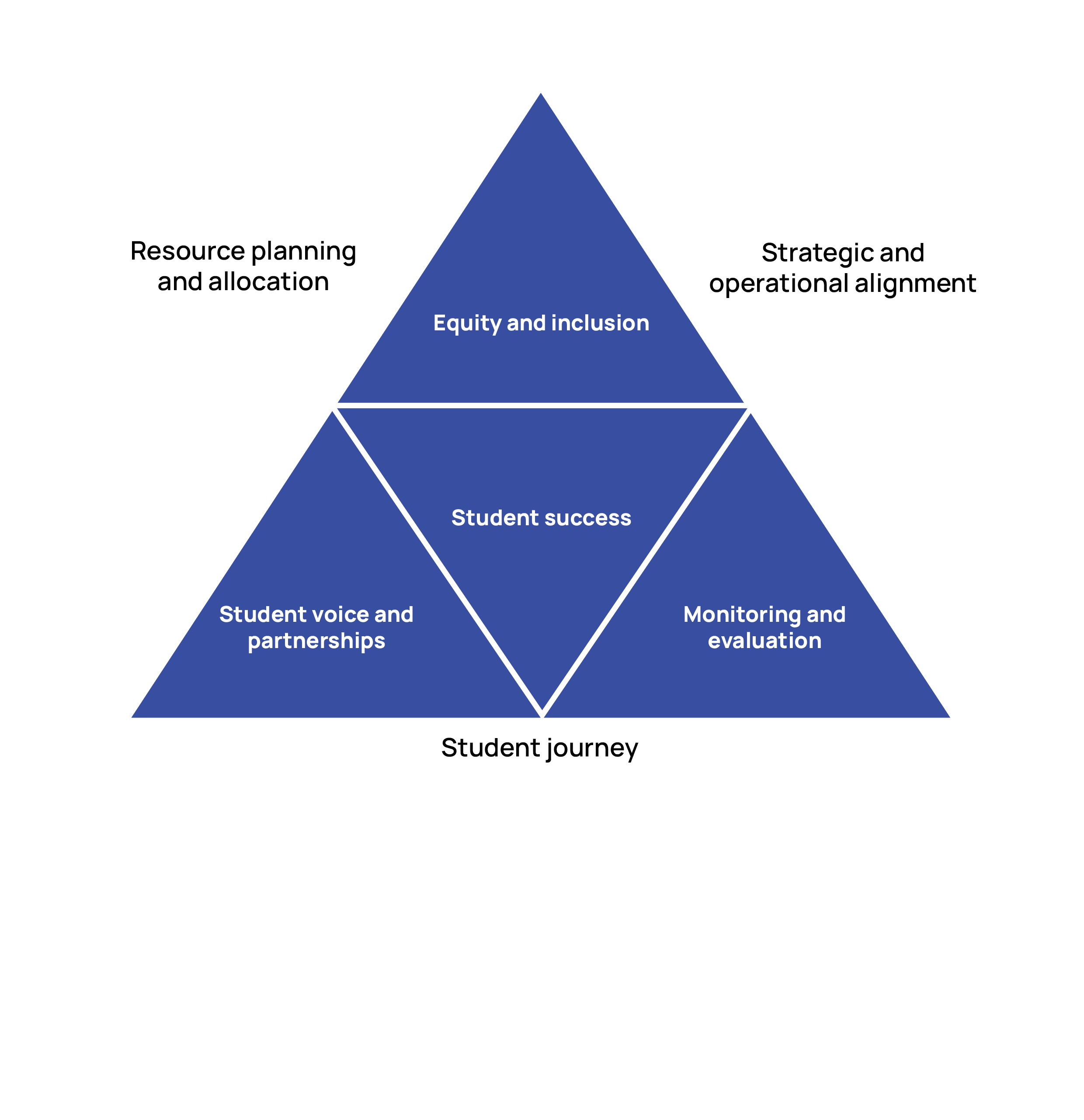
Strategic and operational plans, along with resources, align with the student journey and are designed and implemented to support a positive student experience and enable student achievement.
What this means
Providers align a long‑term strategy with short‑term operations across every stage of the student journey. This requires clear governance, flexible planning and ongoing stakeholder engagement. By mapping student needs from outreach to alumni engagement, providers can allocate resources, design inclusive support, and ensure quality across all modes of delivery.
In practice
Providers typically:
map each stage, from outreach to alumni engagement, to guide planning and resourcing
allocate digital, physical and human resources based on evidenced student needs
use flexible operational plans that adapt to governance or regulatory changes
maintain clear governance structures across all delivery modes
use the student voice alongside regular monitoring and evaluation to inform and refine in‑year decisions
invest in inclusive learning environments, support services, and staff recruitment and development.
Why this matters
Providers need to plan coherently, allocate resources wisely and support students effectively throughout their entire journey, to:
strengthen alignment between strategy, operations and student needs
improve consistency and quality across all delivery modes and partnerships
enable timely, evidence‑based decisions that enhance student success
ensure resources are targeted where they have the greatest impact.
Resources
Hitch, Danielle, Goldingay, Sophie, Hosken, Norah et al (2012), Academic skills and beyond: a resource based approach to support student success in higher education, Journal of academic language and learning 6(2), A29-A41
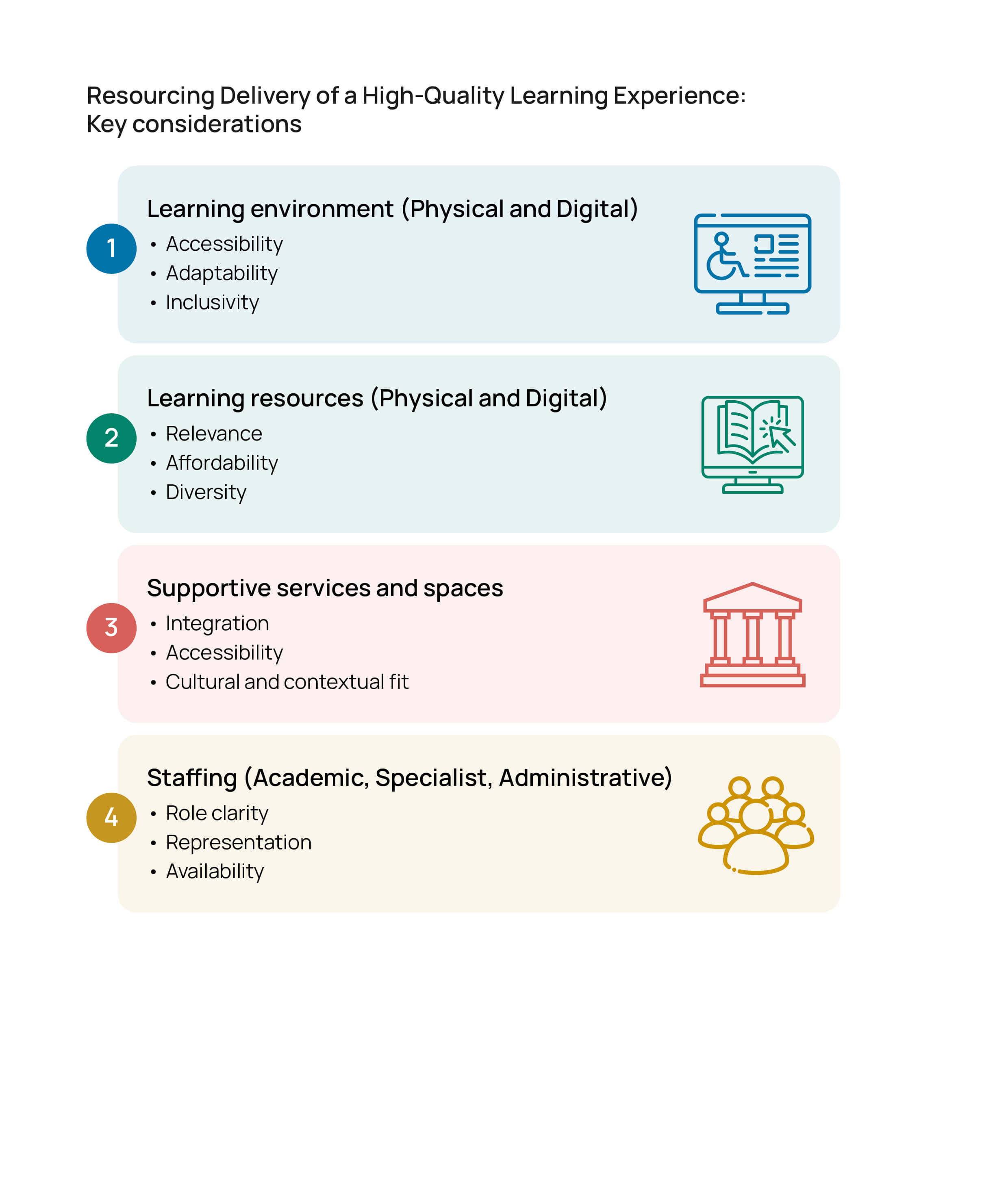
Providers ensure they have dedicated, accessible and inclusive resources to support and enhance the delivery of their programmes (and smaller units of study) along with the well-being of students and staff. These include staffing, digital and physical resources.
What this means
Providers plan and continually improve educational resources so they meet the evidenced needs of diverse students. Providing inclusive spaces, accessible digital tools, well‑designed learning materials and integrated support services, together with employing appropriately skilled staff providers, can help all students to fully participate, feel represented and access the help they need to succeed.
In practice
Providers typically:
ensure resources, spaces and services genuinely match the needs of their student body
promote inclusion, so that all students can participate fully and feel represented
support a high‑quality learning experience through the provision of accessible environments and materials
encourage student success by integrating academic, wellbeing and career support
help staff work effectively through clear roles, training and manageable workloads
foster a culture of continuous improvement that reduces the barriers that disadvantage specific groups.
Why this matters
A well‑resourced, inclusive learning environment is essential for students to thrive. This Key Practice helps providers to plan, review and improve support in ways that genuinely meet diverse student needs through:
strengthening equity by removing barriers for under‑represented and neurodiverse students
improving learning quality through accessible spaces, tools and materials
enhancing student success by integrating academic, wellbeing and career support
ensuring staff are equipped and aligned to deliver a consistent, supportive experience.
Resources are reviewed and updated in alignment with strategic developments and changes in provision, as well as staff and student recruitment. This also ensures relevance to the workplace and the wider academic discipline.
What this means
Effective management of resources is a prerequisite for a high-quality student experience. Providers should understand, plan, monitor and regularly review financial, human, physical, digital and support resources. Strategic alignment with curriculum, student support and employability objectives ensures relevance and sustainability. Collaboration with students, staff, employers and stakeholders supports continuous improvement, reduces institutional risk and enhances educational outcomes.
In practice
Providers typically:
maintain a clear resource inventory of staff, facilities, digital tools, learning materials and student support services so gaps and duplication can be identified
consider resource implications before making changes to programmes, assessments, curriculums or student support provision to ensure capacity can meet demand
provide clear signposting, so staff and students know what support and resources are available and how they can be accessed
monitor usage and effectiveness of resources through data, feedback and engagement metrics, using the findings to inform future investment decisions
assign clear ownership and accountability for resources, ensuring they are regularly reviewed, updated and included in quality assurance and governance processes
engage students, employers, alumni and professional bodies in reviewing and improving resources to keep them relevant, inclusive and aligned with employability needs
promote collaboration and sharing of good practice across departments and external partners to improve efficiency, enhance the student experience and make best use of staff time.
Why this matters
Effective resource management enables providers to deliver high-quality learning, meet student needs, manage institutional risk and support positive outcomes. This:
enhances student experience, wellbeing, retention and success
ensures resources align with strategic, curriculum and employability goals
strengthens accountability, efficiency and continuous improvement across the institution.
Resources are allocated to ensure that staff receive ongoing professional development to support and enhance the delivery of a high-quality and innovative student learning and research experience.
What this means
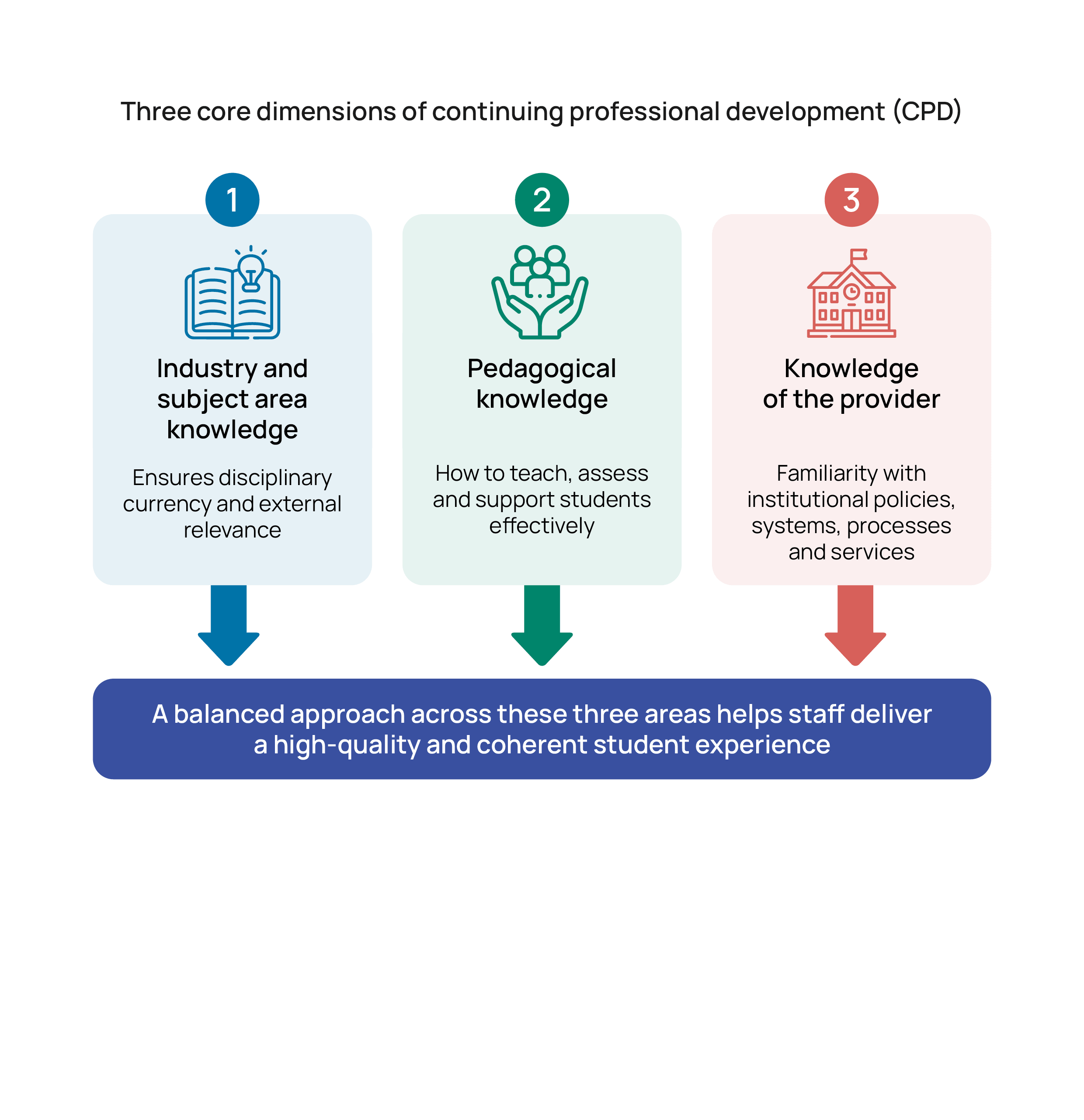
Providers treat staff development as a strategic, continuous process rather than a one-off training requirement. By investing in subject expertise, teaching capability and institutional knowledge, they can improve teaching quality, support inclusive practice, enhance staff wellbeing, and ensure students receive a consistent, high-quality learning experience across all modes of delivery.
In practice
Providers typically:
embed continuous professional development (CPD) into everyday practice rather than relying solely on induction and mandatory training
develop staff across three areas: subject expertise, teaching and assessment skills, and understanding of institutional systems and processes
ensure equitable access to development opportunities for all staff, regardless of role, contract type or department
align staff development with strategic priorities, such as blended learning, digital capability, student support and graduate outcomes
use appraisal, supervision and career development processes to identify development needs, set objectives and monitor progress
promote peer learning and reflective practice through mentoring, teaching observation, peer review and communities of practice
embed equality, diversity, inclusion and accessibility principles within CPD to help staff better support diverse student populations and deliver inclusive learning experiences.
Why this matters
Investing in ongoing staff development helps providers maintain teaching quality, respond to changing student needs and deliver consistently positive student outcomes. This:
enhances the student experience through effective teaching, assessment and support
builds organisational resilience by helping staff adapt to new technologies, pedagogies and sector expectations
promotes equity and inclusion by ensuring all staff can develop the skills needed to support diverse learners.
Processes and activities to support the management of academic standards and quality enhancement are appropriately resourced to meet strategic, operational and regulatory objectives and requirements.
What this means
Providers ensure that academic standards and quality enhancement are appropriately resourced and embedded within their governance framework and strategic planning. This approach supports regulatory compliance, strengthens academic integrity, enables meaningful student partnership and protects the student experience. Programmes remain high quality, sustainable and responsive to change while staying aligned with external expectations and sector requirements.
In practice
Providers typically:
align quality assurance and academic standards activities with institutional strategy, operational plans and regulatory requirements
ensure governance committees and decision-making structures provide effective oversight of quality, standards and enhancement
allocate sufficient financial, staffing, digital and physical resources to support quality management activities
embed robust processes for programme approval, review, assessment, academic integrity and risk management
actively gather, analyse and act on student feedback, ensuring students are genuine partners in enhancement
invest in staff development, digital systems and AI-ready processes to respond effectively to regulatory changes and evolving student needs.
Why this matters
Effective governance, resourcing and oversight help providers maintain academic standards, meet regulatory expectations, enhance student outcomes and safeguard institutional reputation. This:
supports compliance with national regulators, PSRB requirements and sector quality expectations
ensures students receive a high-quality, reliable and continuously improving academic experience
strengthens institutional resilience through effective risk management, resource planning and evidence-based enhancement.
The creation, development and maintenance of accessible and inclusive learning environments (physical and virtual) offer all students the opportunity to be engaged in their learning experience and facilitate a sense of belonging. Providers ensure they consider environmental sustainability in designing and maintaining these learning resources and facilities.
What this means
Providers take a proactive, institution-wide approach to creating learning environments that are accessible, inclusive and sustainable by design. Physical, digital and hybrid spaces enable all students to participate fully, regardless of their needs, circumstances or mode of study. Providers embed accessibility into planning, delivery and review processes, meet legal obligations, and work with staff and students to continuously improve engagement, belonging and educational quality.
In practice
Providers typically:
design and maintain physical, digital and hybrid learning environments that are accessible, inclusive and sustainable from the outset, rather than relying on individual adjustments after barriers arise
ensure teaching rooms, libraries, laboratories, online platforms and campus facilities accommodate diverse student needs, including disabled, neurodivergent, commuter and distance-learning students
adopt consistent, accessible digital design standards across modules and programmes so students can easily find learning materials, assessments, support services and key information
provide appropriate technology, policies and support for hybrid learning, including lecture capture, recordings, captions and transcripts, to enable equitable participation regardless of location
embed accessibility, inclusion and belonging within institutional governance, quality assurance and enhancement processes, ensuring compliance with the Equality Act 2010
invest in staff development so educators can confidently apply universal design principles, create accessible learning materials and deliver inclusive teaching and assessment practices
regularly review learning environments in partnership with students, using feedback and lived experience to continuously improve engagement, participation, belonging and student success.
Why this matters
Creating accessible and inclusive learning environments improves student success, strengthens regulatory compliance and helps to ensure all students can engage, participate and achieve, regardless of their circumstances or needs. This:
reduces barriers to learning and supports improved student outcomes, retention and progression
Providers, in collaboration with staff and students, monitor and evaluate on a systematic basis the effectiveness and impact of learning environments and the resources required for the delivery and enhancement of the learning experience.
What this means
Providers systematically use student feedback gathered at programme, module and individual levels to improve learning environments and resource allocation. Effective quality assurance relies on meaningful student partnership with well-trained representatives who facilitate agile responses to emerging issues. Strong collaboration across academic and professional services supports continuous improvement while making transparent, evidence-based decisions about where resources are invested.
In practice
Providers typically:
collect and analyse student feedback from surveys, module evaluations and informal conversations to build a complete picture of student priorities and experiences
use student feedback to inform improvements to learning environments, teaching resources and support services, while clearly explaining decisions and constraints
create multiple, accessible channels for students to provide feedback and ensure they understand how their views are used
empower student representatives through training, mentoring and strong staff partnerships so they can contribute effectively to decision-making and problem-solving
use student-staff committees and liaison meetings to identify issues quickly and implement timely improvements during the academic year
ensure quality assurance processes evaluate the impact of resources and learning environments on student outcomes and drive meaningful enhancement
encourage collaboration between academic departments and professional services to share intelligence, reduce duplication, identify efficiencies and promote continuous improvement across the institution.
Why this matters
Effective use of student feedback, quality assurance and cross-institution collaboration helps providers make informed decisions about resources, enhance the student experience and drive continuous improvement. This:
ensures resources and learning environments better meet student needs and support success
enables evidence-based decisions about where limited resources will have the greatest impact
strengthens student engagement, trust and partnership in improving the educational experience.
Resources
Collett, T., Hanks, S., Watson, H., & Davies, T. (2017). Collecting student feedback: a whole school approach. Medical Education, 51(5), 547-548. https://doi.org/10.1111/medu.13303
Key Practice f focuses on equity in learning, ensuring that all students have the best possible opportunity to succeed. I will apply this in my own practice by continually enhancing the accessibility of my teaching to deliver a high-quality learning experience, ensuring that no individual is disadvantaged by their circumstances, needs or differences.
Deena Webster, Senior Lecturer in Land and Property Management, Harper Adams University