UK Quality Code for Higher Education: Advice and Guidance - Principle 12
Publication date: 22 Sep 2026
This guidance explains how providers operate concerns, complaints and appeals processes that are fair, transparent, accessible and effective. It emphasises early resolution, clear communication and continual improvement, helping providers support students and applicants while learning from outcomes to enhance practice across the organisation.
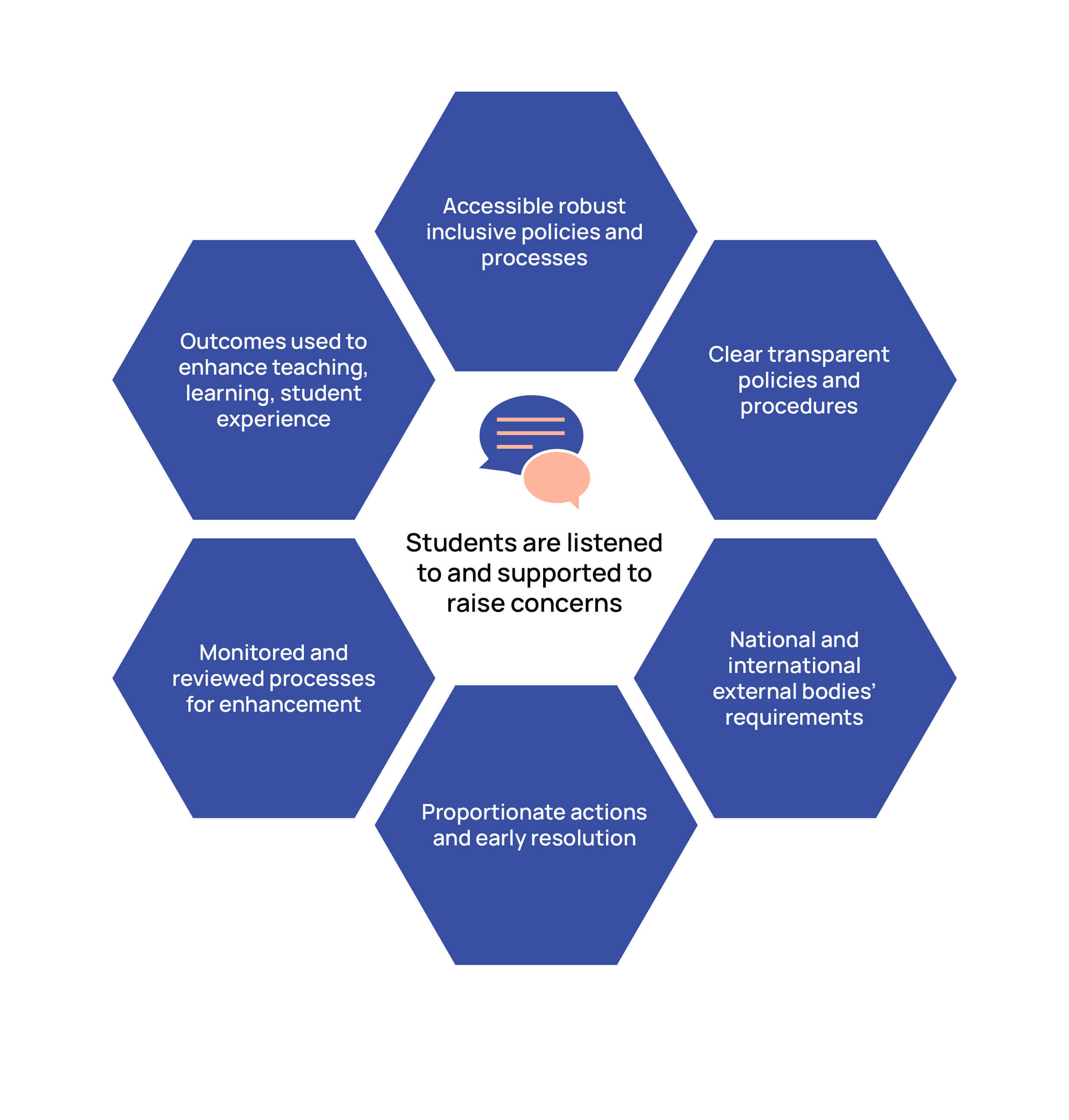
This supports you to develop accessible and inclusive processes, ensure that policies and procedures are fair, transparent and aligned with sector expectations, use outcomes and feedback to enhance teaching, learning, and the wider student experience, and strengthen organisational learning, accountability and continuous improvement.
Publication date: 22 Sep 2026
This guidance is structured around six Key Practices, which focus on: creating accessible and transparent procedures; meeting external requirements; resolving issues proportionately and promptly; and using monitoring, review and outcomes to drive continuous improvement in teaching, learning and the wider student experience.
Providers create processes that are easy to access, fair to navigate and focused on resolving issues while supporting organisational learning. This guidance also includes the following practices.
Providers ensure that concerns, complaints and appeals processes are accessible, inclusive and easy to understand for all students and applicants. Processes support early resolution wherever possible, apply throughout the student lifecycle - including recruitment and admissions - and let participants raise issues confidently, without fear of disadvantage or unfair treatment.
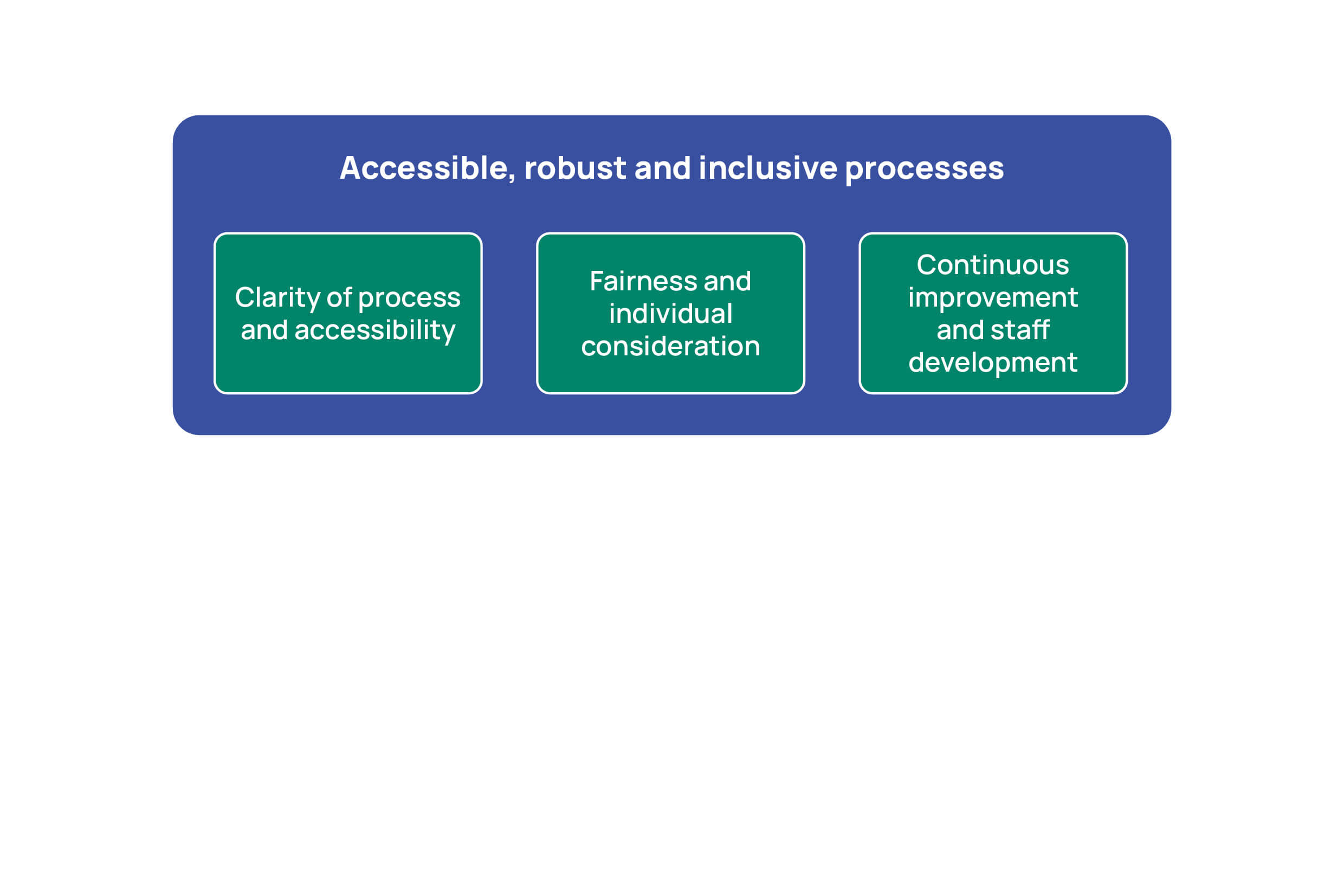
Accessible, inclusive and robust processes help to make sure that all students and applicants can raise concerns confidently and receive fair consideration, by:
Resources
Office of the Independent Adjudicator, Good practice framework
Scottish Public Services Ombudsman, How to handle complaints
Competition and Markets Authority, Consumer law advice for higher education providers
Office for Students, Student protection and choice: students as consumers
Northern Ireland Public Services Ombudsman, Principles of good complaints handling
Providers make sure that these policies and procedures are clearly communicated, easy to find and straightforward to understand. Information is accessible to students, those supporting them and those operating the processes. Formal and informal stages are clearly distinguished, helping individuals to understand their options, responsibilities and routes for escalation.
Why this matters
Clear information helps students engage confidently with processes and supports fair, efficient and consistent handling of concerns, complaints and appeals, by:
Resources
Competition and Markets Authority, Consumer law advice for higher education providers
Scottish Public Services Ombudsman (SPSO), Statement of complaints handling principles
Office for Students, Securing student success: Regulatory framework for higher education in England, Condition C2 Annex A: Initial and general ongoing conditions of registration
Office of the Independent Adjudicator for Higher Education, Good practice framework
Office for Students, Student protection and choice: students as consumers
Northern Ireland Public Services Ombudsman, Principles of good complaints handling
Providers make sure that their concerns, complaints and appeals policies and procedures meet the expectations of relevant external bodies responsible for reviewing, hearing or overseeing cases. This includes complying with applicable requirements, timescales and reporting expectations, while making sure that students understand when and how issues may be escalated beyond the provider.
Alignment with external requirements helps make sure processes are credible, consistent and fair, while supporting accountability and public confidence, by:
Resources
United Nations Educational, Scientific and Cultural Organization (UNESCO), Guidelines on quality assurance in higher education
Competition and Markets Authority, Consumer law advice for higher education providers
Scottish Public Services Ombudsman (SPSO), Statement of complaints handling principles
Office for Students, Securing student success: Regulatory framework for higher education in England, Annex A, Condition C2 Initial and general ongoing conditions of registration - Office for Students
Office of the Independent Adjudicator for Higher Education, Good practice framework
Office for Students, Student protection and choice: students as consumers
Northern Ireland Public Services Ombudsman, Principles of Good Complaints Handling
Providers take action that is appropriate to the nature, seriousness and complexity of the issues raised. Processes are designed to support early resolution wherever possible, while ensuring cases receive the level of scrutiny and expertise needed to achieve fair outcomes. Providers also consider wider improvements that may prevent similar issues in future.
Resources
Office of the Independent Adjudicator (OIA), Putting things right
OIA, Good practice framework: handling complaints and academic appeals
Scottish Public Services Ombudsman, Good practice guidance: Alternative complaint resolution approaches
Providers routinely evaluate how concerns, complaints and appeals processes operate in practice. Monitoring examines performance, trends and timeliness, while review considers whether processes remain fit for purpose, accessible and effective. Together, these activities identify improvements, strengthen accountability, assure fairness and ensure that learning from cases contributes to institutional enhancement and a better experience for students and staff.
Effective monitoring and review helps make sure concerns, complaints and appeals processes remain fair, responsive and aligned with institutional priorities, while generating evidence that supports enhancement and continuous improvement, by:
Resources
Providers do more than resolve individual concerns, complaints and appeals. They use outcomes as evidence for improvement, identifying trends, recurring issues and opportunities for enhancement. Effective recording, analysis and reporting arrangements help make sure lessons learned lead to changes in policies, practices, services and learning experiences, creating a culture of continuous improvement and responsiveness.
Resources
Academic Registrars’ Council (ARC), Student casework practitioner group
QAA, guidance on transnational education
This is a fantastic resource to support us in managing our academic appeals and complaints processes. The guidance helps us to focus on what really matters to our students in terms of procedural transparency, identifying individual student needs and ensuring that we are regularly reflecting on how we can improve our processes with the student at the heart. We have recently used the resource to redesign our student guide to the academic appeal process, focussing on developing resources in a wide range of formats for different student needs, providing much more information about what to expect from the process and ensuring that there are clear referral processes for student support.