QAA has updated its cookie policy. We use cookies to ensure that we give you the best experience on this website. This includes third-party cookies that may track your use of this website. To confirm you are happy with our use of cookies, please click Accept to continue. You can change your settings at any time.
Principle 6 - Engaging in external review and accreditation
External reviews assure how effectively providers manage quality and standards. They offer independent sector comparisons and generate outcomes that strengthen policies and practice. Whether nationally mandated or professionally focused, these reviews actively involve staff, students and peers, making them an essential mechanism for enhancement and sustained academic credibility.
In a highly regulated environment, external reviews and accreditations validate academic standards, teaching quality and student outcomes. When treated as opportunities for learning rather than an exercise in compliance, these processes strengthen quality culture, support strategic alignment, build stakeholder confidence, enhance recruitment and inform decision‑making. Embedding lessons learned across the institution ensures continuous improvement, sector comparability and sustained trust in academic quality and standards.
UK Quality Code for Higher Education: Advice and Guidance - Principle 6
Publication date: 22 Sep 2026
Author:
QAA
Format:
PDF
Size:
3.28 MB
How this works in practice
External reviews can help universities prove they meet required standards, strengthen quality and drive improvement. They promote continuous learning, active engagement, shared responsibility and enhanced provision.
External reviews validate teaching, standards and that student outcomes meet sector expectations.
Providers should use reviews to improve strategy, curriculum and decision‑making - not just to evidence compliance.
Embedding learning from reviews builds a culture of shared responsibility for quality and enhancement.
Regulatory, commissioned and PSRB reviews each offer different forms of scrutiny that inform improvement.
Insights from reviews should be communicated clearly and used to shape policy, practice and staff development.
Continuous monitoring of actions ensures external scrutiny leads to long‑term quality and sector comparability.
Download presentation-friendly tables and diagrams
External review, whether optional or required by national quality frameworks or accrediting bodies, is built into the provider’s strategic approach and aligns to internal quality and standards monitoring and evaluation activity.
What this means
Providers need a clear strategic approach to managing quality and standards. Successful external reviews depend on sharing accessible, high‑quality data derived from monitoring and evaluation activities and demonstrating genuine commitment to good practice. Embedding this ethos into organisational culture and key policies makes sure providers are always prepared for review, regardless of timing, and able to evidence their effectiveness confidently.
In practice
Providers typically:
adopt a strategic, organisation‑wide approach to quality that ensures high‑quality, accessible data and clear evidence of good practice for any external review
use strong governance structures, supported by task‑and‑finish groups, to help monitor review activity and reinforce shared understanding of its strategic importance
use consistent, reliable data collection aligned with quality assurance processes to ensure effective benchmarking, enhancement and readiness for scrutiny
integrate external review activity with internal monitoring systems, supported by tools such as accreditation registers, to manage risks and maintain compliance
ensure that regulations and policies remain flexible enough to adapt to external requirements while staying aligned with institutional values
make sure that curriculum changes follow robust governance routes that consider academic, administrative and resource implications across the institution
ensure review readiness through strategic planning, clear communication, stakeholder engagement, maintained expertise and organisational structures that support collaborative, non‑siloed working.
Why this matters
This approach embeds review‑readiness into everyday quality processes and strengthens institutional credibility. It also:
ensures high‑quality data, governance and processes are always in place for effective external scrutiny
aligns internal quality assurance with external expectations, reducing risk and supporting continuous improvement
builds organisational readiness so reviews become strategic opportunities rather than reactive compliance exercises.
Providers use outcomes from external review and accreditation as a catalyst for ongoing improvement and strategic enhancement of the student learning experience.
What this means
Providers use external review and accreditation outcomes to drive continuous improvement and strengthen the student experience. Aligning reviews with internal quality processes ensures effective preparation and meaningful follow‑up. By learning from past reviews and keeping staff and students informed, providers create a virtuous cycle where enhancement supports future readiness and leads to better outcomes over time.
In practice
Providers typically:
align external review activity with internal quality monitoring, allowing evidence, governance and enhancement processes to work together
use outcomes from external reviews to shape strategic planning, policy updates and service improvements, creating a continuous enhancement cycle
demonstrate learning from past reviews
ensure staff and students are aware of review activity and outcomes, and students are involved in co‑creating action plans
move beyond compliance by embedding review outcomes into institutional planning and integrating actions into existing quality assurance processes
manage cyclical review requirements by resourcing actions appropriately, clarifying timelines, identifying expertise and ensuring evidence standards are met
review and adapt institutional policies to ensure alignment with professional standards and regulatory expectations without compromising student experience.
Why this matters
This approach uses external review outcomes to drive continuous improvement. It strengthens governance and accountability, and ensures that providers learn, adapt and stay consistently review‑ready by:
embedding learning from past reviews into strategic planning, policy updates and quality enhancement
building visibility, shared ownership and accountability for review outcomes across staff and students
ensuring actions are evidence‑based, well‑resourced and aligned with professional and regulatory standards.
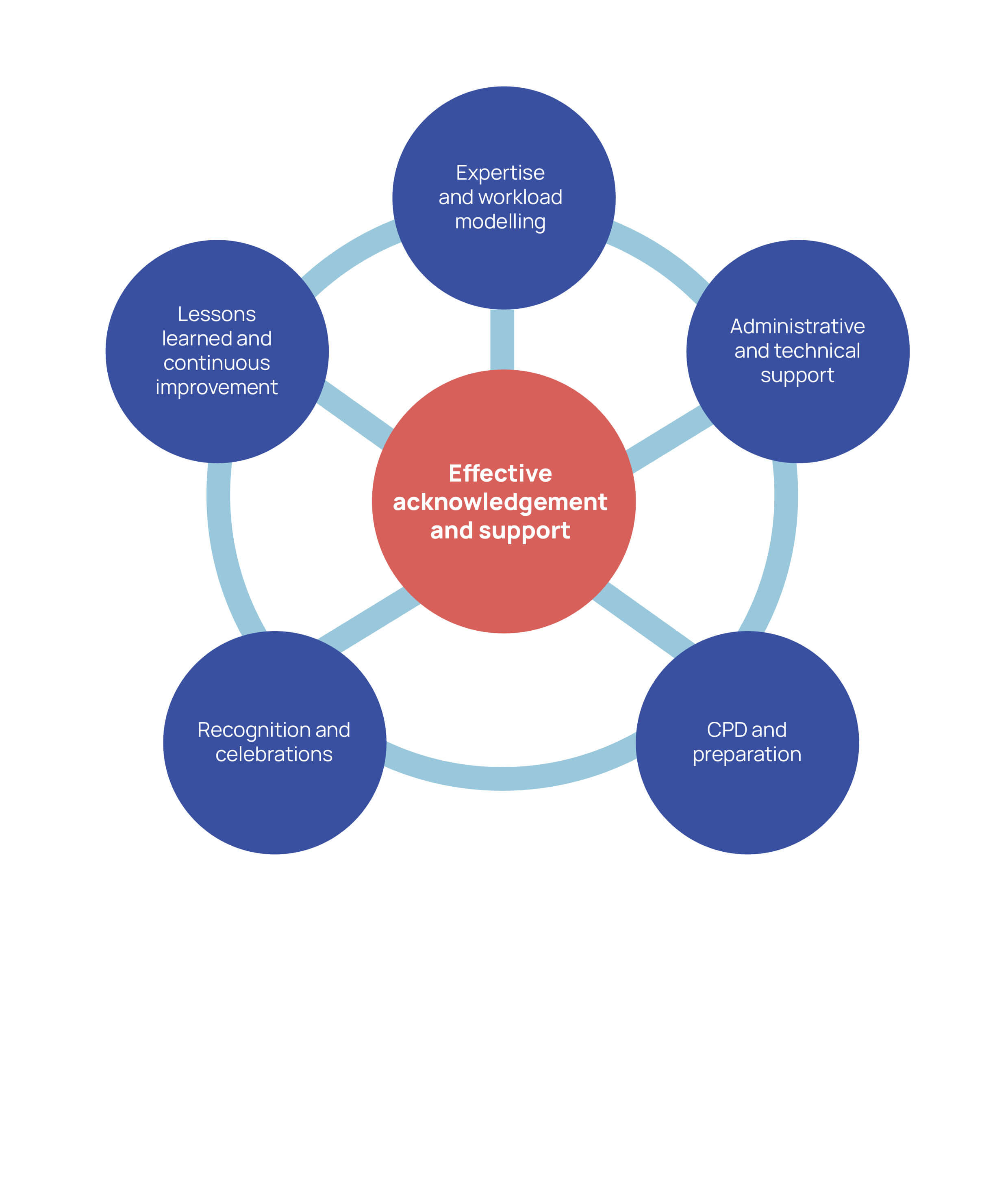
Providers acknowledge and support the expertise and resource required to participate in external review and accreditation.
What this means
Providers can benefit by deliberately investing in collaboration, expertise and resourcing so external reviews are well supported and lead to genuine improvement. This practice emphasises shared responsibility, sustained capability and a culture that values continuous enhancement.
In practice
Providers typically:
identify internal specialists, maintaining a register of experienced staff and creating leadership groups or communities of practice so the right people are involved at the right time
recognise that external review participation is substantial work for staff and students and should be built into workload models, remission or planning cycles
have well‑resourced administrative, IT and data teams that coordinate documentation, manage systems, maintain evidence repositories and support staff with reliable qualitative and quantitative data
offer CPD, briefings, mentoring, shadowing and sector engagement so staff understand regulatory expectations and feel confident contributing to reviews
offer targeted briefings, opportunities to learn from experienced colleagues and structured support for senior leaders and review teams
use promotions, awards, communications and events to acknowledge the work involved and reinforce a culture that values collaborative quality enhancement
use post‑review reflection to refine policies, improve governance, strengthen communication and inform future training and workload planning so improvements become part of ongoing enhancement rather than one‑off activity.
Why this matters
Strengthening collaboration, resourcing, staff capability and reflective practice ensures providers are well‑prepared for external scrutiny, continuously improve and uphold high academic standards. This:
builds institutional readiness, confidence and consistency in meeting regulatory and professional expectations
embeds continuous improvement by turning review insights into lasting enhancements
supports a culture where quality, collaboration and shared responsibility are valued and sustained.
Providers who engage in external review understand the UK national regulatory and legislative contexts in which they operate and the different approaches, forms and focus they may take. Providers may engage colleagues with international expertise, in addition to those familiar with UK requirements.
What this means
Making sure that those leading and supporting review activity have a strong understanding of the UK's national regulatory and legislative contexts means providers can engage constructively with the different forms, purposes and methodologies of external review, whether these are developmental, assurance-focused or linked to professional recognition.
In practice
Providers typically:
build a provider‑wide understanding of UK regulatory and legislative requirements and keep colleagues up to date
deliberately prepare for regulatory reviews with clear evidence, communication and stakeholder engagement
create structured internal channels of communication to make colleagues aware of regulatory updates
share good practice internally and externally, using peer networks and sector bodies
engage proactively with regulators and external sector experts
contribute to consultations to help shape future regulation and strengthen institutional insight.
Why this matters
Strong regulatory awareness helps providers preparations for external review, meet legal obligations, improve quality and use review outcomes to enhance the student experience.
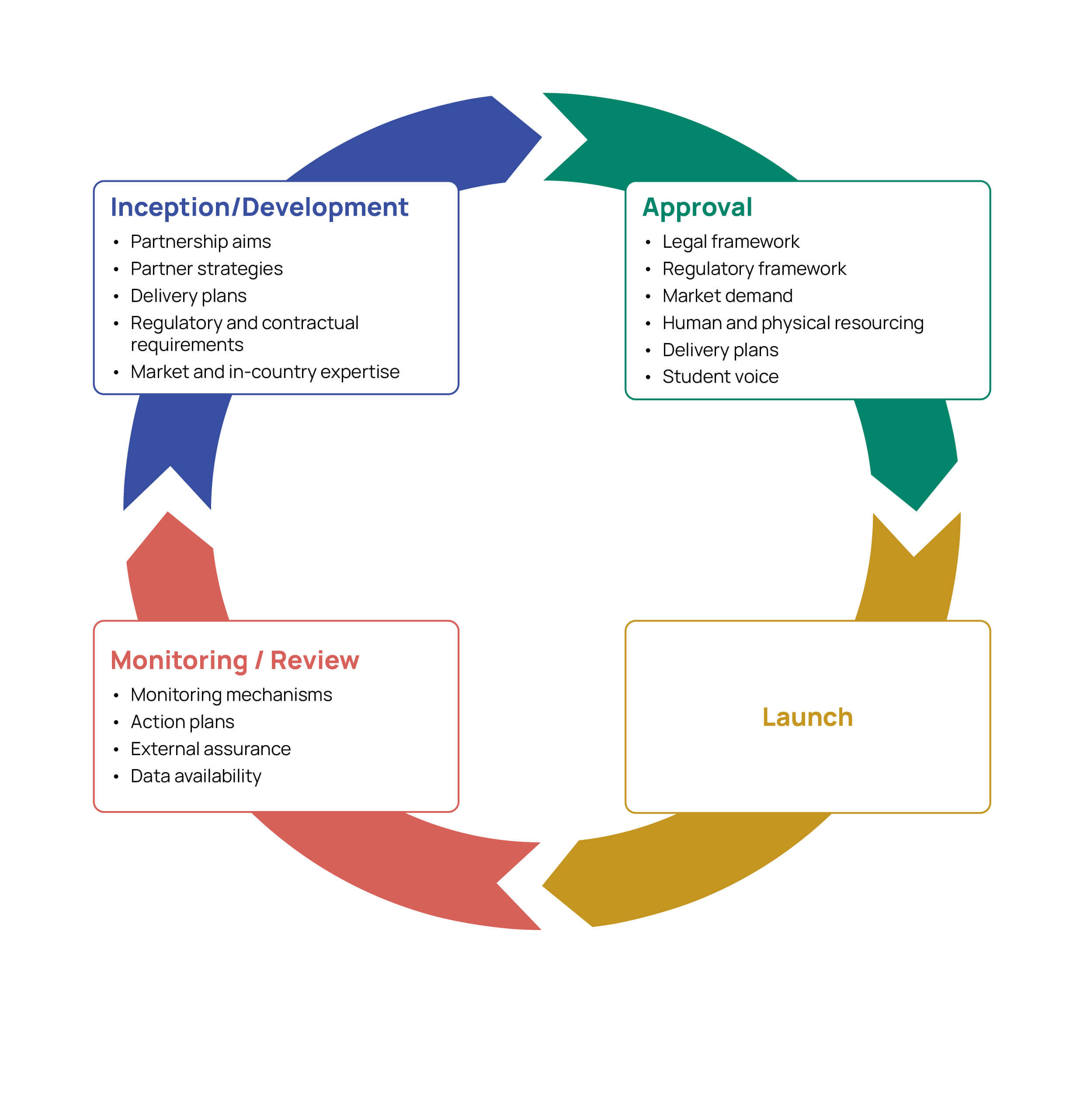
Providers understand the requirements and process for external reviews that may be required by regulators in partner delivery locations.
What this means
External reviews of provision partner delivery locations may take place for several reasons. For example:
meeting the requirements of an in-country regulator
meeting the accreditation requirements of an in-country PSRB
meeting the accreditation requirements of a UK-based PSRB that offers international accreditations.
In practice
Providers typically:
ensure that the purpose of any partnership delivery is clear, along with its strategic value and how it is regulated
are prepared for external reviews of provision at partner delivery sites as required by regulators and professional bodies
give consideration to legal, regulation and ethical issues related to external reviews
maintain strong governance with the partner’s arrangements and a common approach to quality assurance
have an understanding of a partner’s operational capacity - staffing, facilities, digital infrastructure and assessment methods - to ensure they can continue to meet the requirements of external review
foster a mutually supportive relationship based on sharing data, good practice, staff development and learning resources.
Why this matters
Providers must ensure partner‑delivered programmes meet local and international regulatory expectations, protect quality and standards, manage risk, and sustain compliant, well‑governed transnational partnerships that enhance student outcomes.
This Advice and Guidance will be a useful reference when developing policies, frameworks and other documents relating to external reviews or working with professional, statutory and regulatory bodies. I'll use it as a sense-check to ensure my approach is aligned with wider sector practice and to identify any areas I may have overlooked. It's an effective way to build documents on a solid foundation and reduce the need for significant revisions later.
Emma Wingate, Academic Collaboration Manager, Manchester Metropolitan University