QAA has updated its cookie policy. We use cookies to ensure that we give you the best experience on this website. This includes third-party cookies that may track your use of this website. To confirm you are happy with our use of cookies, please click Accept to continue. You can change your settings at any time.
Principle 10 - Supporting students to achieve their potential
This guidance explores how providers can build a framework of support that helps students achieve their potential throughout their academic, personal and professional journey. It covers how providers map the student learning journey, communicate information clearly, support students through key transitions, and ensure ongoing services, trained staff and extracurricular activities work together to build belonging, confidence and success.
The approach provides a coherent framework of support that underpins students’ academic, personal and professional learning journeys. Providers map different student journeys to identify where support is needed and align academic, professional and extracurricular provision. Clear information, transition support, accessible services and appropriately supported staff work together, with clearly defined responsibilities and through support mechanisms that are applied consistently and equitably across provision and student body.
UK Quality Code for Higher Education: Advice and Guidance - Principle 10
Publication date: 25 Sep 2026
Author:
QAA
Format:
PDF
Size:
10.91 MB
How this works in practice
Providers implement a shared support framework through coordinated, accessible and timely support that reflects different student journeys and institutional contexts.
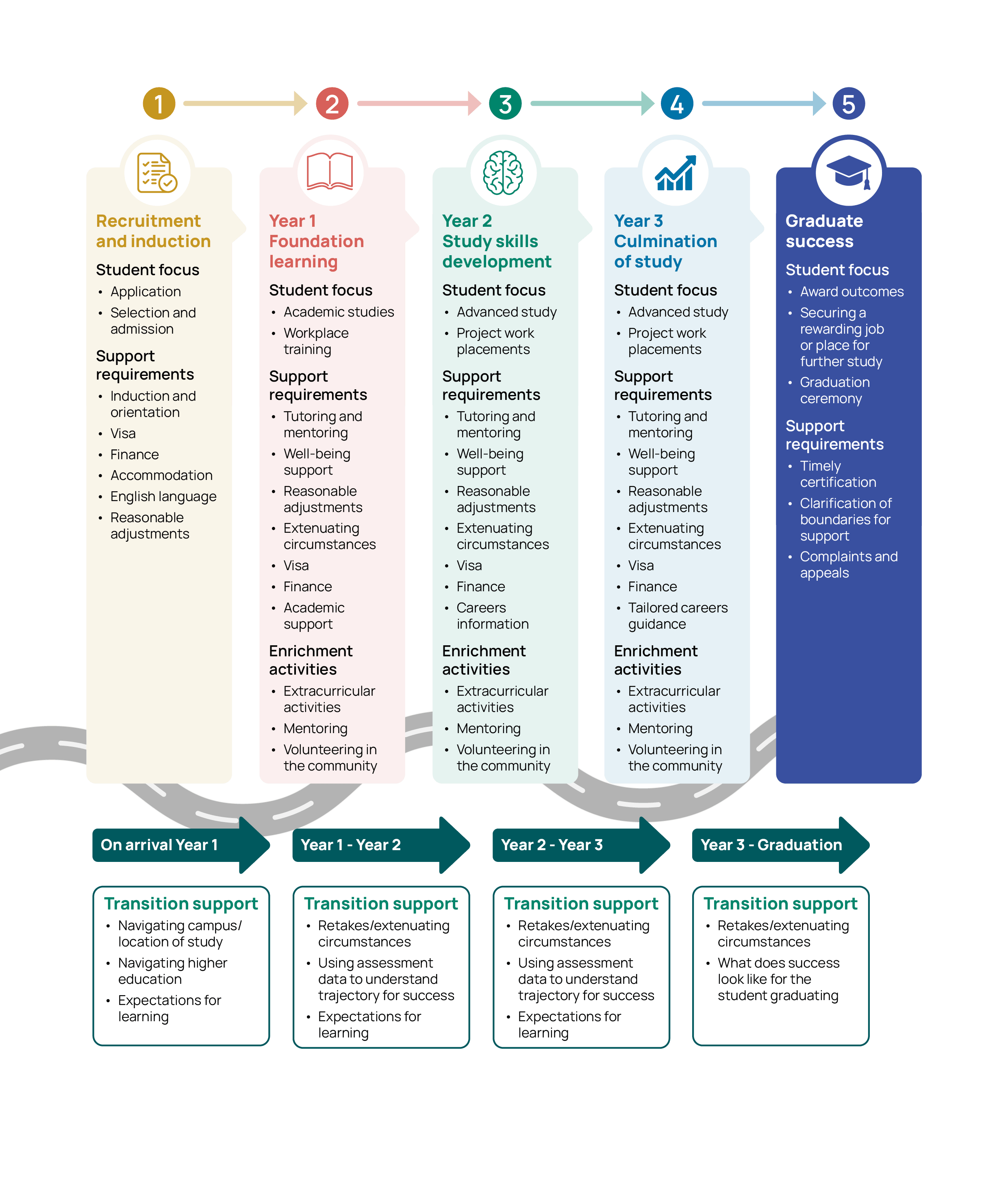
Mapping the student journey - identification of key stages across the student journey.
Coordination of support - alignment of support activities across a provider to ensure that they complement rather than compete with each other.
Provision of timely information - communicate relevant, accurate information at appropriate points, ensuring students and staff can understand and access available support.
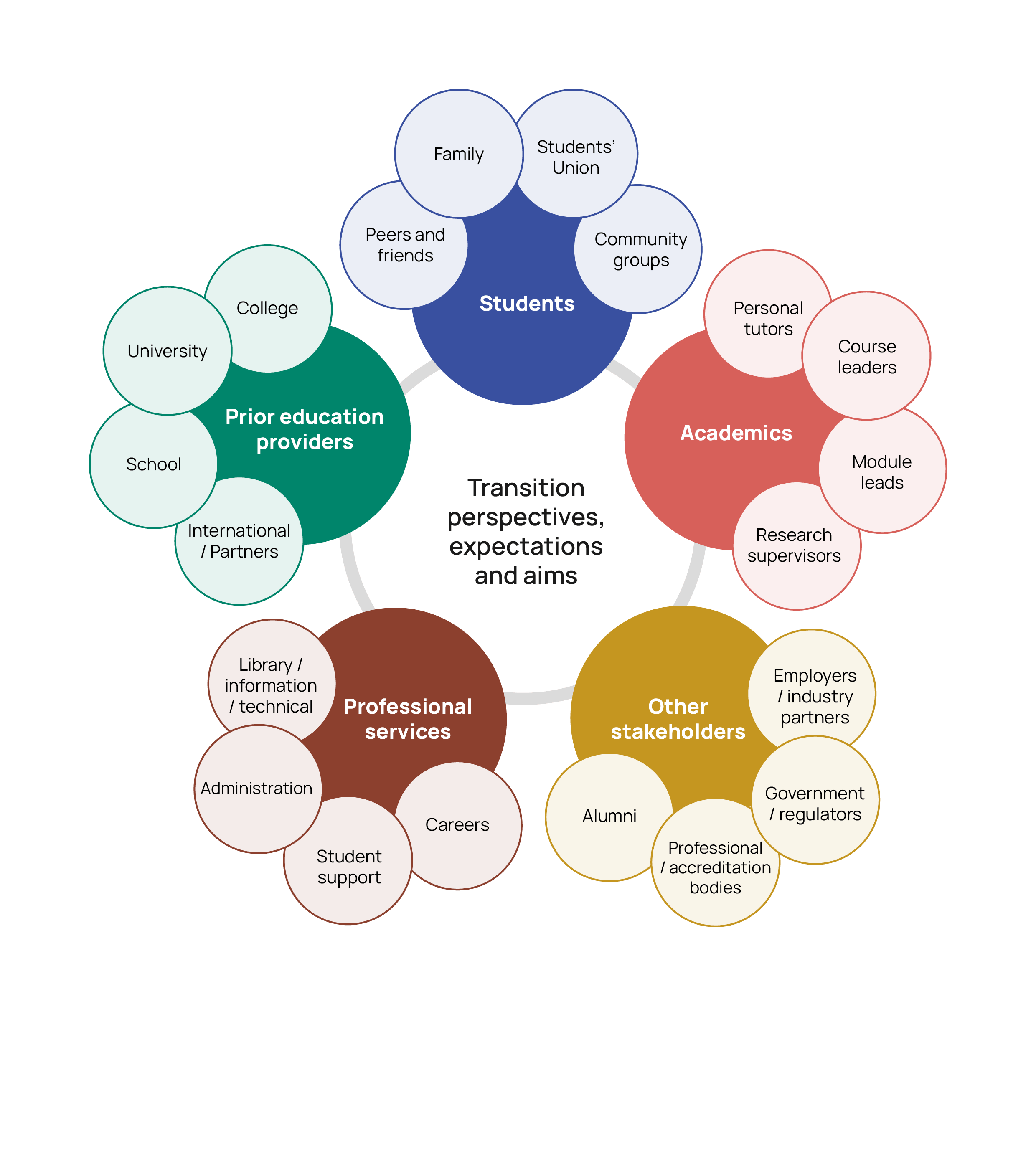
Collaborative working - key stakeholders including students, their representatives, academic teams and wider support teams work in partnership to shape and deliver support.
Download presentation-friendly tables and diagrams
Accessible, relevant, accurate and timely information is provided throughout the student journey, enabling students and staff to understand and access the support available.
What this means
The focus of this Key Practice is providing students with relevant, timely and accurate information and ensuring support is available throughout their studies. This includes mapping communications to key stages of the student journey, tailoring messages for different audiences, ensuring consistency and accessibility, and checking that information reaches students and staff and is understood by its intended audience.
In practice
Clarify what information needs to be communicated - at each stage of the student journey, and by whom
Agree clear ownership and sign-off arrangements for student communications, to ensure a coherent approach
Tailor communication methods and content - enabling better reach to different student groups, modes of study and locations
Use plain English, accessible formats and assistive technologies - to reach diverse audiences
Coordinate messaging across departments - to avoid duplication and information overload
Monitor and evaluate - how effectively communications are understood and acted upon.
Why this matters
Clear, accessible and timely information helps students understand what support is available to them, to then access appropriate support and navigate their learning journey effectively.
Supports informed choices - students have the information they need at relevant points throughout their studies.
Improves access to support - students can understand what support is available and how to access it.
Supports different audiences - information can be tailored and made accessible to different students and staff.
Strengthens communication - providers can check that information reaches its intended audience, is understood and supports appropriate action.
All students are supported at key transition points throughout their journey, with their specific needs and requirements met and their pathways into learning recognised.
What this means
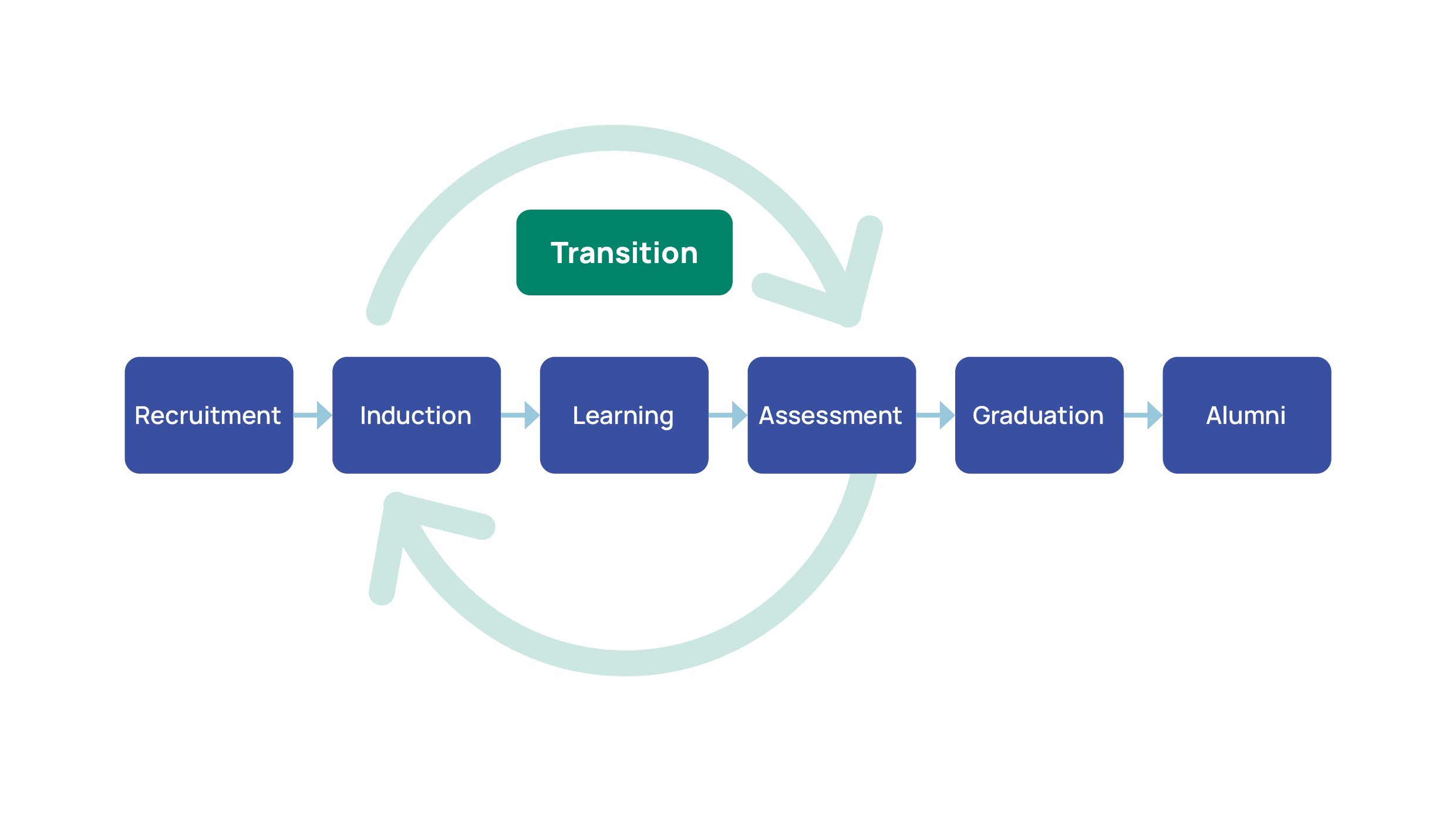
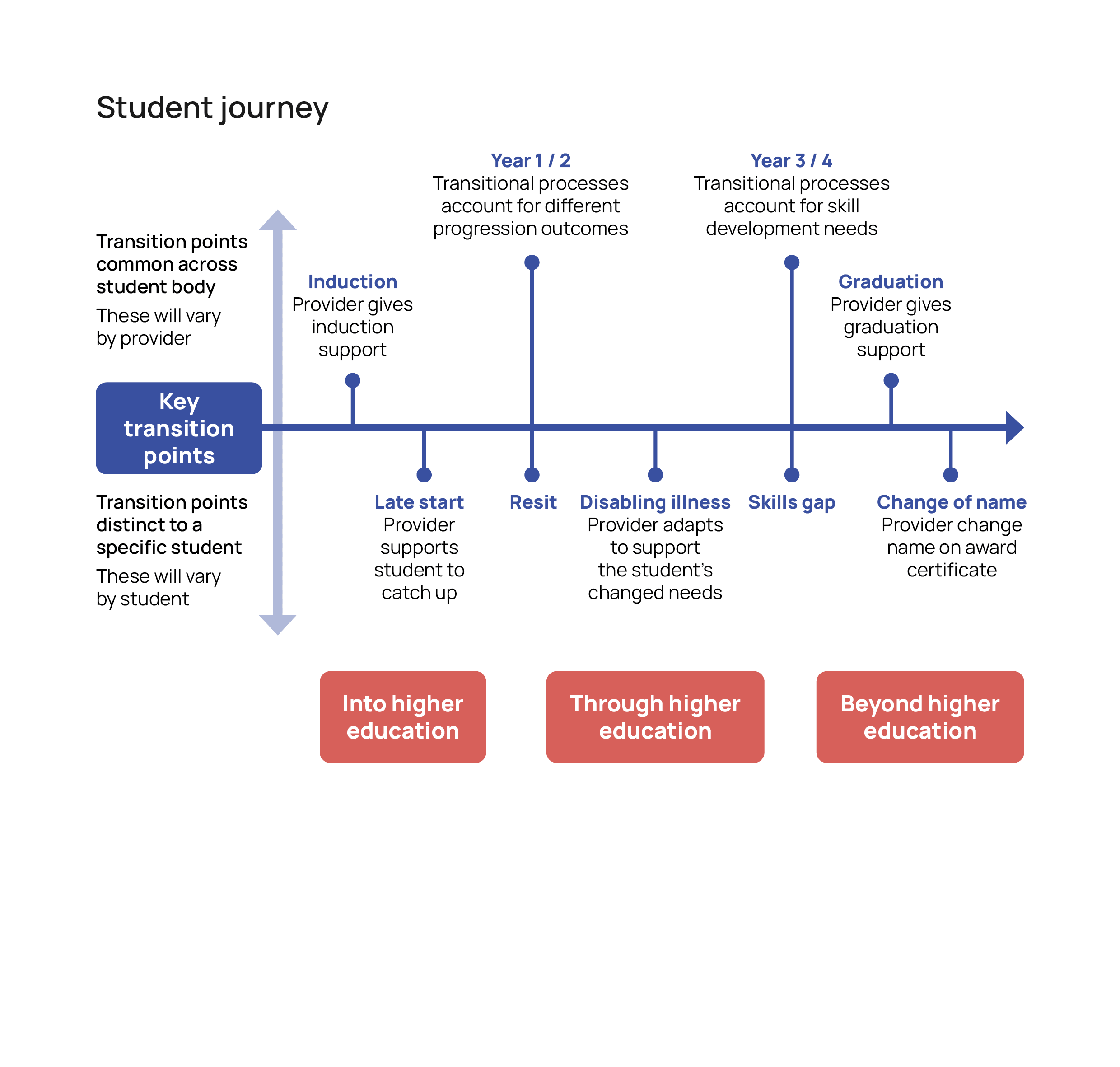
Providers recognise that students face multiple transition points throughout their studies, some common across the whole student body and others specific to individual circumstances. Support is embedded across academic, pastoral and professional services, drawing on engagement data and student voice to identify students at risk of disengagement and respond before challenges at key transition points escalate.
In practice
Key Practice b encourages providers to recognise and support students through the different academic, personal and social changes they experience during their learning journey.
Recognise transition points - including entry into higher education, induction, progression between levels, placement and preparation for next steps.
Provide continuity of support - connecting academic, wellbeing and career support rather than treating them separately.
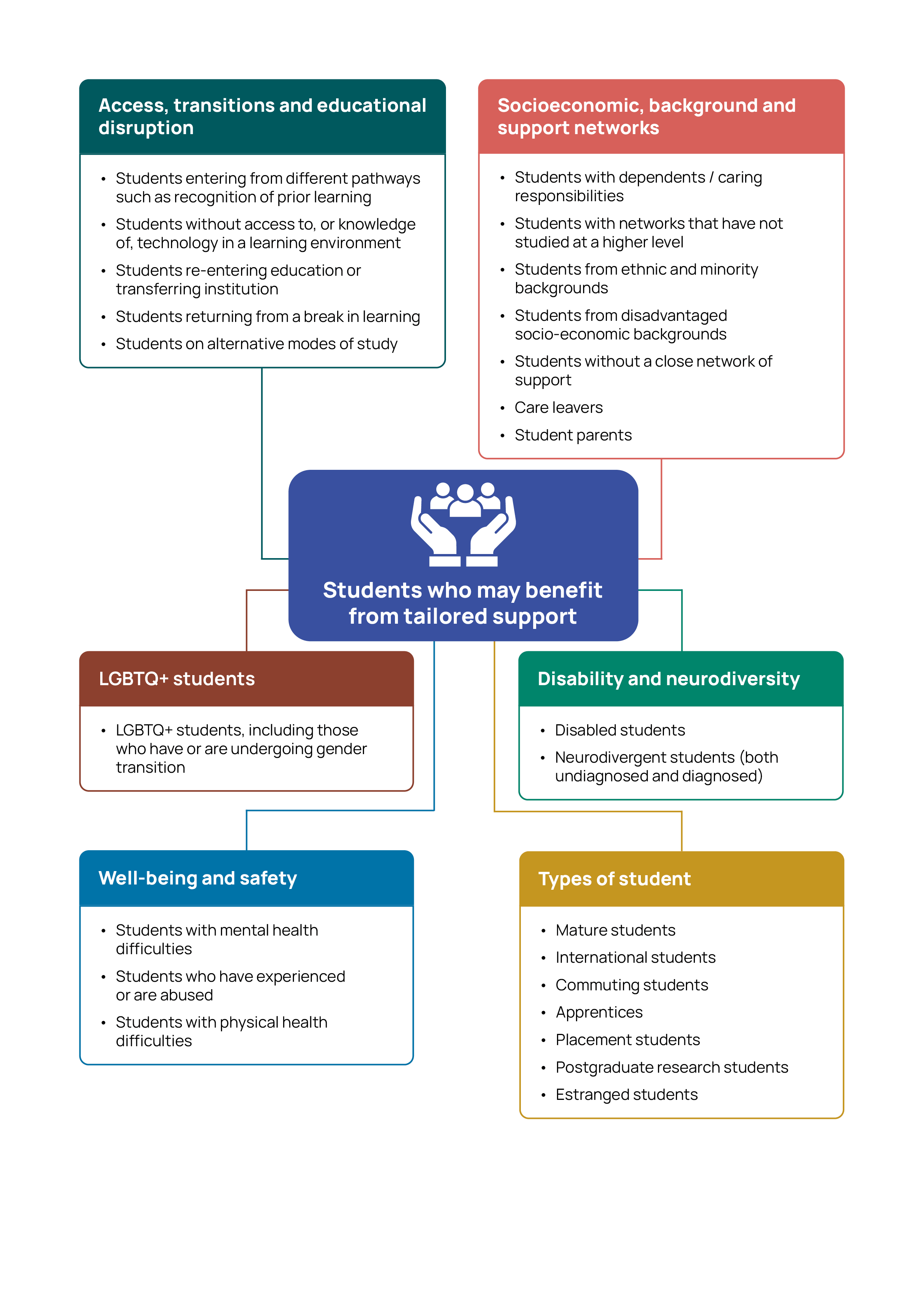
Respond to individual needs - recognising that students experience transitions differently and may access many areas of support simultaneously.
Identify challenges early - using appropriate data and student engagement to provide timely, coordinated support.
Why this matters
Effective transition support helps students navigate change, maintain engagement and confidence, and access the right support at important points across their learning journey.
Supports continuity - helps students move confidently between different stages of learning.
Promotes belonging and engagement - helps students feel welcomed, connected and supported during periods of change.
Responds to individual needs - recognises that students may experience transitions differently and require tailored support.
Enables early support - helps identify emerging challenges and respond before difficulties escalate.
Students and staff are aware of the ongoing academic, professional and pastoral services and activities available, and students are encouraged to access these opportunities and support throughout their learning journey.
What this means
Key Practice c focuses on ensuring students and staff are aware of the academic, professional and pastoral support available throughout the learning journey. It also ensures that support is promoted as an ongoing conversation, rather than a one-off communication, with approaches reflecting changing student needs. Providers are encouraged to use varied communication methods, engage students and staff, and evaluate whether support is understood, accessible and being used effectively.
In practice
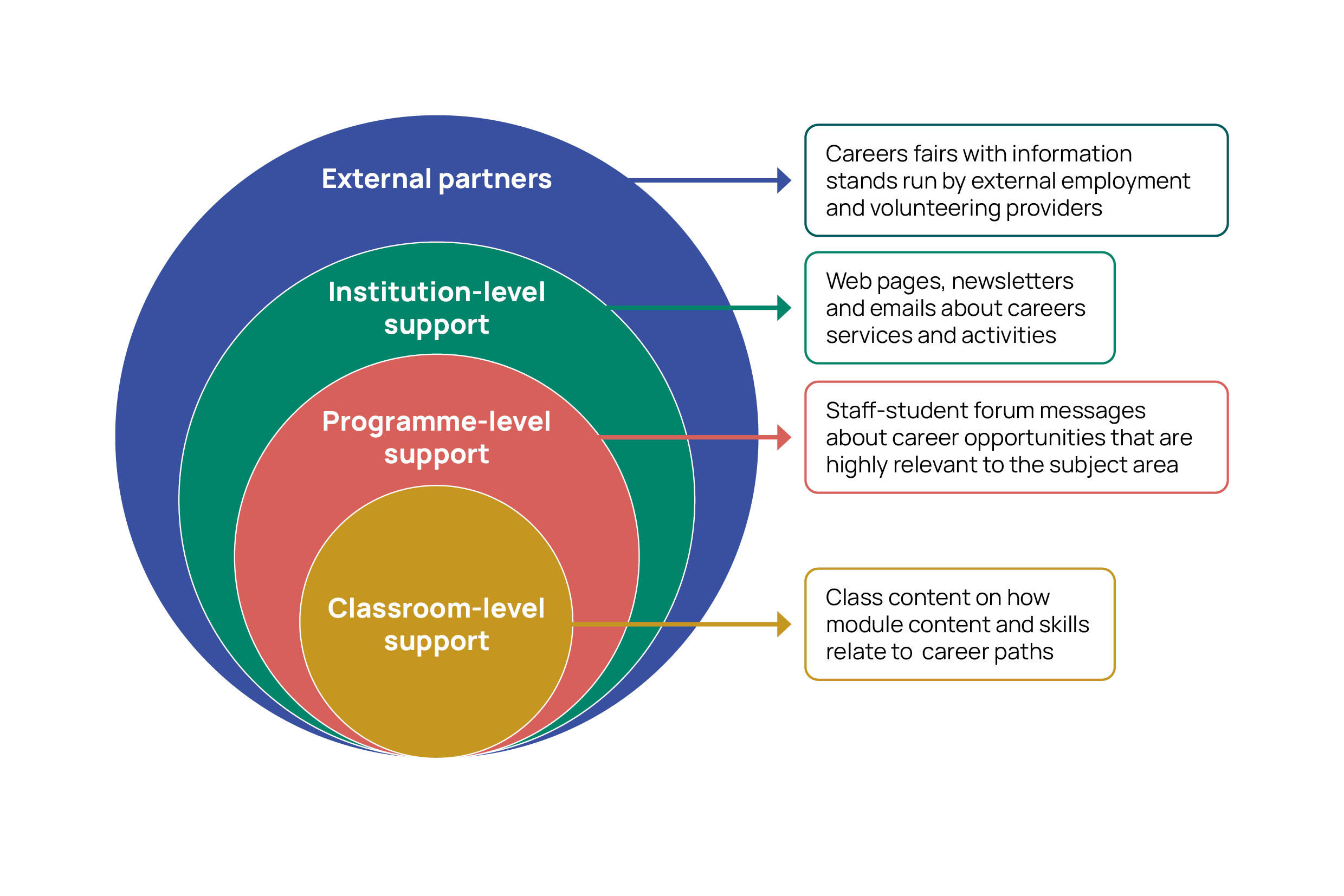
Support is visible and up to date - Students can access clear, current information about academic, professional and pastoral support throughout their learning journey.
Signposting is part of everyday student interactions - Information about relevant support is integrated into tutorials, teaching, communications and other appropriate points of contact.
Communication reflects students’ different needs - A range of communication methods and tailored information helps ensure support is accessible and relevant to students with different circumstances, including culture, disability and mode of study.
Students are partners in communicating support - Student representative bodies and peers contribute to communicating support and activities, helping to raise awareness and encourage engagement.
Communication is reviewed for effectiveness - Feedback, participation and student academic data help providers understand awareness and engagement, and consider whether communication is timely, relevant, clear, consistent and inclusive.
Why this matters
Ensuring students know about available support enables them to access the appropriate services and opportunities throughout their learning journey, when they need them.
Improves awareness and access - students are more likely to recognise and use relevant support when it is clearly communicated.
Responds to changing needs - ongoing communication helps ensure support remains relevant as students progress through their studies.
Supports equality, diversity and inclusion - tailored communication can enable better reach and support the full diversity of the student population.
Strengthens engagement - working with students and evaluating communication helps providers understand what works and identify gaps in awareness or engagement.
Staff are appropriately qualified, trained and supported to deliver high-quality learning and support for all students, particularly those with specific needs and requirements.
What this means
This Key Practice emphasises a provider-wide approach to ensuring staff have the qualifications, training and support to deliver high-quality student support. It includes the recognition of different staff roles, providing relevant development opportunities, equipping staff with the knowledge, skills and resources they need, understanding diverse student requirements, and enabling academic, professional and support staff to work together effectively.
In practice
Staff have the right knowledge and skills - qualifications, training and ongoing development reflect the requirements of their roles and the needs of students.
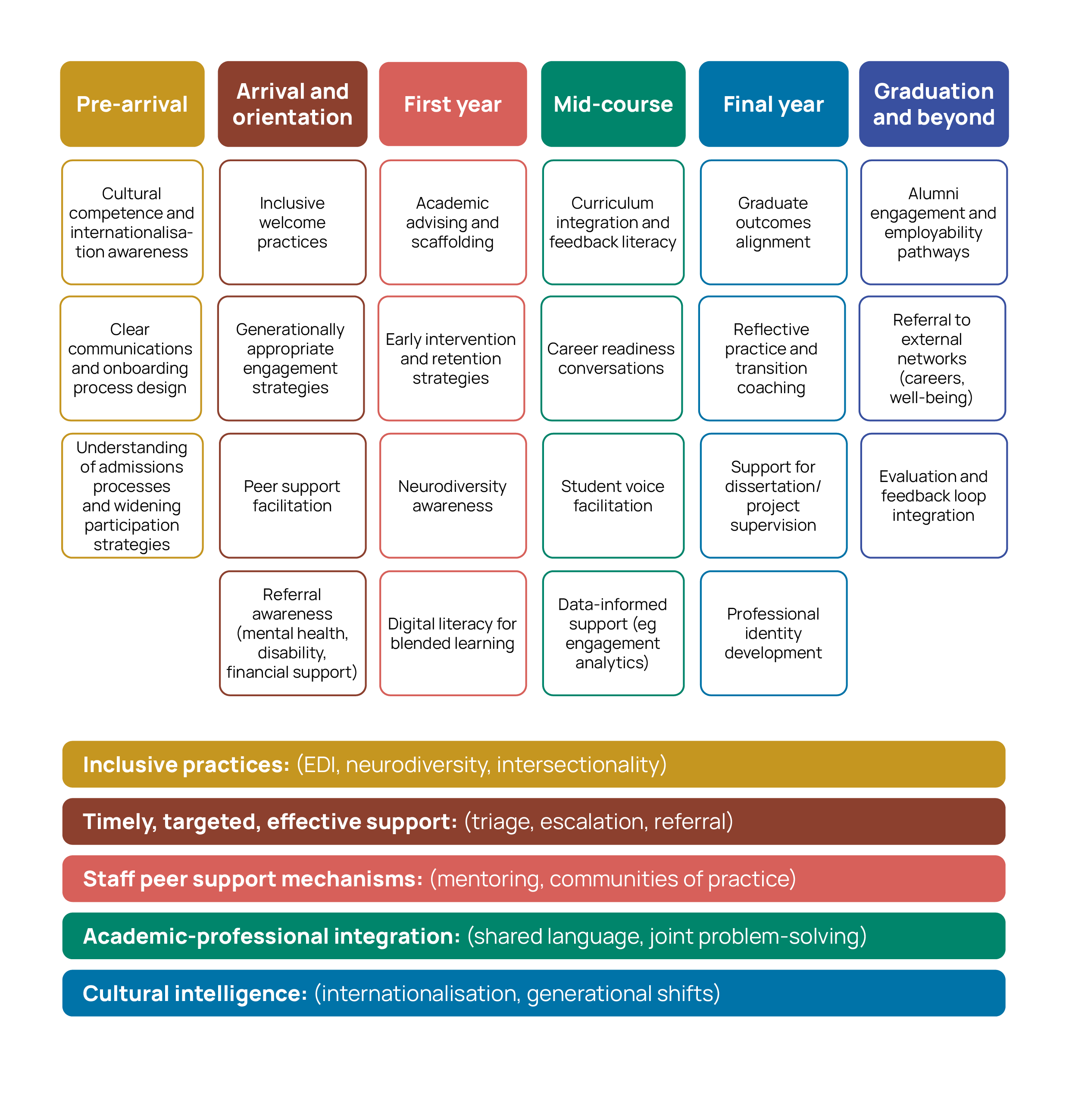
Training reflects the student journey - staff are equipped to support students at different stages, from pre-arrival and induction through to graduation and beyond.
Staff understand their roles and responsibilities - clear boundaries, referral pathways and shared expectations help staff provide appropriate support and know when to involve specialist services.
Support is inclusive and responsive - staff are equipped to recognise diverse student needs, including disability, neurodiversity, cultural differences and other circumstances that may affect the student experience.
Staff collaborate and are supported themselves - academic and professional staff collaborate, share practice and have access to appropriate resources, peer support and support for their own wellbeing.
Why this matters
Well-trained and supported staff are better equipped to provide consistent, inclusive and responsive learning and student support throughout the student journey.
Gives staff confidence and clarity - enables staff to understand the boundaries of their role, responsibilities and when to refer students to specialist support.
Supports students with specific needs - helps to ensure students receive appropriate and timely support that responds to their individual circumstances.
Reduces risk of unsupported interventions for students and staff - clear roles, training and referral pathways help to avoid informal or unsupported interventions.
Scaffolds action on attainment gaps - staff knowledge, student data and feedback can help identify gaps in support and shape evidence-informed approaches to improvement.
Students and staff recognise that activities offered outside the formal curriculum are beneficial for promoting students' sense of belonging, as well as providing opportunities to broaden their skills and achievements, complementing their formal studies.
What this means
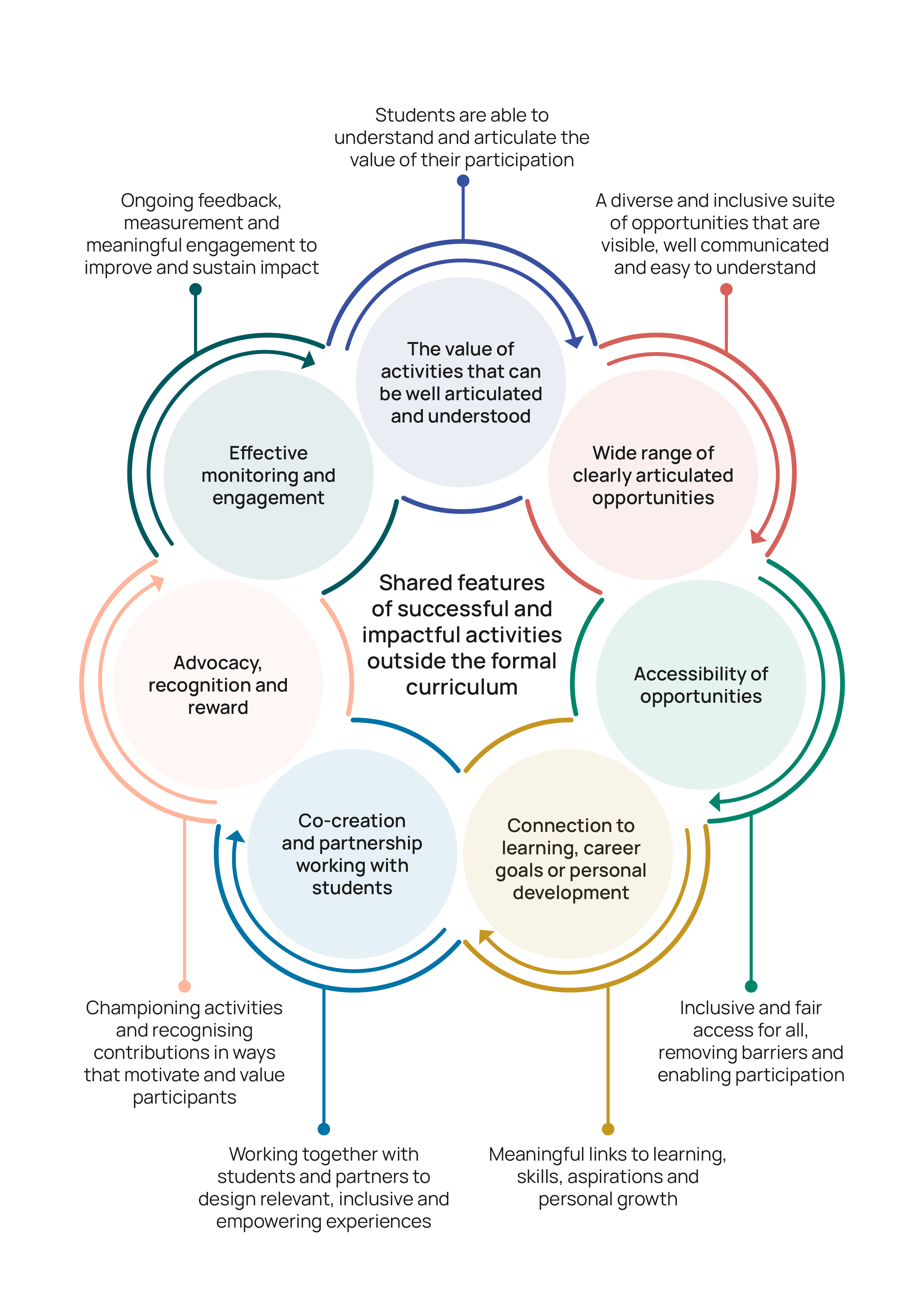
Providers create, support and promote activities beyond the formal curriculum, recognising their value in building belonging, wellbeing, employability and community. Institutions ensure that opportunities are accessible, inclusive and meaningful, with clear connections to learning and career goals. Students who engage with these opportunities are supported to recognise, reflect on and articulate the skills, experience and confidence they develop through these wider activities and experiences.
In practice
Activities beyond the formal curriculum are valued - extracurricular and wider experiences are recognised as contributing to students’ belonging, wellbeing, skills and professional development.
Opportunities are accessible and inclusive - activities reflect the diverse circumstances and needs of students, with barriers to participation considered.
Activities connect with students’ wider development - opportunities complement formal learning and support personal, professional and employability development.
Students can recognise the value of their experiences - students are supported to reflect on and articulate the skills, confidence and experience they gain.
Students and staff promote and support participation - the value of wider activities is communicated and recognised across the provider, with students involved in shaping and evaluating opportunities.
Why this matters
Recognising activities beyond the curriculum helps students build skills, confidence and belonging through the following.
Strengthening belonging and community - creating opportunities for students to connect, participate and develop a sense of belonging within their institution.
Broadening skills, networks and employability - complementing formal study through experiences that support personal and professional development.
Supporting equitable access - ensuring opportunities are accessible, inclusive and meaningful for students across different backgrounds and circumstances.
Helping students articulate their experiences - supporting students to recognise and communicate the skills, confidence and experience gained through wider activities.