Celebrating the impact of authentic student-staff partnerships in college-based HE
Author
Professor Matt O’Leary
Professor of Education, Birmingham City University
On 29 April, Birmingham City University’s City South Campus hosted a national showcase event to celebrate and disseminate the work of participants involved in the QAA-funded collaborative enhancement project (CEP) Supporting flexible pathways and effective transitions in College-Based Higher Education (CBHE).
Using an innovative Cycle of Collaborative Observation (CoCO) as the driving force for building authentic student-staff partnerships, both parties have worked collaboratively throughout the project to deepen understanding of their learning and teaching experiences, with a view to supporting and enhancing the effectiveness of students’ transitions into and through HE level study.
The showcase event provided a national platform for both the students and staff involved in the project to share their experiences and reflections on working together in their student-staff partnerships, along with discussing and presenting the findings and impact of their areas of focus.
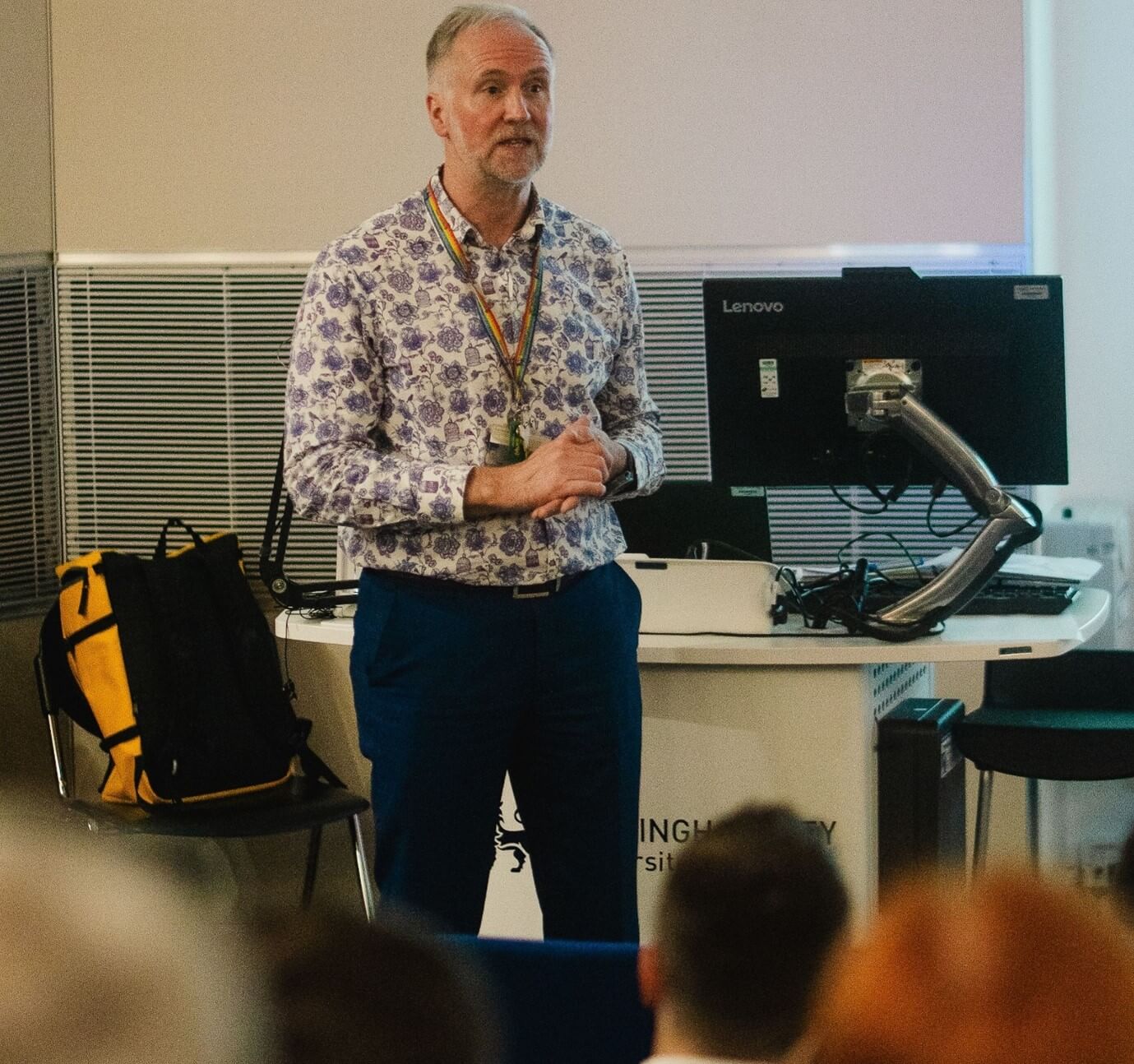
Attendees included the project’s student and staff participants, as well as their college peers and colleagues. In addition, there were many external attendees from all parts of England, many of whom are actively involved in CBHE. The day started with an introduction and overview of the project by the project lead Professor Matt O’Leary from BCU, who spoke about the project context, its aims and focus. As part of his talk, Professor O’Leary highlighted how CBHE is often an overlooked and under researched area of HE policy and practice.
Whilst the overall percentage of students who choose to study a course in CBHE may be relatively small compared to those who follow the more traditional university route, CBHE plays a crucial role in widening participation in HE, especially amongst underrepresented social groups.
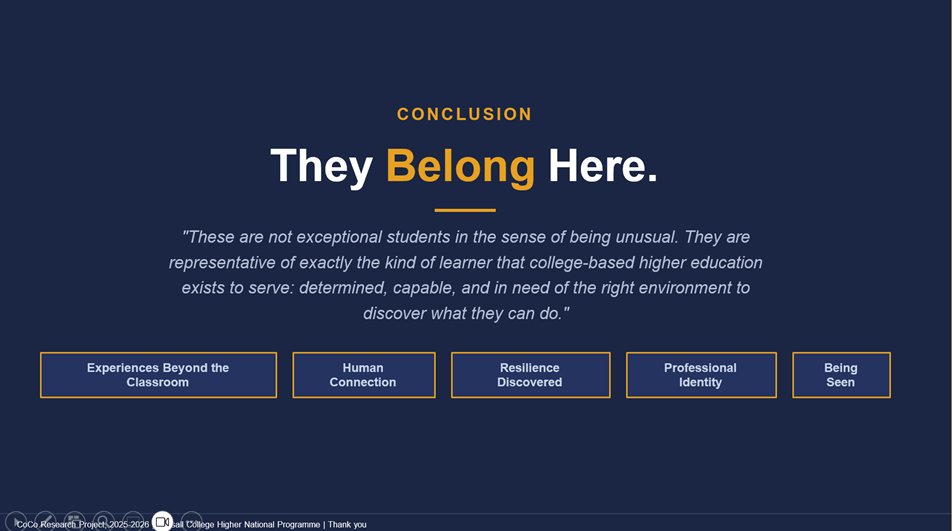
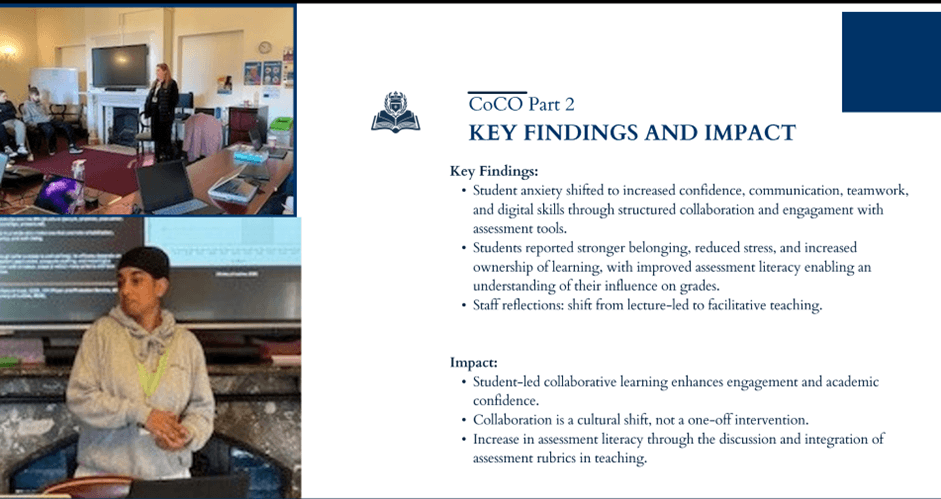
Following the project overview, each college lead gave a summary presentation of the key themes and insights to emerge from the subject case studies in their respective colleges. Recurrent themes included tangible improvements in students’ confidence and engagement with academic writing, assessment and feedback, along with a heightened sense of belonging. Below are two sample slides from their presentations.
In the afternoon, attention switched to the project’s student and staff participants, as they formed into their case study groups to participate in a lively marketplace carousel discussion. What really stood out from the afternoon session were the student voices. The enthusiasm, passion and overriding confidence with which they articulated their reflections on working collaboratively with their peers and tutors to develop more flexible, responsive pathways into HE and the impact on their learning experiences brought the work to life.
In particular, it was through the students’ accounts that the transformative power of authentic student-staff partnerships was illuminated. Their stories repeatedly reinforced how working closely with others and engaging in collaborative reflection on their learning and teaching experiences had resulted in genuine, co-created solutions to some of the challenges they faced. Ultimately, this has helped students build confidence, independence and effective strategies for managing their transitions into and through HE.
One of the most compelling takeaway messages from this was the value of investing in authentic student-staff partnerships. When students are actively involved in and work together with staff in the planning, design, implementation and evaluation of their learning experiences, rather than passive recipients of them, the impact on them as learners can be powerful and transformative. To quote one of the concluding comments from our college leads in their presentation, “Collaboration among students, staff, and institutions is essential, not just a strategy, but a cultural shift.”