Joined-Up Student Support Through Triple-S at Forth Valley College
Authors

IRENE POLLOCK
Learning Services Manager
Forth Valley College
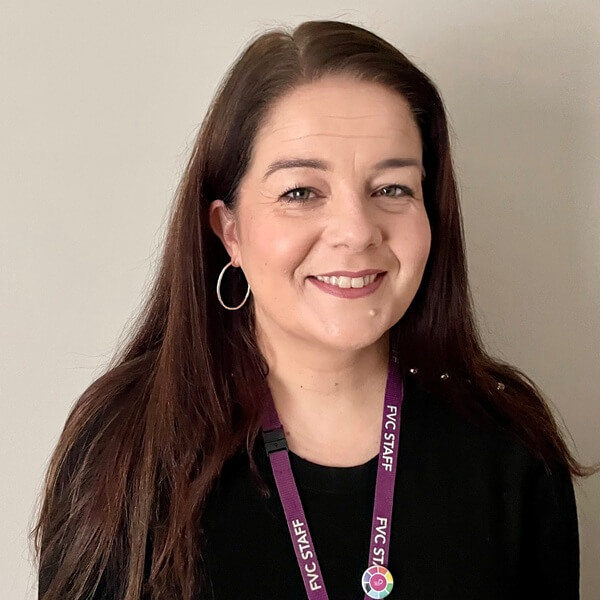
LAURA GEOGHEGAN
Student Support Manager
Forth Valley College
Summary
Forth Valley College's students wanted to consolidate student support and avoid students unnecessarily repeating their stories. The college created a cohesive system by making fuller use of its existing Triple-S tool, centralising student support information and extending data-sharing agreements with local schools and authorities.

The challenge
Forth Valley College is a large institution with significant support needs across its student body: in the 2025/26 academic year alone, learning support advisors wrote 1,100 personal learning support plans, while support and guidance advisors engaged with 2,500 students. Many students arrive at the college with existing support plans, informal caring responsibilities, or other personal circumstances which impact on their learning. Without a joined-up system, students had to repeat their stories and support requests to multiple members of staff.
The approach
Rather than introducing something new, the college focused on making fuller use of an existing tool: Triple-S, the Student Support System, which had been underutilised for several years. Under the new approach, student support services take the lead in creating each student's profile, ensuring that support needs are visible to any relevant member of staff, including how a student has engaged with other support services. All the essential information sits in one place, and any member of staff can add their own interactions and observations into the system. While students can request access to their own information, the system's primary purpose is to support communication between staff, ensuring any discussions about students happen thoughtfully and compassionately.
In many cases, useful information is already in place before a student even arrives. Where students have received pastoral care or support arrangements at school, this information can be gathered in advance through data sharing agreements with three local authorities, supported by memoranda of understanding for students from outside those areas. This means that by the time a student first meets college staff, much of the relevant background is already known and support plans can be implemented more quickly.
As both student support and departmental staff have access to Triple-S, the ‘record of contact’ also provides a useful narrative that allows staff to gain a more holistic view of the student and their needs, particularly as these change over time. Triple-S is linked to other college systems. Being able to review data from a range of sources helps to determine what interventions, if any, are necessary. If, for example, a student’s attendance is cause for concern, a lecturer could view the record of contact and see if the student had also missed support appointments. Alternatively, the lecturer might see that a support and guidance advisor has had a discussion with the student about a challenging home situation (although not all details might be included).
Students always retain control of their data and what is shared. When a profile is created, advisors record extensive detail in confidential notes, but only key support information is pulled through into Triple-S, and students can choose what moves from the confidential area into the shared system. Support and guidance advisors take care to explain clearly how information is shared, who will see it, and how it benefits the student, as well as what impact choosing not to share might have on their learning experience. In cases where a student raises a concern but isn't ready to formally engage with the system, that information can still be noted so that wellbeing staff are aware and able to check in separately. For example, a student might have been offered one-to-one support with their learning, but be unsure about whether they want to take this up; a note in Triple-S means that a member of staff will touch base later in the year to see if this is support is now desired.
To support this way of working, lecturer training is being rolled out, alongside a new guide to Triple-S. The guide helps staff understand the purpose of the information held, where to record it, and who needs to know what — supporting good judgement about what level of detail is appropriate to capture. The training uses realistic scenarios, including examples written in a judgemental tone, deliberately included to prompt reflection on how to record interactions factually, without making assumptions. The guidance steers staff back to the purpose of the system, encouraging them to include only the key information: the situation, what action was taken, and the outcome or referral. Throughout, the focus should be on how keeping this record benefits the student.
The impact
Staff awareness and use of the system have grown significantly, meaning everyone working with a student is better informed of their needs, without students having to repeat their story. Data sharing from schools means many students arrive with arrangements already in place, removing the need to go over difficult ground again on arrival. This advance knowledge allows support workers to move straight into meaningful conversations about wellbeing and support, rather than spending valuable meeting time on basic form-filling. Throughout, students retain choice over what information is shared, along with the right to request and review it.
Looking ahead, the college plans to introduce a separate form for students who don't arrive with information from school, as well as a progression form for students to complete ahead of support meetings. Careful attention is being given to the design of these forms, to ensure they ask the right questions in a genuinely compassionate way. The college is committed to evaluating and improving how information is communicated, recorded, and shared in order to best support students on their college journey.